The Weekly Review
A system you stop checking is a system you stop trusting
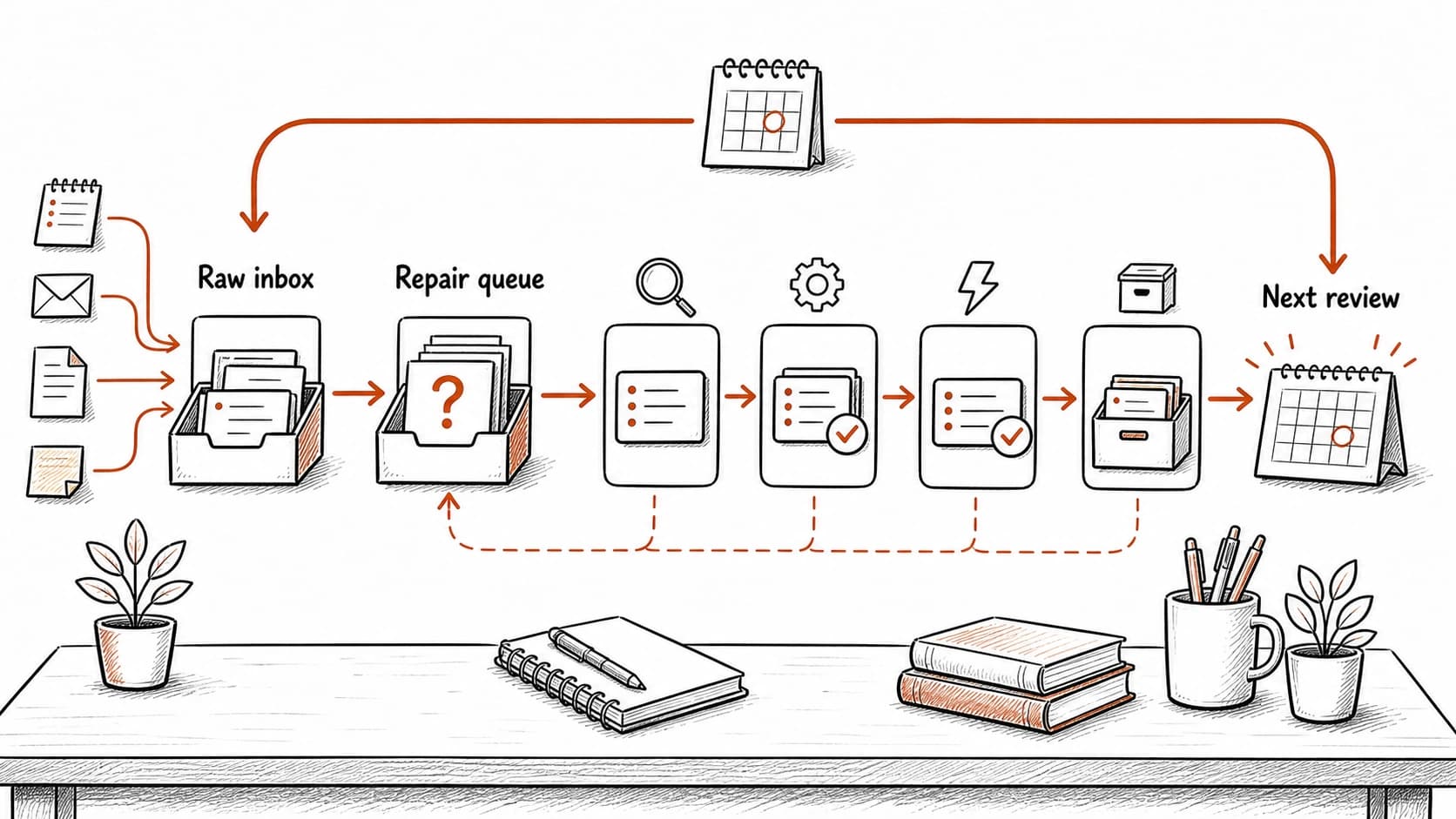
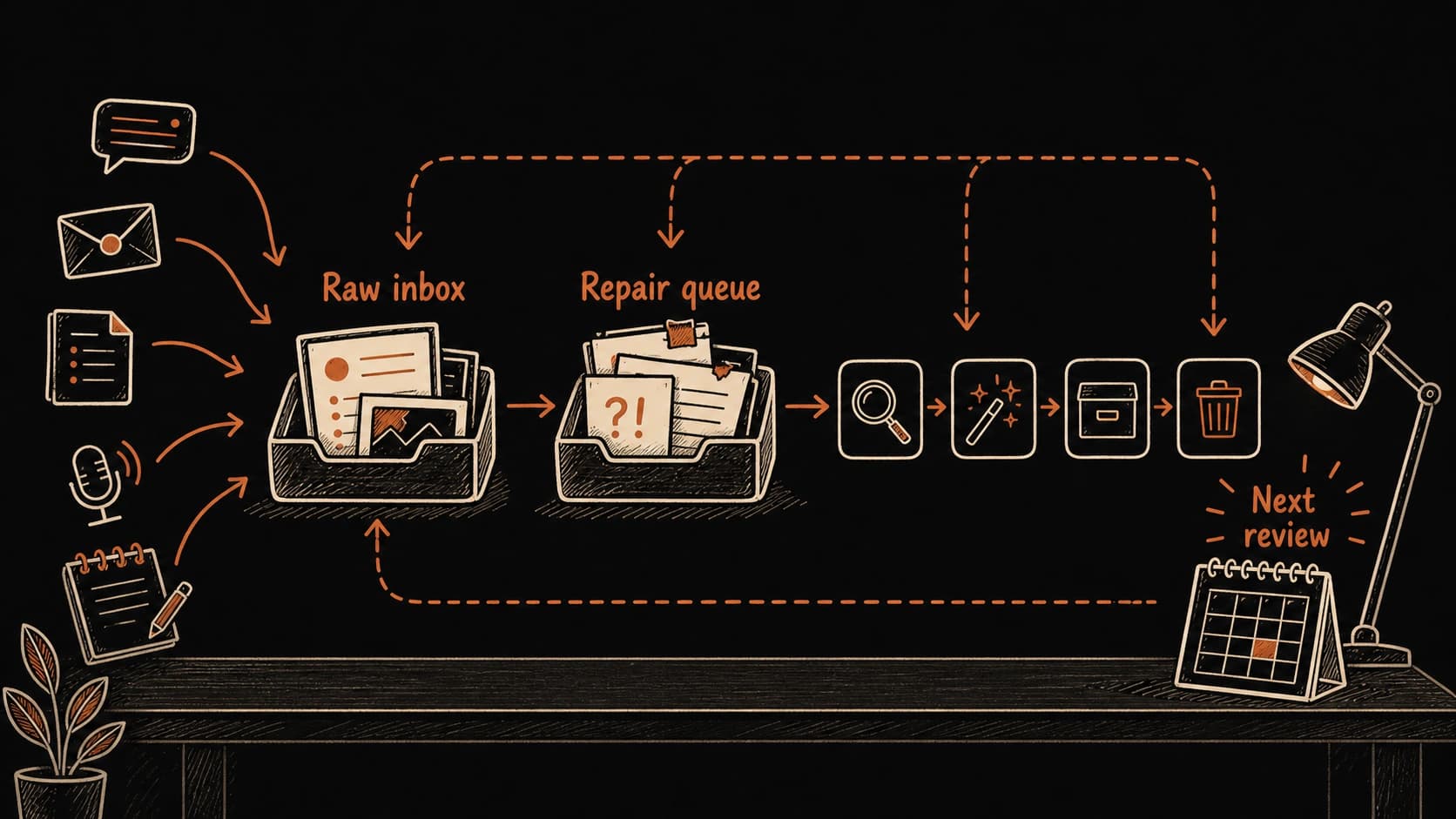
The Thursday call now has an approval queue: the pilot decision, Renee's task, and a draft follow-up message all waiting for review. Before you approve them, check whether the records behind them are still current. Every chapter so far has created something that can go stale. Raw sources pile up. Decision records become outdated when new information arrives. Commitments pass their deadlines without follow-up. returns the wrong source because the right one has a weak title. Without a regular check, the system quietly stops being trustworthy, and you stop relying on it.
A is a bounded maintenance pass. It does not require you to reorganize everything. It asks you to spend 15 to 30 minutes checking the places where drift usually appears, so the system stays reliable enough to use for real work.
The five-pass checklist
Run these five passes in order, on one active project, at the end of the week. Each pass has a single question that tells you when to stop.
- pass. Open the . For each item, decide: promote to a project record, park for later, or discard. Stop when the dump is bounded to items you plan to review within the next week.
- Record repair pass. Check your reviewed records for the active project. Are the decisions current? Are the owners still correct? Are the due dates still live? Update or mark stale any record that no longer reflects reality.
- test pass. Ask one question you already know the answer to. Did the answer cite the right record? If returned the wrong source, save a : add a better title, create an alias, or update a project label.
- Action pass. Check your task list and waiting-for items. Which tasks are still active? Which commitments are overdue? Which follow-ups need a message? Confirm what still needs attention this week.
- Archive pass. Look for closed projects, completed tasks, old drafts, and inactive records. Propose archive candidates. Keep the visible for any record that might be needed later.
Trust states are not permanent
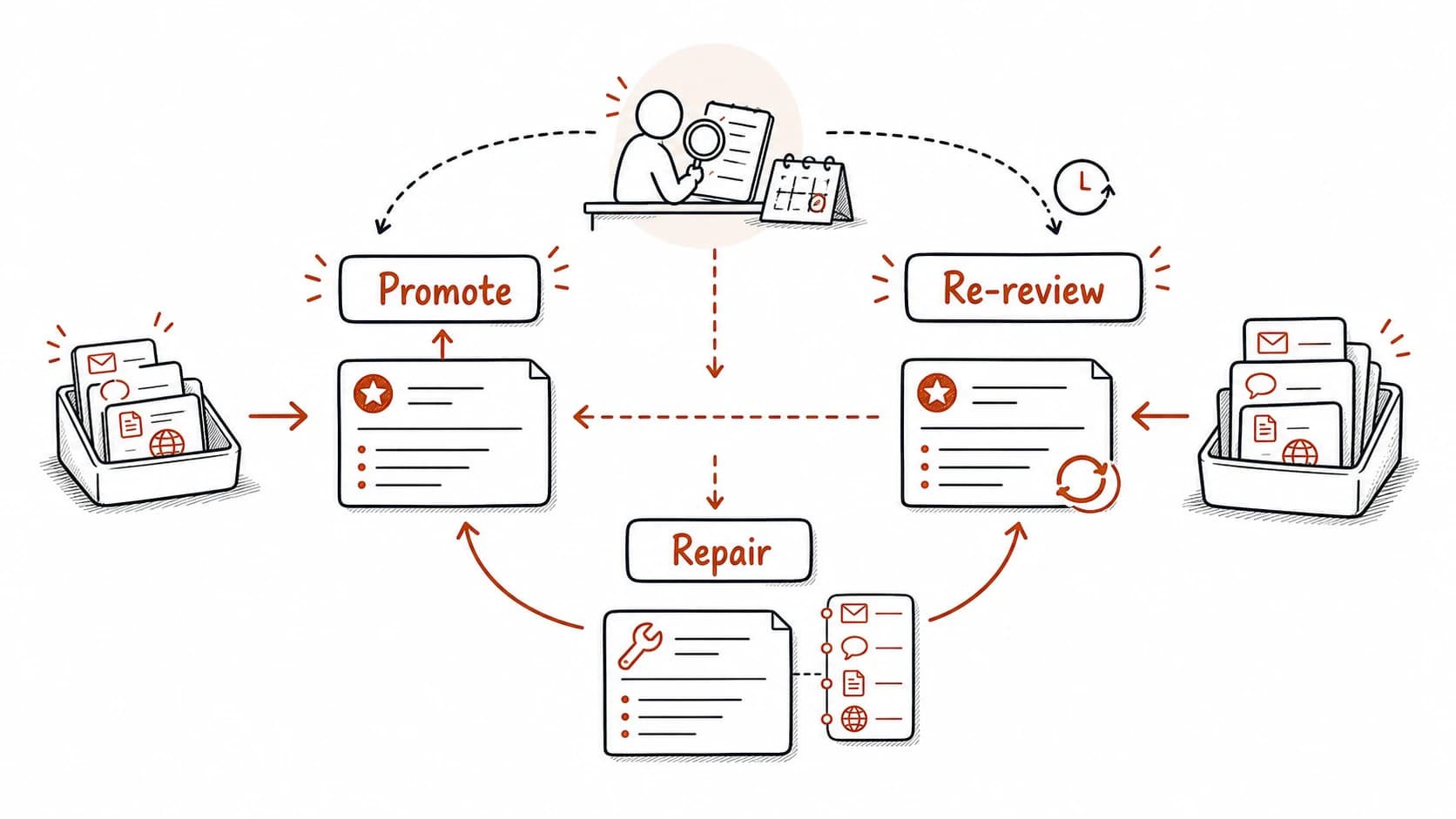
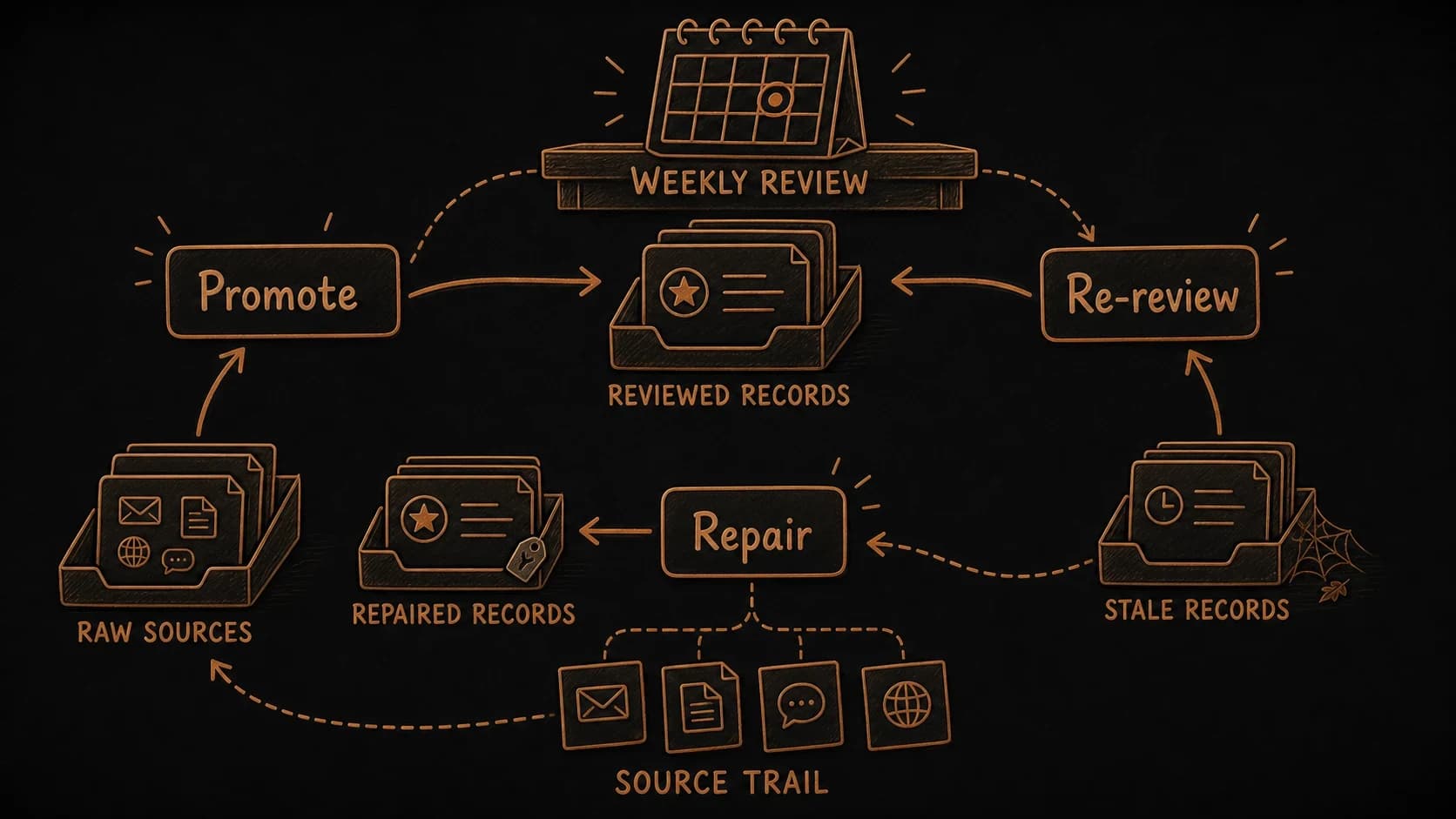
The previous chapters introduced trust states as a ladder: raw source, organized source, . The reveals that trust can move in both directions. A reviewed record can become stale when new information supersedes it. A raw source can be promoted when you finally review it. The is not a one-time assignment; it is a status that needs periodic verification.
During the record repair pass, check whether any has been contradicted by newer sources. If the approved decision was "two-client pilot" but a recent email expanded it to four clients, the is stale until you update it. Demoting a record to "needs re-review" is a maintenance operation, not a failure. It means the system is working.
Failure path: what happens when you skip review for a month
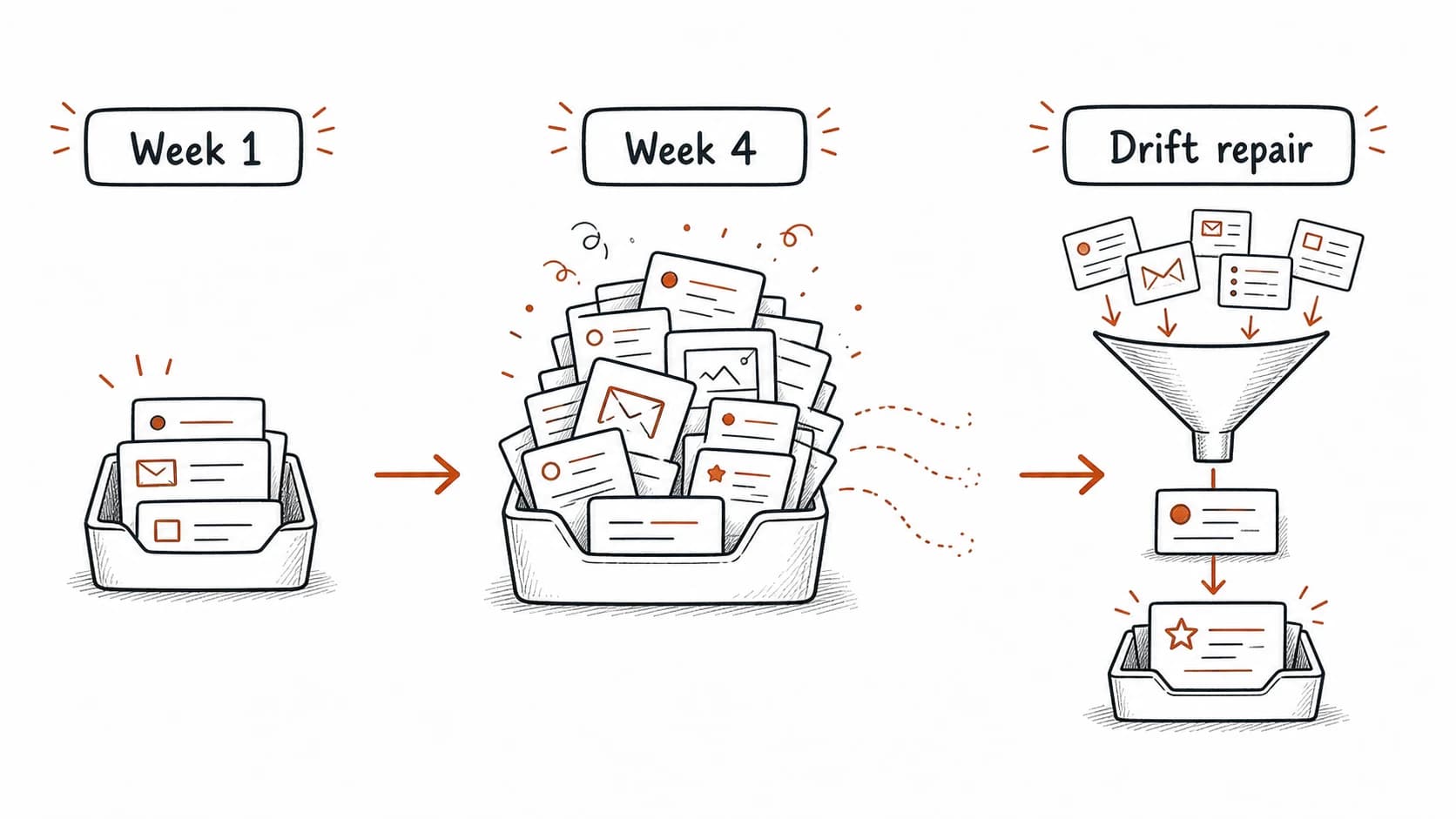
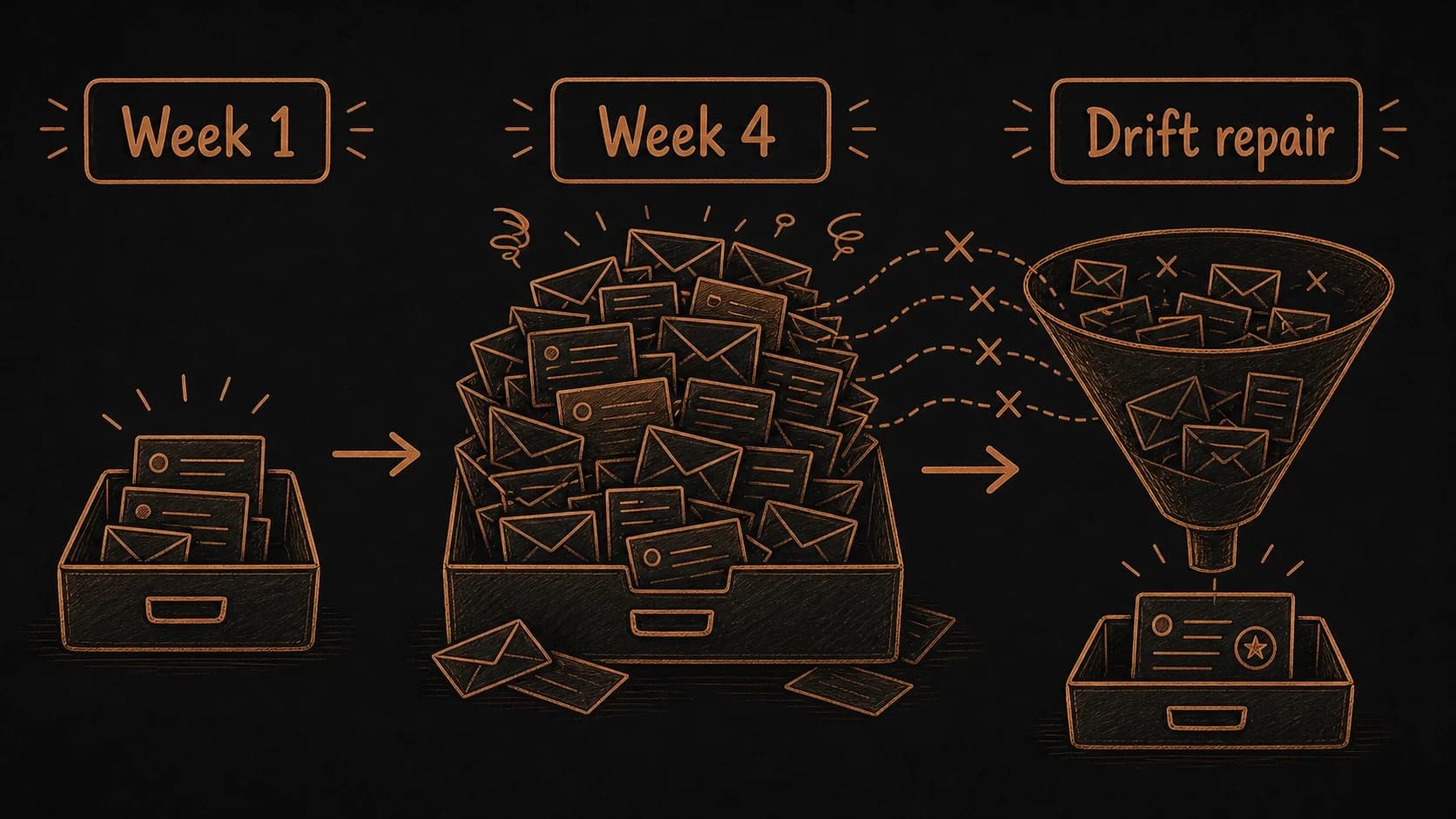
Week one without review: the grows to 15 items. You can still catch up in one sitting. Week two: the dump reaches 30 items and some source links have gone cold. You start ignoring the system and searching your email directly. Week three: you cannot remember what is in the and what is not. You stop trusting it.
By the fourth week, the system has two problems. The obvious one is the backlog. The hidden one is that you have been making decisions without checking the system, so the records no longer reflect what happened. Rebuilding trust requires reviewing the backlog and updating the records that drifted during the gap.
The fix is not to review harder; it is to review smaller. A 15-minute pass on one project per week keeps the system alive. If you miss a week, start the next review from today's sources and work backward only as far as the active project needs. Do not try to clear three weeks of backlog in one sitting.
How long the review takes depends on system size
If the review consistently takes longer than 45 minutes, the system may be too broad. Consider narrowing to fewer active projects, archiving completed work more aggressively, or splitting the review across two shorter sessions.
Run a weekly second-brain review
Claude runs the five-pass checklist on one project and shows you what drifted, what is overdue, and what to fix.
The is done when one active project is easier to trust than it was before. The is bounded, the records are current, has been tested, and proposed changes are waiting for approval. Start the next week knowing what is current and what needs attention.