Catch Promises Before They Disappear
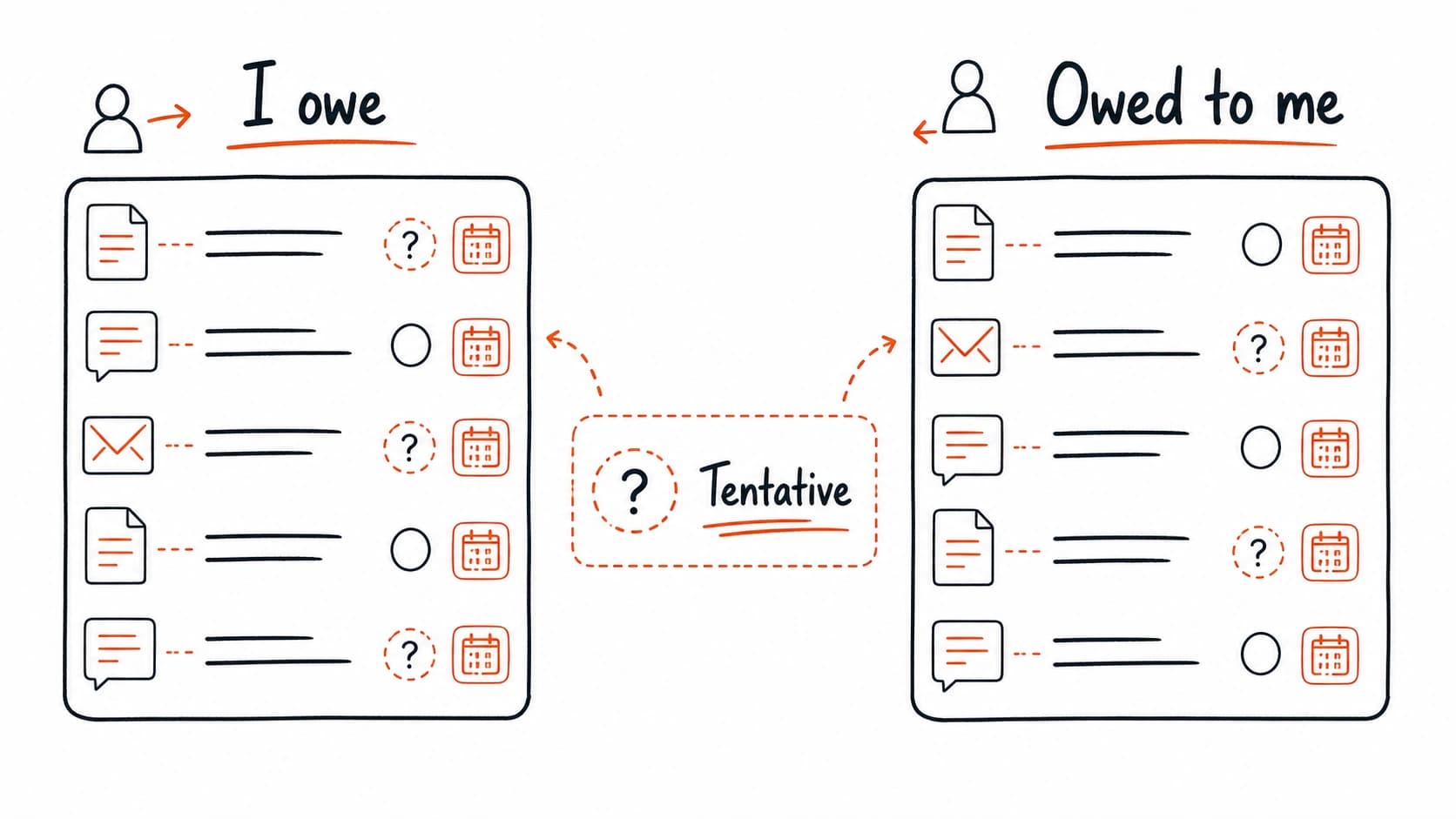
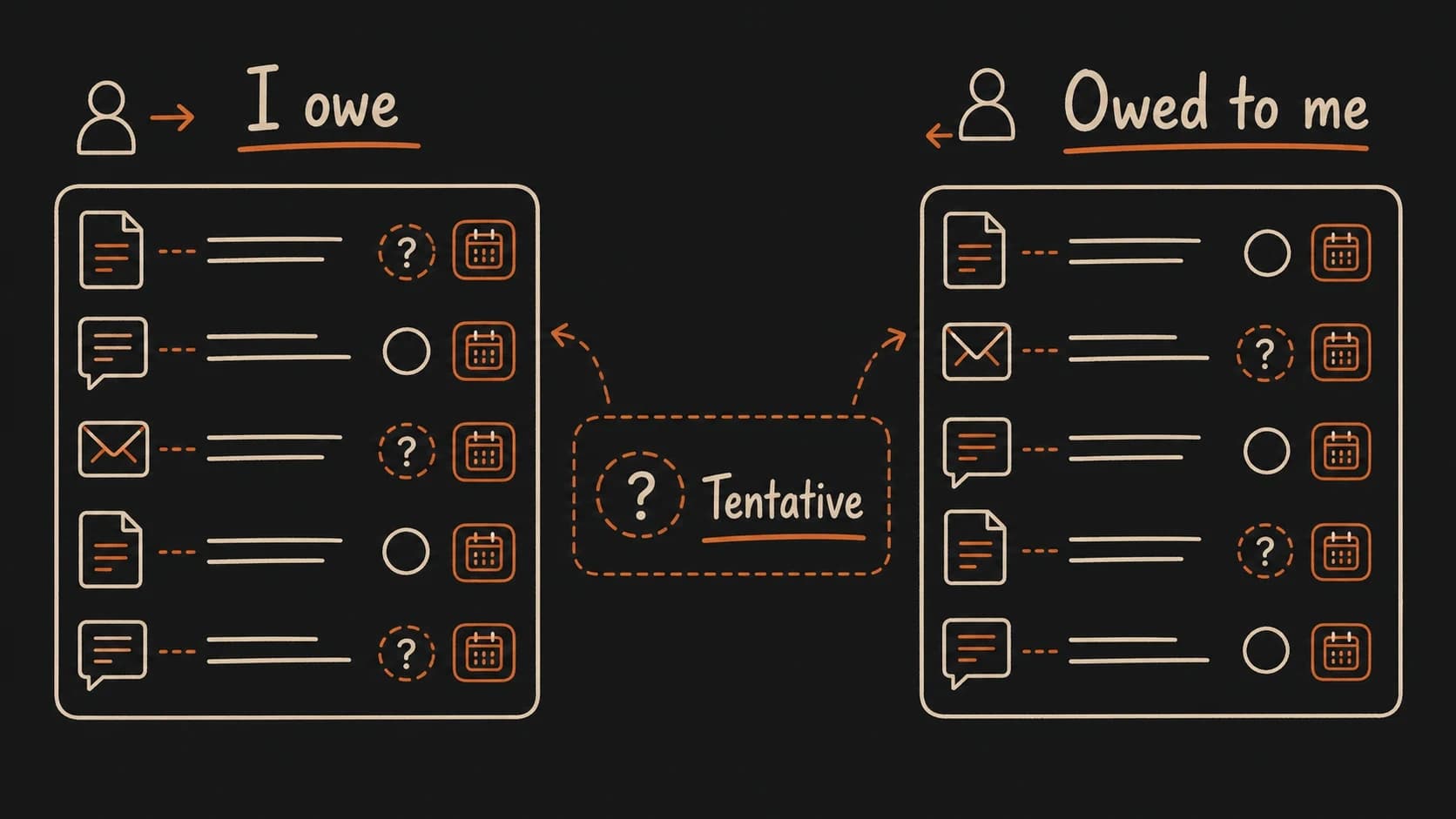
The previous chapters built a decision ledger that records what was decided and why. Decisions create obligations, and obligations are where things drop. Someone says "I'll send it by Friday." Someone else says "we should probably follow up next week." A third person nods. Three weeks later, nobody remembers who committed to what, because the promises lived in a that was captured, organized, and never turned into a persistent tracker.
A tracker catches promises before they disappear. It separates what you owe from what others owe you. It marks each obligation as confirmed or tentative based on the source language. And it surfaces overdue items during the so dropped promises become visible before the relationship damage is done.
Decisions and commitments solve different problems
A decision exists without a when the team decides something and nobody takes the next step. The pilot was approved on May 8, but if nobody owns the draft agenda, the decision sits untouched. A commitment exists without a formal decision when someone promises to do something in a conversation that was never elevated to a project-level choice. You promised to review Amir's draft before April 12, which was a personal obligation that originated in small talk at the end of a meeting, not in a formal decision process.
The decision ledger tracks the team's choices. The tracker tracks the personal obligations that flow from those choices and from the informal agreements that happen alongside them. Both need source trails and stale checks, but each one answers a different review question.
Every entry needs source language and a strength label
Use case: extract commitments from a , an email, and a quick note
Three sources from the onboarding pilot carry commitments in different forms. The meeting has Renee saying "I'll try to send the draft agenda by Friday." The follow-up email has the client writing "we'd like to start by May 20 if possible." Your quick note after the call says "I need to check with legal before confirming the timeline." Each one creates an obligation, and each uses different language.
Renee's is tentative. "I'll try to" is not the same as "I will." The tracker entry: is "send the draft agenda," direction is "owed to me," owner is Renee, due date is Friday, strength is tentative, source language is "I'll try to send the draft agenda by Friday." Follow-up action: if the draft has not arrived by Friday afternoon, send a check-in message.
The client's request is a preference, not a . "We'd like to start by May 20 if possible" expresses a desire, not a promise. The tracker entry: is "start the pilot by May 20," direction is "owed to me" (the client wants this from your team), owner is the client, due date is May 20, strength is tentative, source language is "we'd like to start by May 20 if possible." Follow-up action: confirm with the team whether May 20 is feasible after legal review.
Your note creates a self-owned obligation. "I need to check with legal" is a you made to yourself. The tracker entry: commitment is "check legal review status," direction is "I owe," owner is you, due date is none given (assign one during review), strength is confirmed (you wrote it as a clear action), source language is "I need to check with legal before confirming the timeline." Follow-up action: email the legal team and update the project brief when you get an answer.
The six-week that saves a relationship
The earlier chapter on decisions and tasks described a promise to review Amir's presentation draft before April 12. That entered the as a meeting note, was organized into a commitment record, and surfaced during the when the deadline had already passed.
In a system without a tracker, the promise would have evaporated. Amir would have presented without your feedback, possibly wondering whether you forgot. With the tracker, the overdue item surfaces during the action pass of the . You can still act: check whether the presentation date changed, apologize for the delay, and deliver the review before the relationship cost compounds.
One recovered can justify months of tracker maintenance. The value is not in tracking every small promise. The value is in catching the important ones that would otherwise slip through the gap between good intentions and follow-through.
Build a commitment tracker from recent sources
Claude reads your meetings and emails, finds every promise, and separates what you owe from what others owe you.