Connect Knowledge to Decisions and Tasks
Sourced answers become useful when they help you follow through
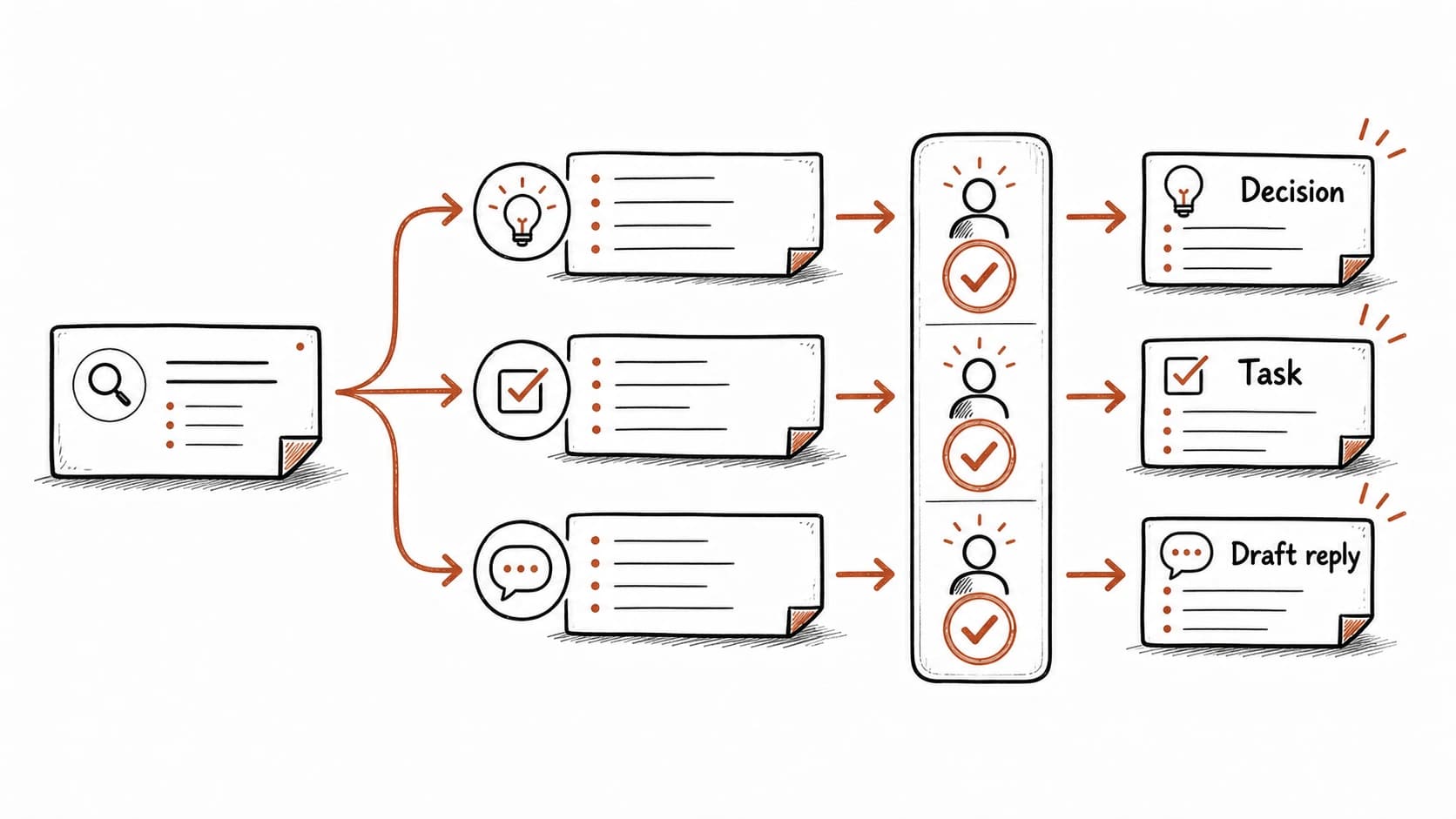
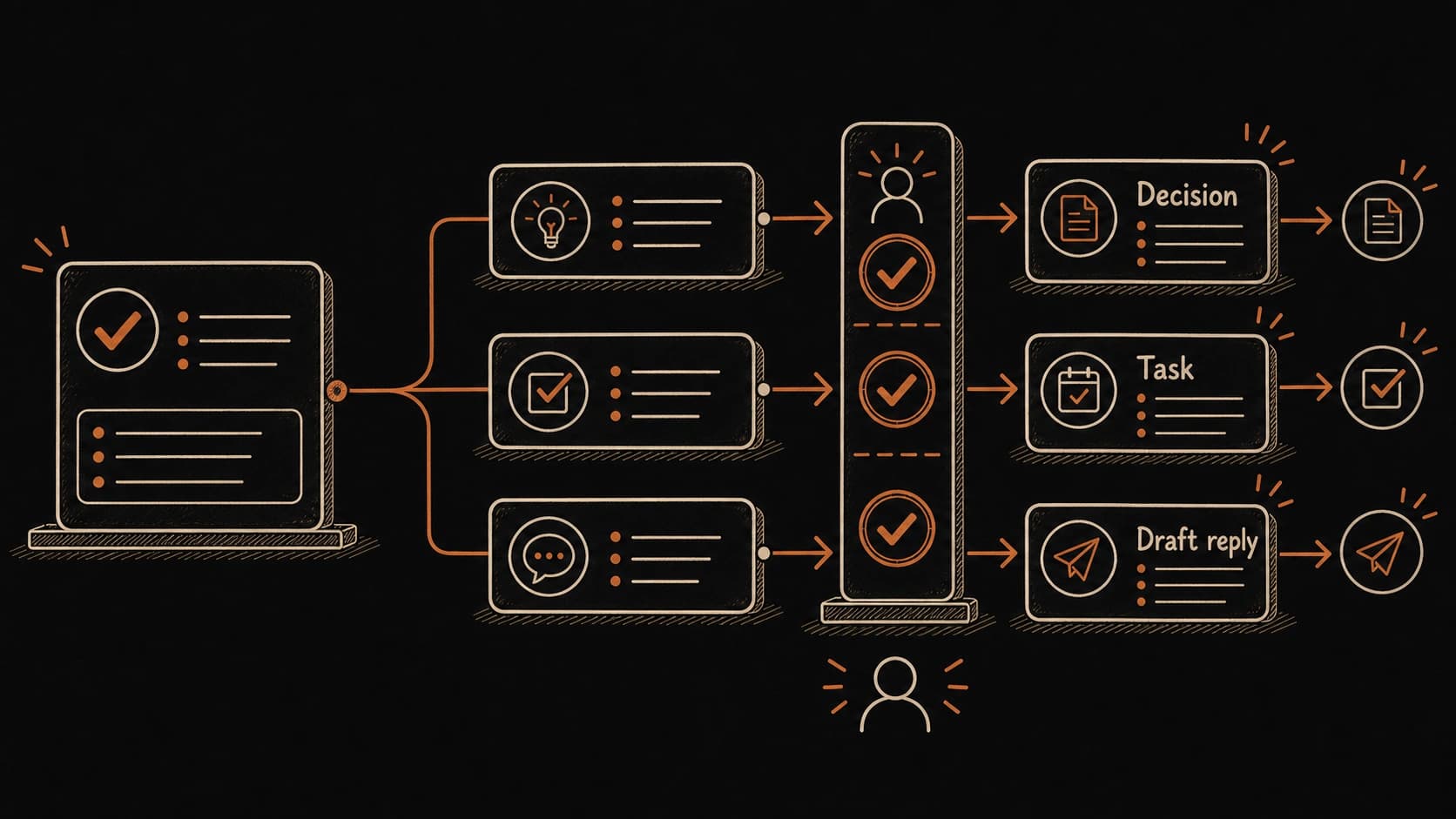
proved the Thursday call records are findable. The pilot decision came back with its , Renee's tentative was flagged, and the legal timeline showed as unresolved. This chapter turns those sourced answers into decisions, tasks, commitments, and follow-up messages. Knowledge should not silently become action. The you build in this chapter is an approval queue: decisions, tasks, and messages that wait for your sign-off before anything moves.
End-to-end scenario: from sourced answer to approved follow-through
Start with the sourced answer from the chapter: the team approved a two-client pilot, Renee tentatively owns the draft agenda by Friday, and legal review timing is unresolved. Walk the full path from evidence to action.
Step 1: Separate facts from actions. The approved pilot is a confirmed decision. Renee's Friday deadline is a tentative . The legal timing is an open question. Each one produces a different kind of record.
Step 2: Create decision records with source trails. The pilot decision cites the meeting from May 8 (decision status: approved, decided by the team, owner: project lead). The pricing delay cites the same transcript (decision status: deferred, reason: waiting for pilot results).
Step 3: Create task and waiting-for proposals. One for Renee (draft agenda, tentative Friday deadline, source: follow-up email). One task for you (review the draft after it arrives, no deadline until Renee confirms). One research question (legal review timeline, source: meeting , status: unresolved).
Step 4: Draft the follow-up message. The assistant drafts a message to Renee confirming the Friday deadline and asking about the legal timeline. The draft cites the and email thread. You review the draft before sending.
Each step preserves a . The links to the moment. The task links to the email. The draft message cites both. If any link breaks, the claim becomes unverifiable, and you know which source to check.
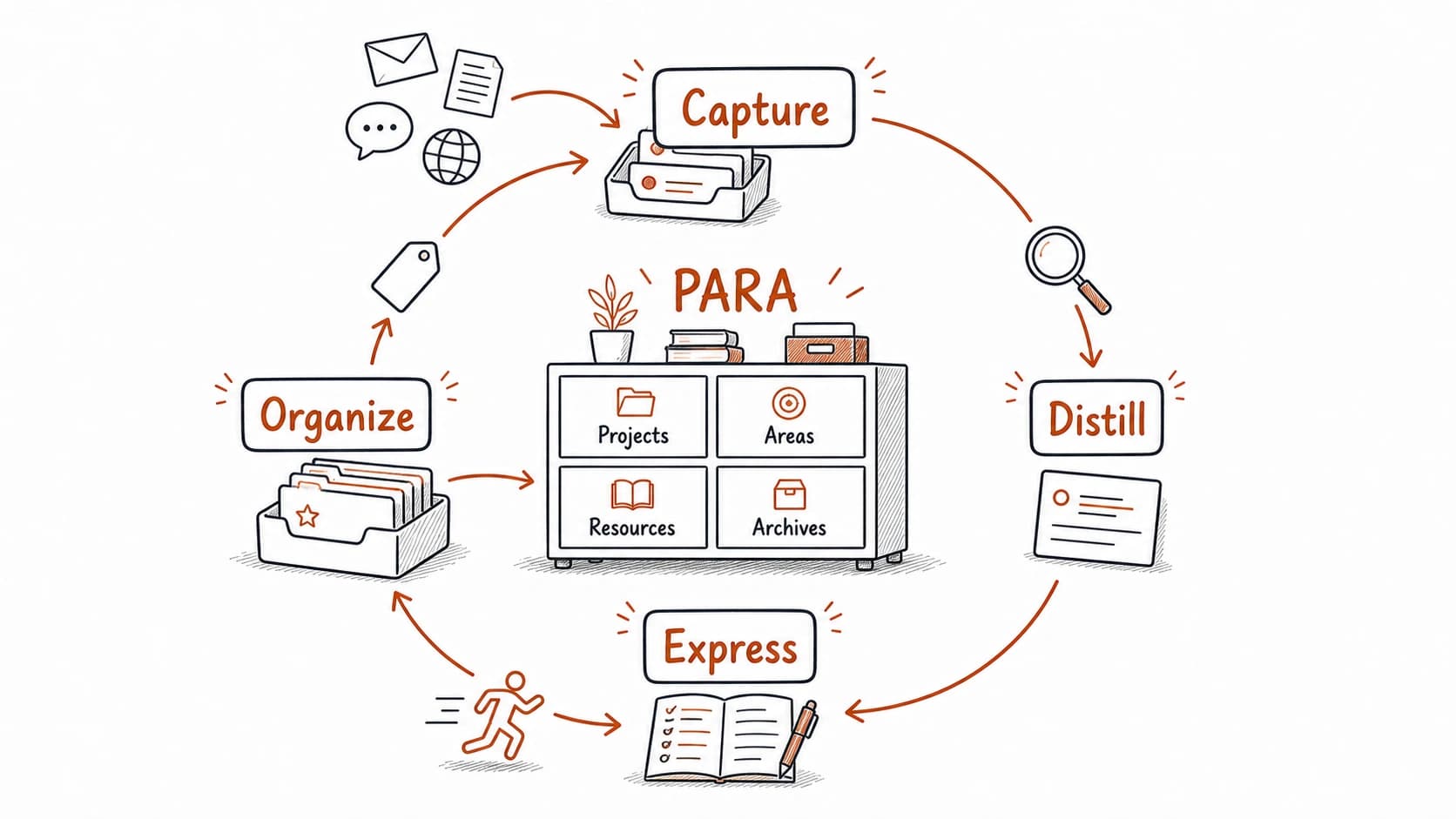
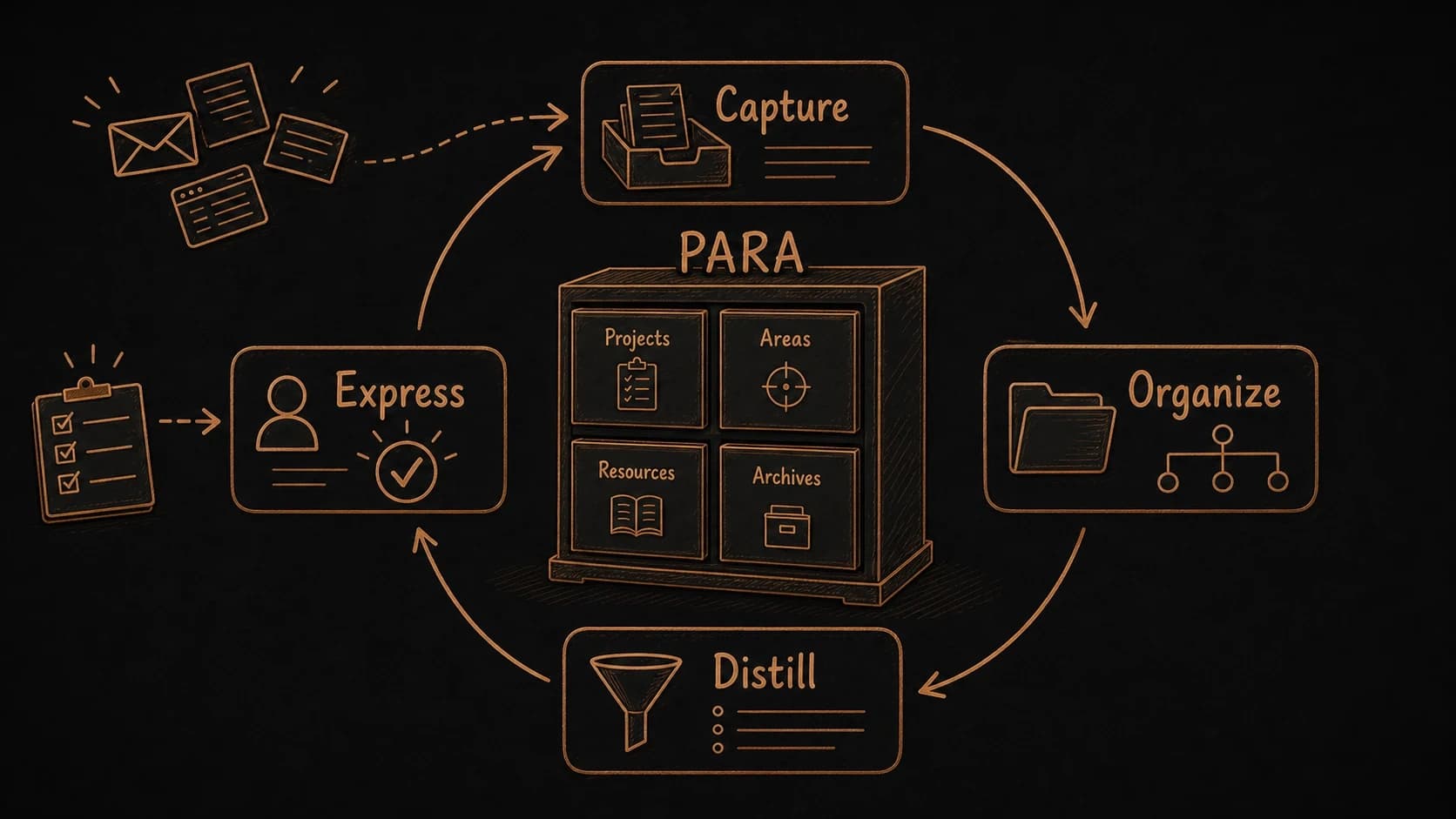
Capture, Organize, Distill, Express () describes this loop
You have already lived the four steps of this loop across the previous chapters. Capture saved the before trusting it. Organize put it with the client project and views you can find again. Distill pulled out the approved decision, the tentative , and the open legal question. Express turns those reviewed pieces into a task, a draft reply, and a waiting for approval.
and Projects, Areas, Resources, and Archives () work together. PARA tells you where a record belongs by use. CODE tells you how a source becomes useful. The AI-ready layer tells the assistant what it may read, what it may propose, what evidence it must cite, and where it must stop for review. Together, they describe the full loop from scattered source to approved action.
When the assistant turns soft language into firm deadlines
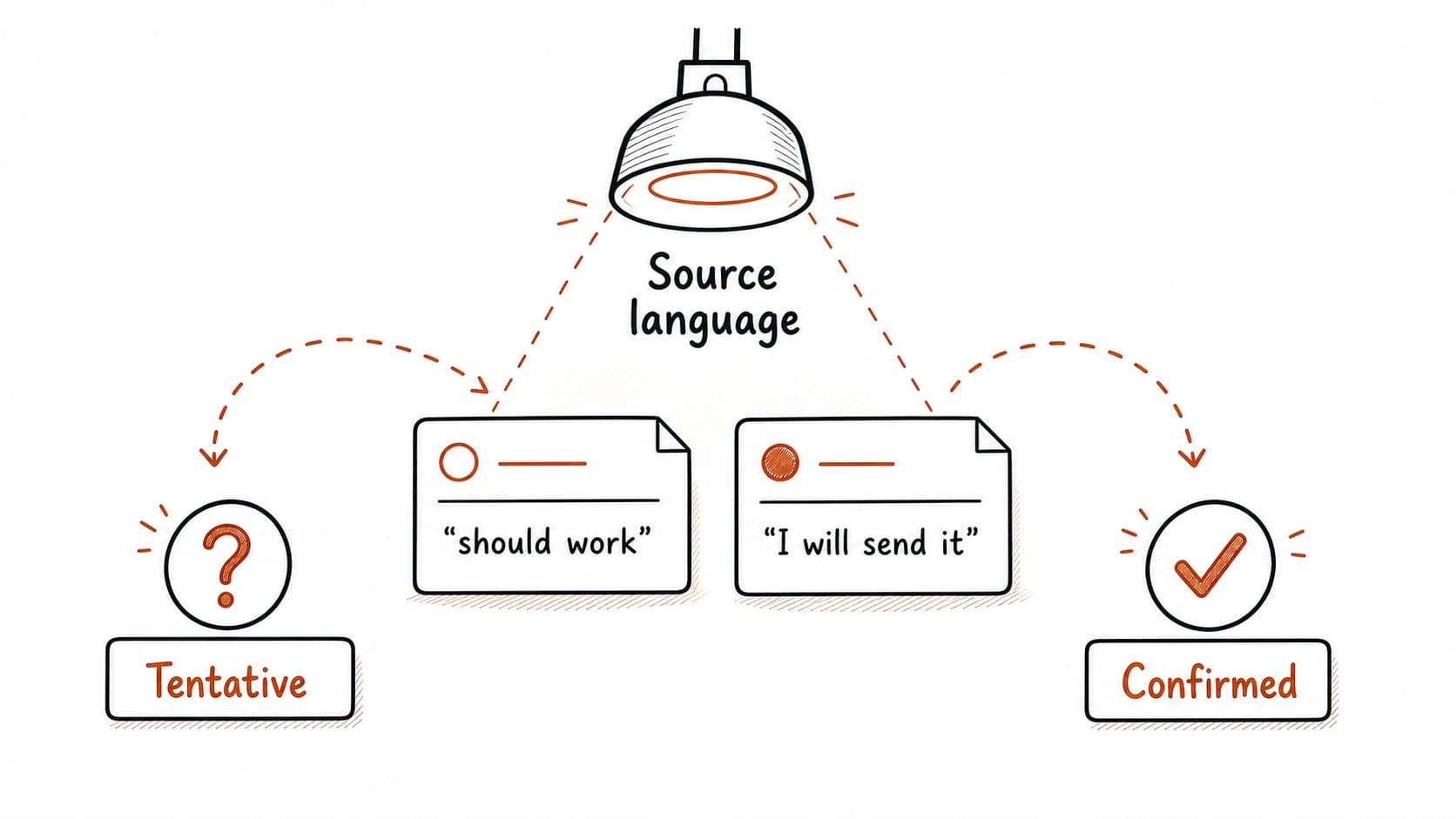
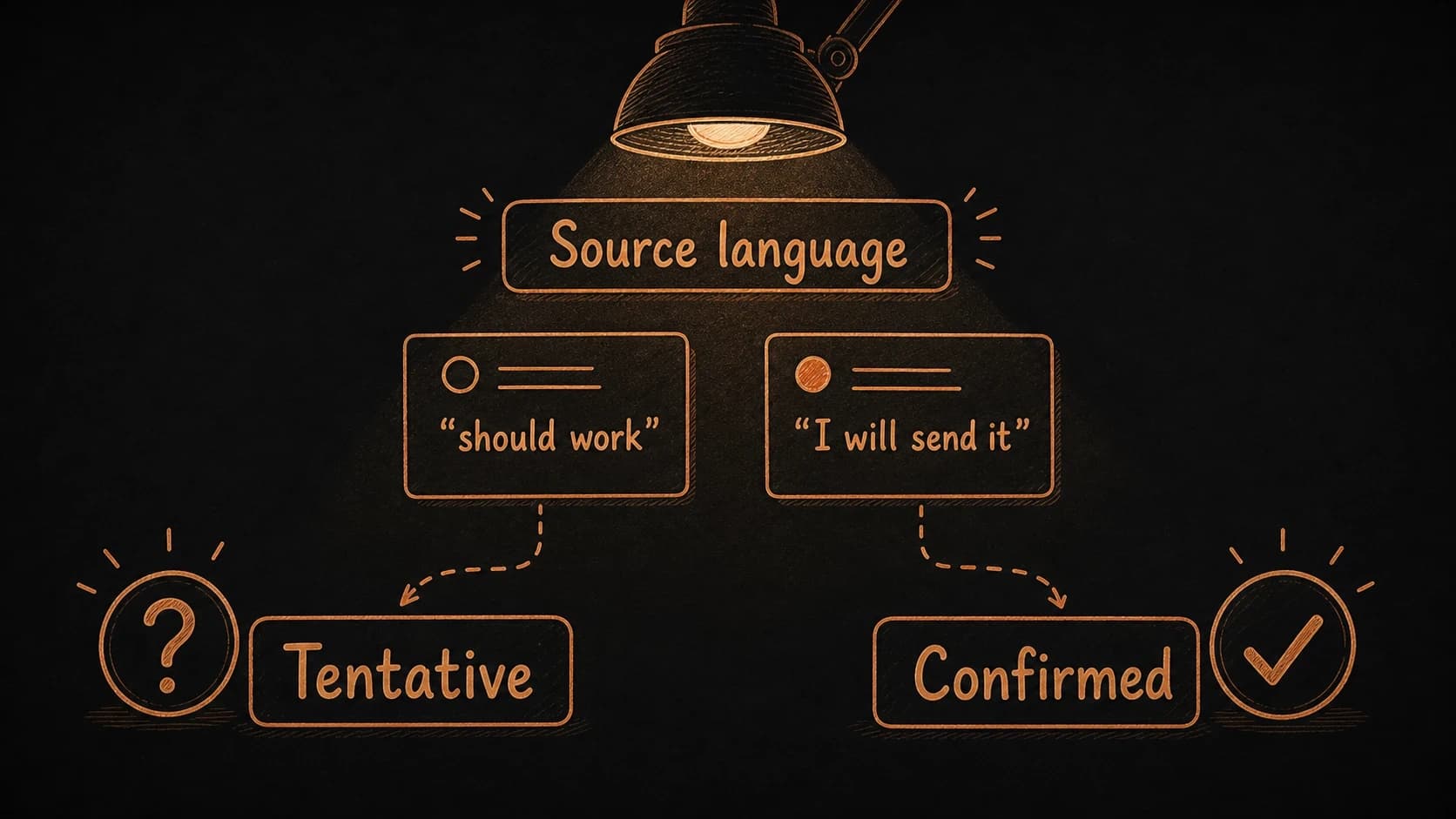
The email says "Friday should work." The assistant reads this as a confirmed deadline and creates a task with Renee as the owner and Friday as the due date. You review the task list and see "Renee: draft agenda, due Friday," which looks authoritative. But the source language was tentative. Nobody explicitly committed.
This happens whenever the assistant upgrades tentative language into firm commitments. "We should probably" becomes "we will." "I'll try to get this done" becomes a calendar event. "That sounds reasonable" becomes an approved decision. Each upgrade is small, but the accumulated effect is a task list full of obligations nobody agreed to.
The fix: when the assistant proposes a , require it to quote the source language. If the source says "should work," the record should say "tentative." If the source says "I will send this by Friday," the record can say "confirmed." The source language governs the commitment strength.
Ambition example: a forgotten surfaces after six weeks
In March, you promised a colleague you would review their draft before the April presentation. The promise lived in a meeting that entered your and was eventually organized into a record: "Review Amir's presentation draft before April 12."
Six weeks later, the flags the as overdue. You had forgotten it. Without the , the promise would have evaporated. With it, you can open the original , confirm you made the commitment, check whether the presentation date has changed, and act before the relationship is damaged.
This is the kind of return that makes the system worth maintaining. One recovered can justify months of review effort.
Turn a sourced answer into follow-through
Claude reads a retrieved answer and proposes decisions, tasks, and follow-ups. You approve what moves.
This chapter is done when one sourced answer leads to a you trust. You should know which decision is approved, which task is proposed, who owns the follow-up, whether the language was firm or tentative, and what still needs confirmation.