Find Where Your Sources Disagree
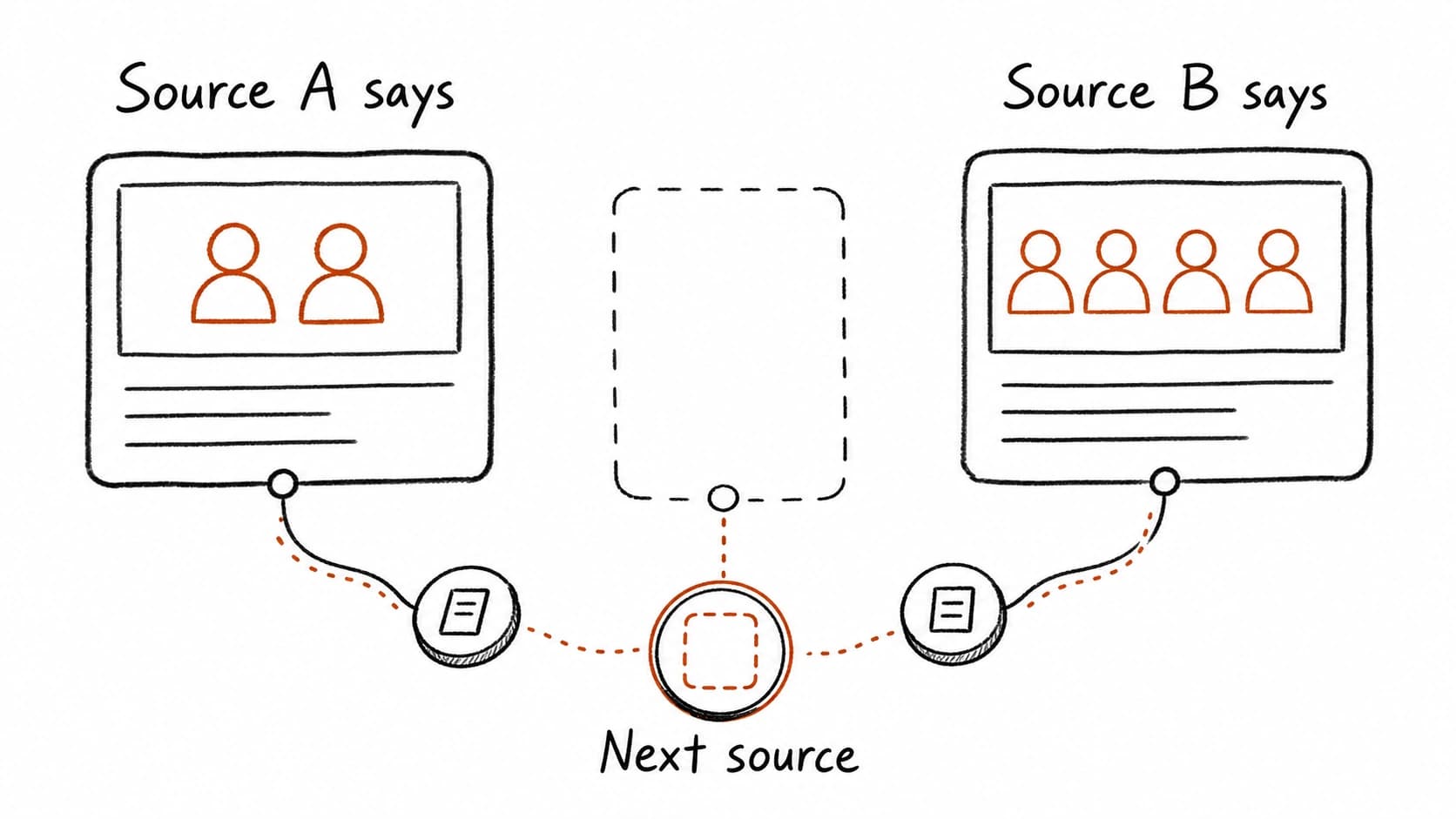
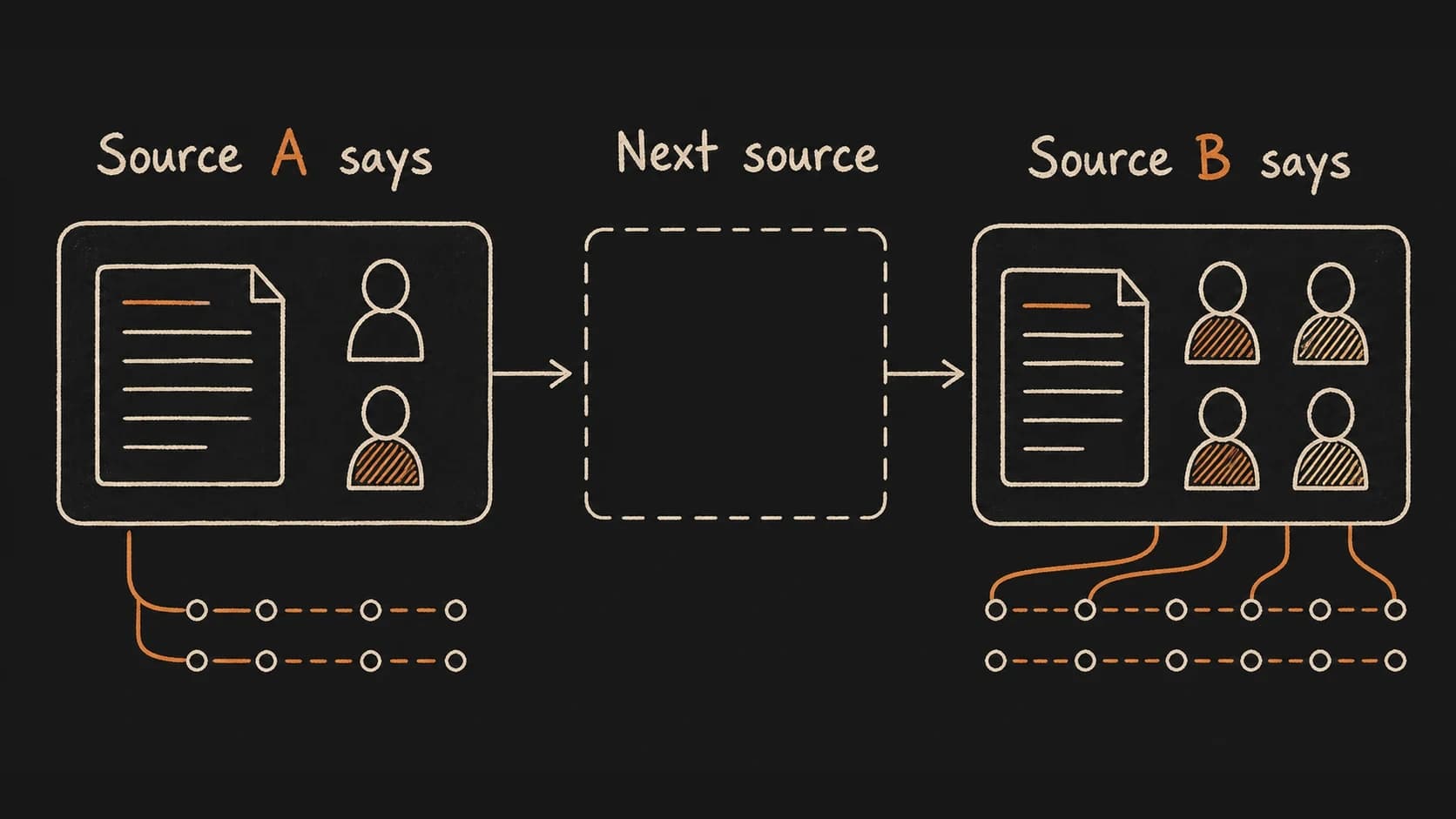
The chapter compared three records and found a supported theme, a contradiction, and a gap. The contradiction was between the approved two-client scope () and the suggested four-client expansion (follow-up email). The synthesis report named the conflict and proposed a resolution question. This chapter turns that one finding into a reusable skill: mapping a contradiction between sources, tracing which source currently governs, and naming what would settle the disagreement.
Contradictions are where the earns its maintenance cost. A single source gives you a clear answer. Two sources that agree give you confidence. Two sources that disagree give you a question you might not have noticed. Catching that question before you act on the wrong source is the payoff of keeping records current and cross-referenced.
A contradiction is two checked sources claiming different things about the same fact
The word matters. A contradiction is not a vague disagreement in tone or emphasis. It is two specific claims about the same fact that cannot both be true at the same time. The says the pilot scope is two clients, while the email says four. Both records have been reviewed and both cite real sources, yet one of them governs the current state of the project; the other needs to be updated, overturned, or confirmed.
Use case: map the pilot scope contradiction
Start with the two sources that disagree. The from May 8 says the team approved a two-client pilot. The follow-up email from May 9 says the client asked about expanding to four. Both sources have been reviewed. Both are in the system. The contradiction has been noted in the report. Now map it.
Which source currently governs? The carries formal approval by team consensus. The email carries a client request without team sign-off. Until the team formally responds to the expansion request, the meeting record governs. The email is an indicator that the scope may change, not evidence that it already has.
What would settle the disagreement? A new source: the team's response to the client's expansion request. If the team agrees, the decision ledger gets a new entry overturning the two-client scope. If the team declines, the email becomes a historical note. If the team defers, the contradiction remains open with a review date.
Three resolution paths for a contradiction
Every contradiction resolves in one of three ways. Mapping which resolution applies tells you what to do next.
Cross-project contradictions reveal hidden dependencies
The chapter described a cross-project finding: the pilot start date (May 20) conflicted with a compliance deadline (June 1, all client-facing processes must comply before launch). Neither record mentioned the other. The contradiction only appeared when the synthesis layer compared dates across projects.
Map this contradiction the same way. Claim A: the pilot starts May 20 (source: project brief). Claim B: new data handling rules take effect June 1, all client-facing processes must comply before launch (source: compliance note). The claims do not directly contradict each other, but together they create a dependency: starting the pilot on May 20 means running a client-facing process under old rules for 11 days. The next source: confirmation from compliance about whether the pilot must comply before launch or can be grandfathered under the old rules.
Cross-project contradiction maps are the most valuable artifacts because they catch collisions nobody was watching for. The pilot team and the compliance team were both doing their jobs correctly. The collision was invisible until someone compared the dates.
Failure path: treating every disagreement as a contradiction
Two sources can say different things without contradicting each other. The says "we discussed starting in May." The project brief says "target start date: May 20." These are at different levels of specificity, but they do not conflict. A contradiction map is useful only when the claims cannot both be true. If the sources are merely imprecise, the fix is to update the less specific record, not to create a contradiction entry.
Save the contradiction map for real conflicts. Overusing it creates a register full of minor discrepancies that dilute the value when a genuine collision appears.
Map one contradiction between two sources
Claude finds where two sources disagree, traces which one governs, and names what would settle it.