Synthesis: Connections Across Documents
Separate records tell you what happened; tells you what it means together
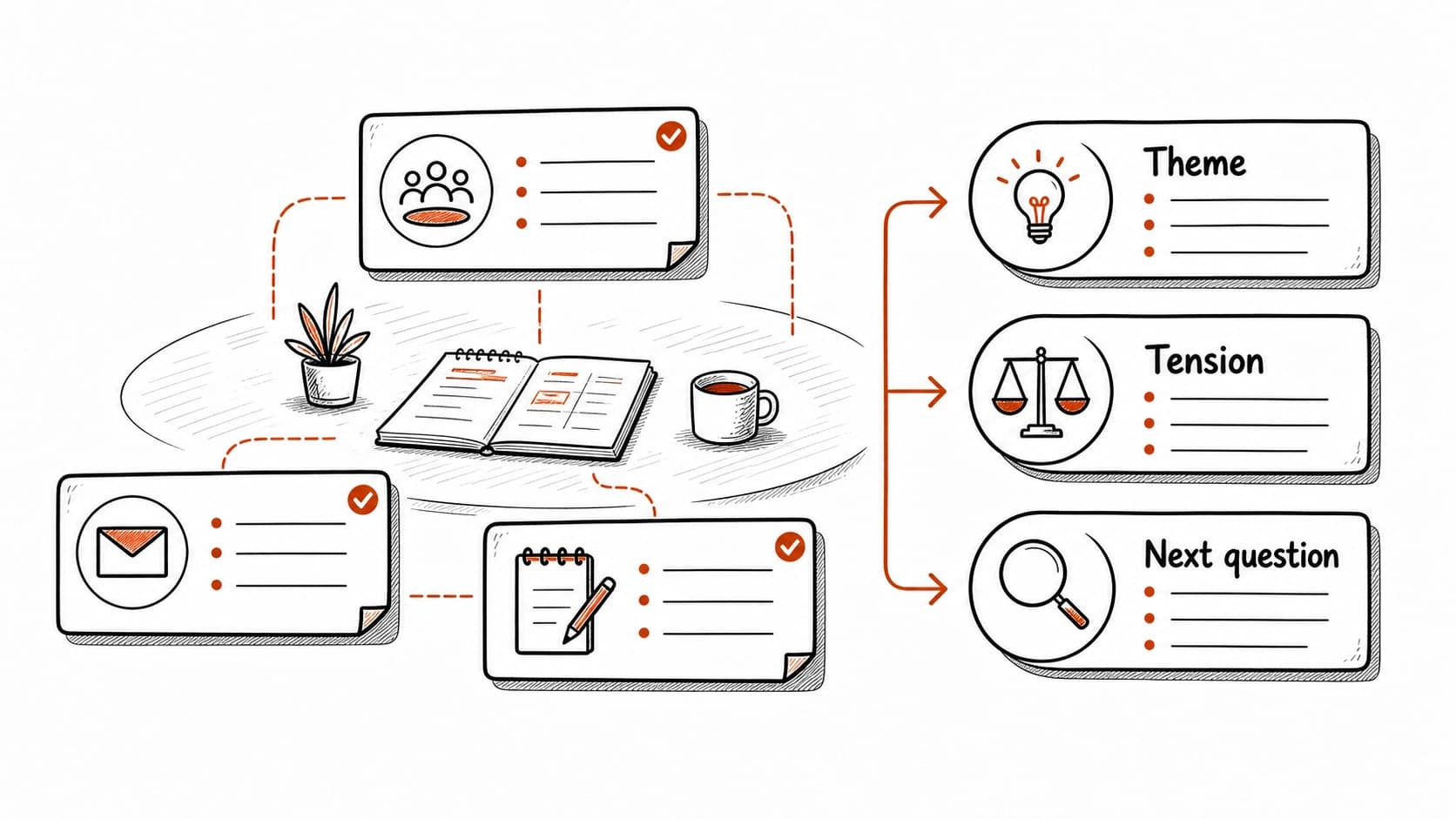
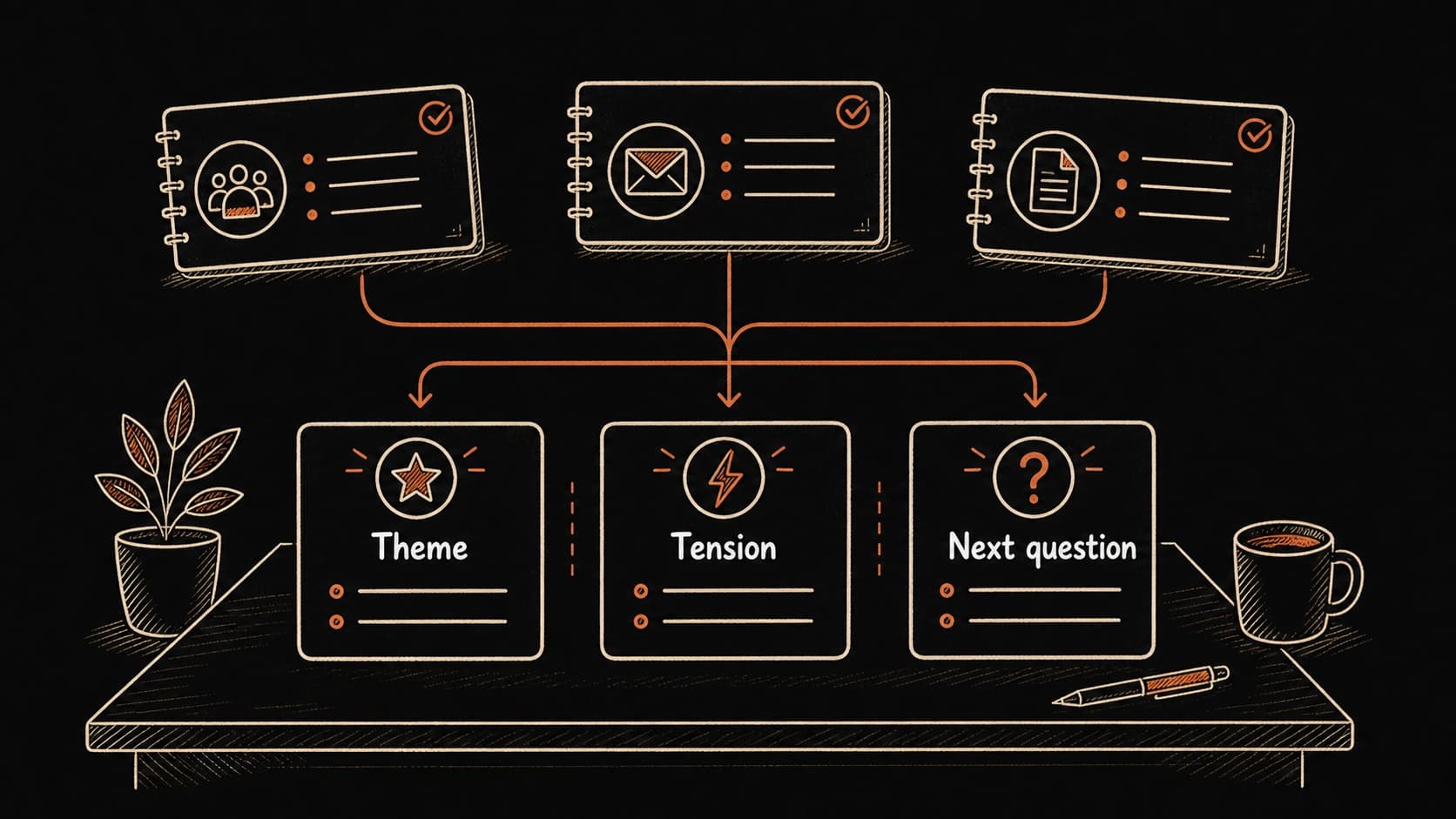
The confirmed that the Thursday call records are current. The pilot decision, Renee's , and the open legal question all survived inspection. Now lay them side by side and see what they say together. works across records. It asks what reviewed sources say when you compare them, and whether the pattern they reveal is grounded or fragile.
Until now, trust has been about individual records: is this source raw, organized, or reviewed? raises a different question. Two reviewed records can each be reliable on their own and still disagree when compared. That disagreement does not mean either record is wrong. It means the system caught something that needs your judgment, and catching it is exactly what makes the effort of maintaining the system worthwhile.
When two sources disagree, begins
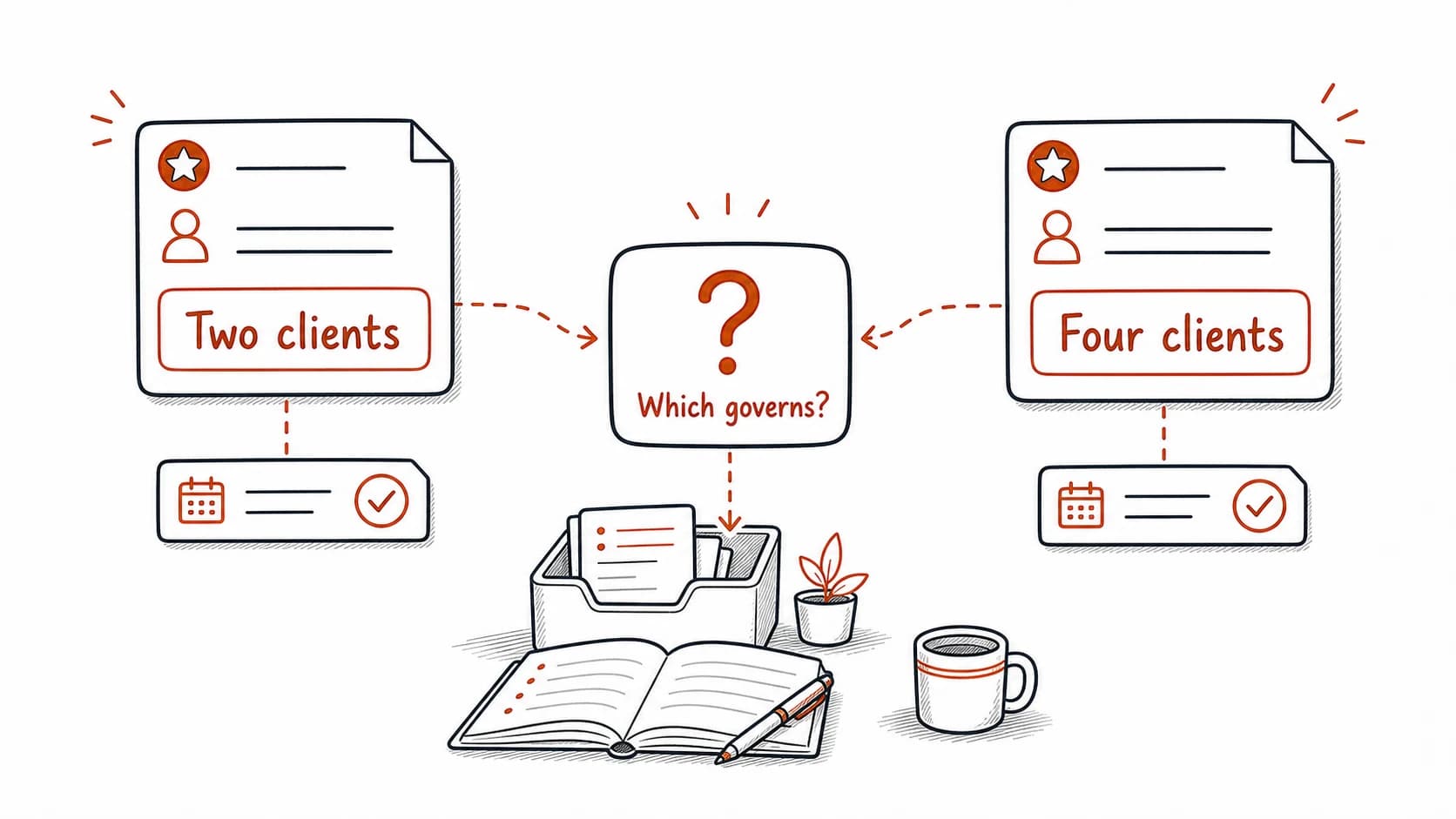
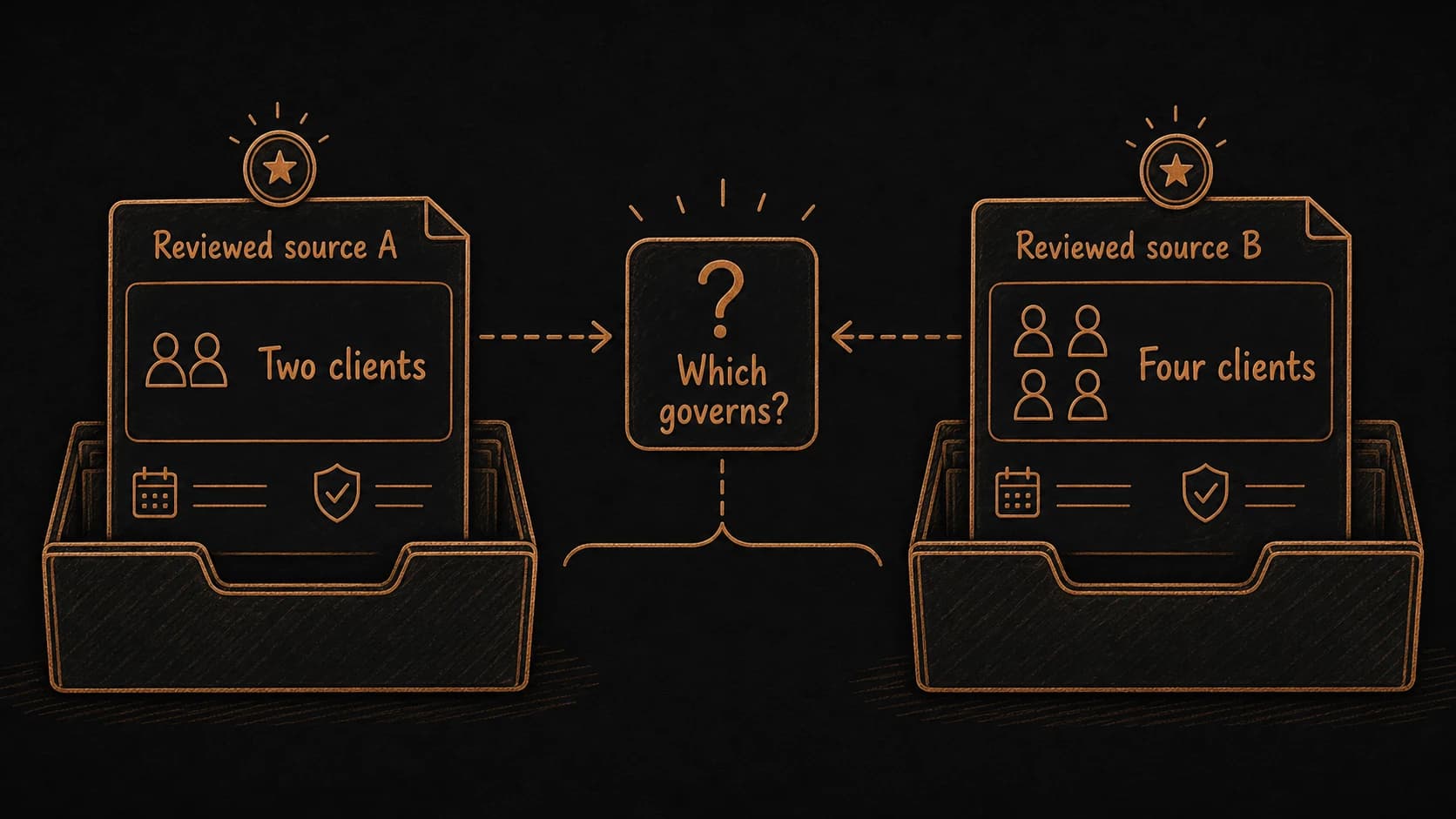
The chapter surfaced a conflict that a single-record view could not catch. The approved said two-client pilot. A later email mentioned four clients. Both sources were individually trustworthy. The disagreement only appeared when returned both with their dates and trust states visible.
This two-source disagreement is the smallest useful : comparing two records that carry conflicting claims about the same fact. Before this chapter asks you to compare three or five sources, practice with two. The question is simple: the meeting says two clients, the email says four, and both are reviewed. Which one governs? The answer requires checking dates, , and whether the later source was a formal decision change or an informal suggestion. That judgment call is yours, and it is the core skill synthesis depends on.
Use case: three sources, three patterns, one report
Start with three reviewed records from the same project. The Thursday client call has accumulated enough material by now: a from May 8, a follow-up email from May 9, and a project brief updated during the . Place them side by side and ask what they say together.
Three patterns emerge from this comparison. First, a supported theme: Renee owns the draft agenda, confirmed across all three sources. Second, a contradiction: the approved scope is two clients, but the email introduces four. Third, a gap: the start date depends on legal review, which no source has resolved. Each pattern carries a different confidence level and requires a different response.
Supported themes rest on multiple independent sources
A theme is supported when two or more reviewed records point to the same conclusion independently. Renee's ownership of the draft agenda appears in the meeting (spoken ), the follow-up email (written confirmation), and the project brief (documented status). Three independent sources agreeing raises confidence enough to act: you can plan around Renee delivering the draft without further verification.
The strength of a supported theme depends on the independence of the sources. Three records that all quote the same original meeting are one source repeated, not three sources agreeing. Check whether each source adds new evidence or merely echoes what another already said.
Contradictions reveal decisions the system caught before you did
The pilot scope shows a contradiction. The meeting approved two clients. The email mentions four. The project brief still says two. If you read any one record alone, the answer looks clear. Reading them together reveals that the scope may have changed in a conversation the system captured before you processed it.
This is the core value of at scale. The contradiction does not mean the is wrong or the email is wrong. It means the approved decision and the client's expectation have diverged, and someone needs to resolve the gap before the pilot starts. The synthesis report should cite both sources, name the conflict, and propose a resolution question: "Has the pilot scope formally changed from two clients to four?"
When the assistant finds competing claims across reviewed records, the report should show both with their source trails, dates, and trust states. The reader decides which source governs. The assistant proposes; the reader resolves.
Ambition example: a cross-project contradiction surfaces a hidden dependency
becomes powerful when it works across projects. You have been running the client onboarding pilot in one project folder and a compliance review in another. During a synthesis pass, the assistant compares a reviewed from the pilot ("start onboarding May 20") with a reviewed compliance note ("new data handling rules take effect June 1, all client-facing processes must comply before launch").
Neither record mentions the other. The pilot team does not know about the compliance deadline; the compliance review does not reference the pilot. The layer surfaces the dependency: starting the pilot on May 20 means running a client-facing process for 11 days under old data handling rules. Without synthesis, this collision would surface only when someone in compliance reviews the launch announcement, likely too late to adjust the timeline gracefully.
Cross-project is where the system earns the investment of and careful source trails. The individual records were each trustworthy. The connection between them was invisible until the system compared dates, owners, and project scopes side by side.
The report itself needs review, even when every source behind it is solid
Each of the three records in the comparison above was reviewed and approved. Their individual trust states are solid. The report, by contrast, is new. It proposes a pattern that no single source contains. The theme, the contradiction, and the gap are interpretations drawn from comparing records, and interpretations can be wrong even when every underlying source is right.
Treat output the same way you treat any proposed record: as material that needs review before it becomes trusted. A supported theme backed by three sources is strong enough to act on after a quick check. A contradiction needs resolution before anyone acts. A gap needs a new source before the pattern can be confirmed.
When you trust the report without checking the sources
reports sound authoritative. "Three records suggest the onboarding timeline is at risk" reads like an executive summary, and that is exactly the danger. If the reader accepts the report without checking the source trails, the system has shifted from supporting judgment to replacing it.
The danger is trusting a pattern because the report looks polished, without verifying how many sources stand behind it. A pattern drawn from one email and two echoes of that email is a one-source finding dressed in a three-source report. The fix: require the assistant to mark every finding with its confidence level and the number of independent sources behind it. If a finding rests on a single source, it should say "tentative, one source" in the report.
The deeper risk is subtler. Over months, a reader who consistently accepts reports without checking sources will start trusting the system's interpretations as facts. The system becomes a black box you stop questioning. The should surface connections for you to evaluate; it should never become a replacement for your own reading of the evidence.
Evidence, interpretation, and next source should stay visibly separate
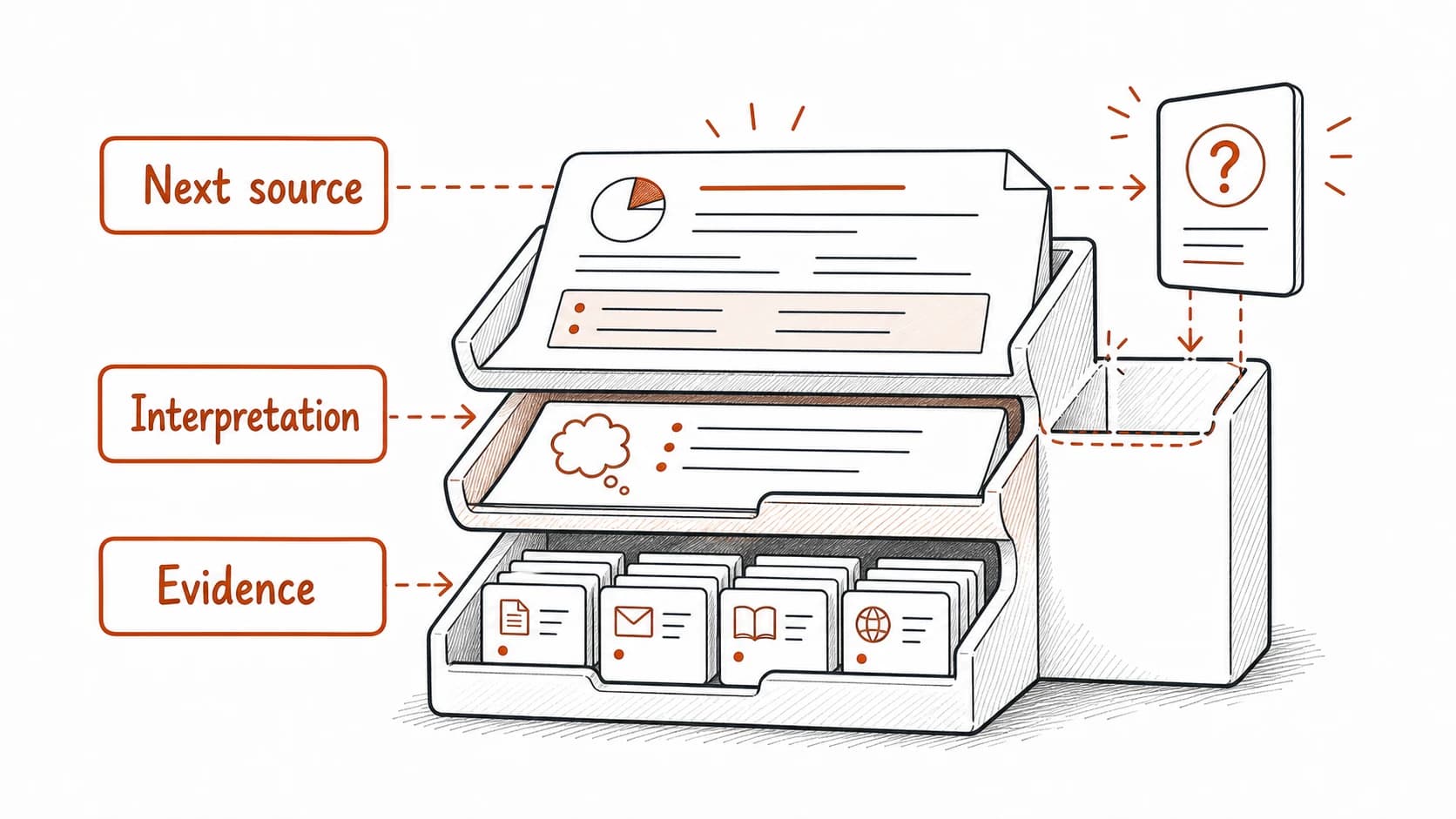
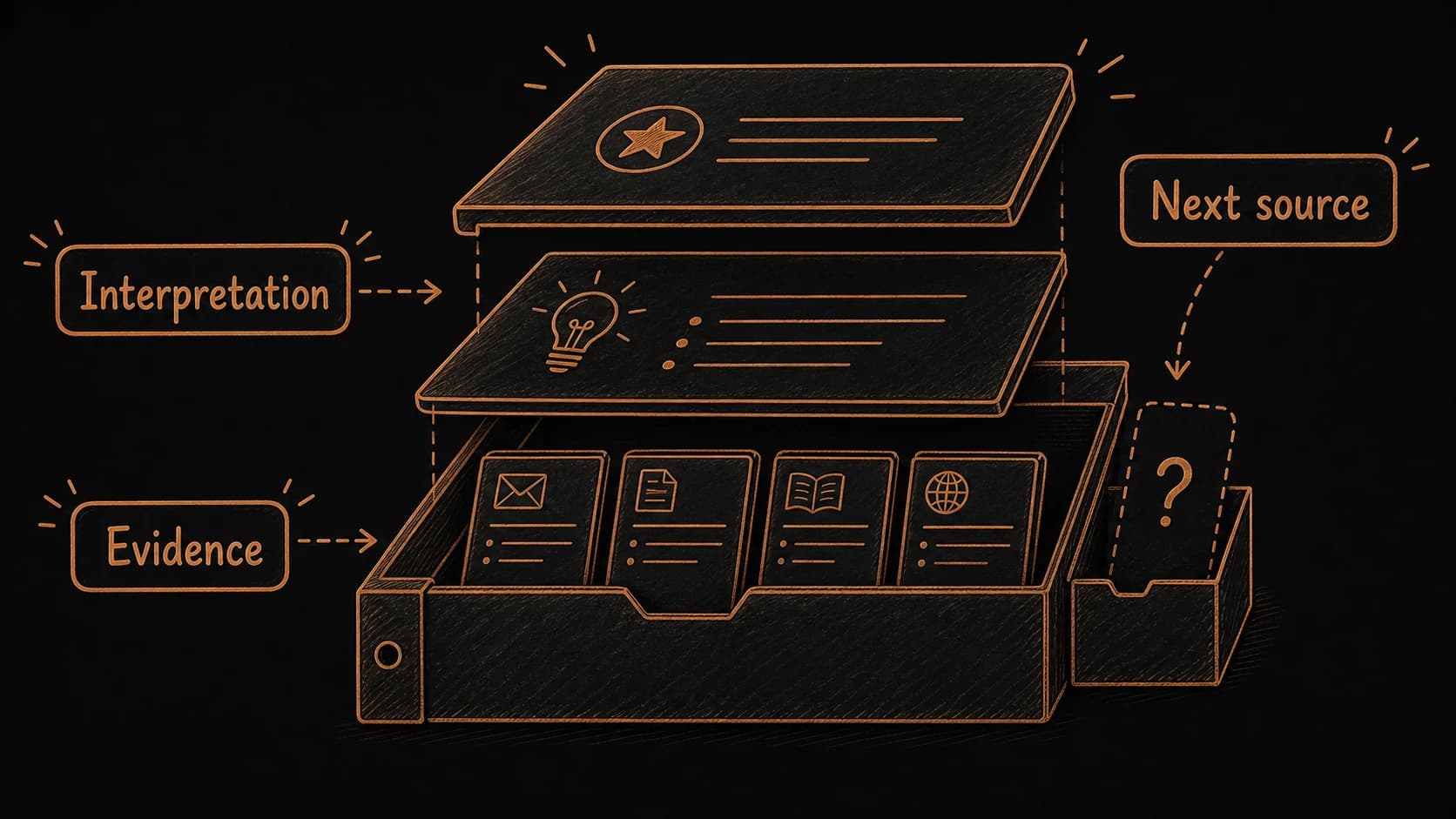
A useful report has three layers, and the reader should be able to distinguish them at a glance. Evidence is what the sources say, quoted or linked. Interpretation is what the assistant proposes those sources mean together. Next source is the record that would strengthen, weaken, or settle the interpretation.
When these layers blur, the reader cannot tell whether a finding is grounded or invented. "The timeline is at risk" could be a direct quote from the project brief, an inference the assistant drew from comparing dates, or a guess based on general patterns. The report should make the difference visible so the reader knows what to verify.
Compare reviewed records for synthesis
Claude reads records across projects and surfaces patterns, contradictions, and gaps no single source reveals.
The project is done when a comparison across three records reveals something you would not have seen from reading any single source alone. You should be able to identify which findings are supported, which are contradictions that need resolution, and which are tentative patterns resting on too little evidence to trust.