Let the Journal Notice Patterns Safely
A journal becomes powerful when the patterns are visible across weeks
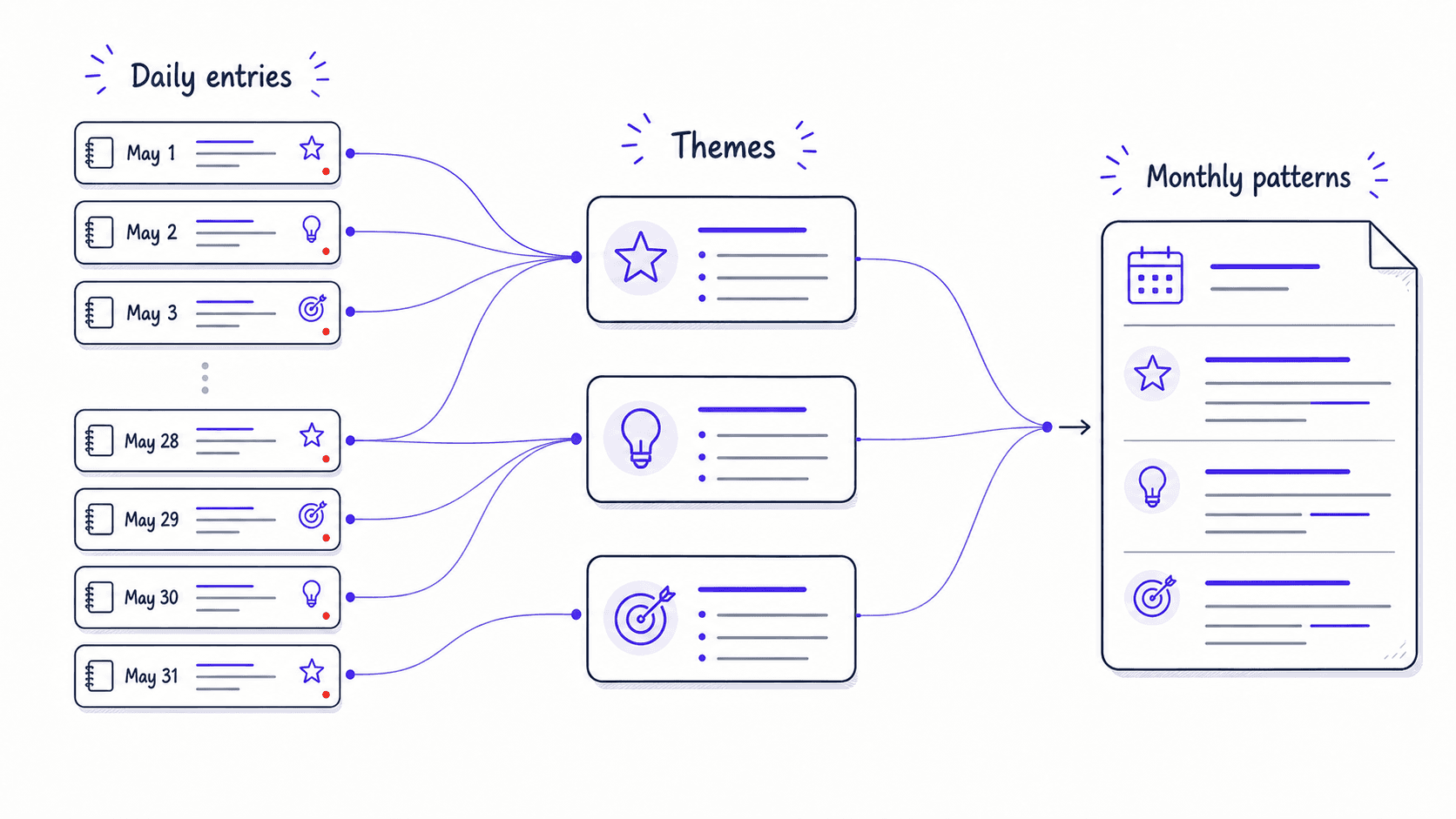
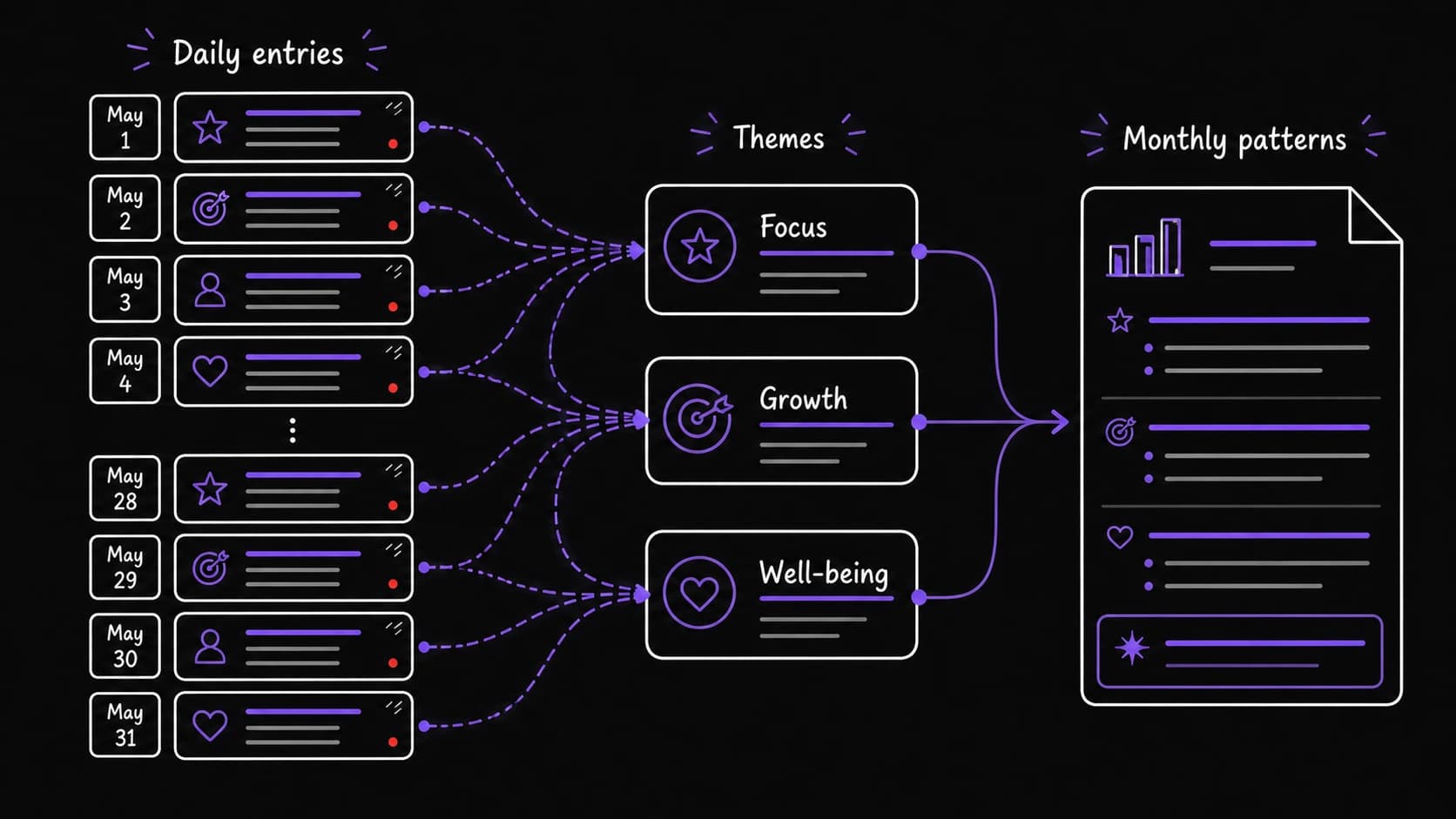
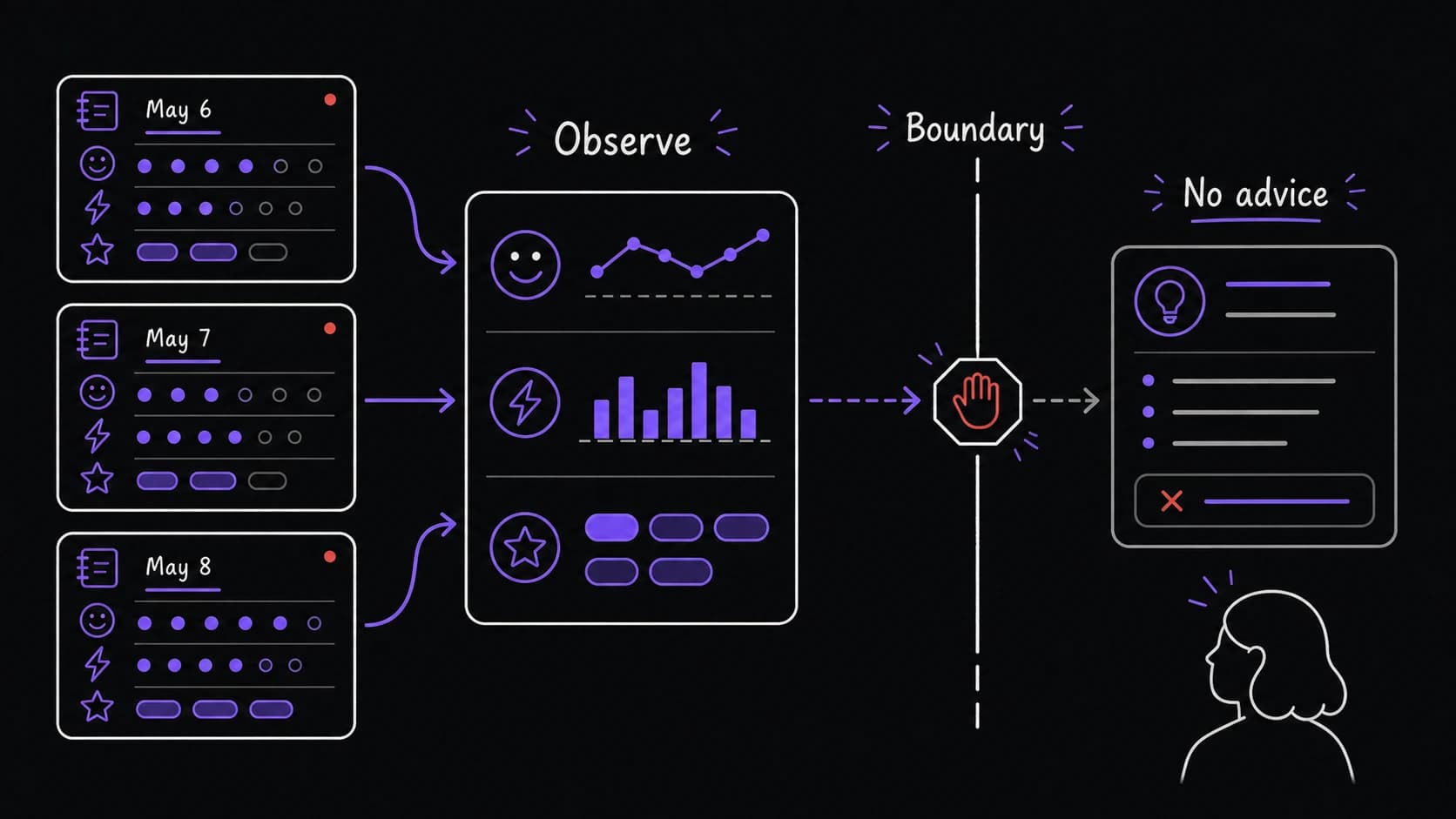
You write freely. The assistant extracts structure: themes mentioned, people referenced, projects discussed, energy level reported, and trend. No single entry reveals a pattern. A month of entries does.
After thirty entries, the system can show: 'Your top themes this month were work transition, sleep quality, and your relationship with a specific project. Your trend declined over the past two weeks. The project you mentioned most was Project Atlas. The life area you mentioned least was health.'
When you review the monthly summary and see that 'deadline pressure' appeared in four entries, you have a concrete lead to examine in your next . These recurring themes are invisible in any single entry. They emerge from the aggregate. Your writing is the input, and the themes the assistant extracts are the output.
The energy check-in takes ten seconds and pays off everywhere
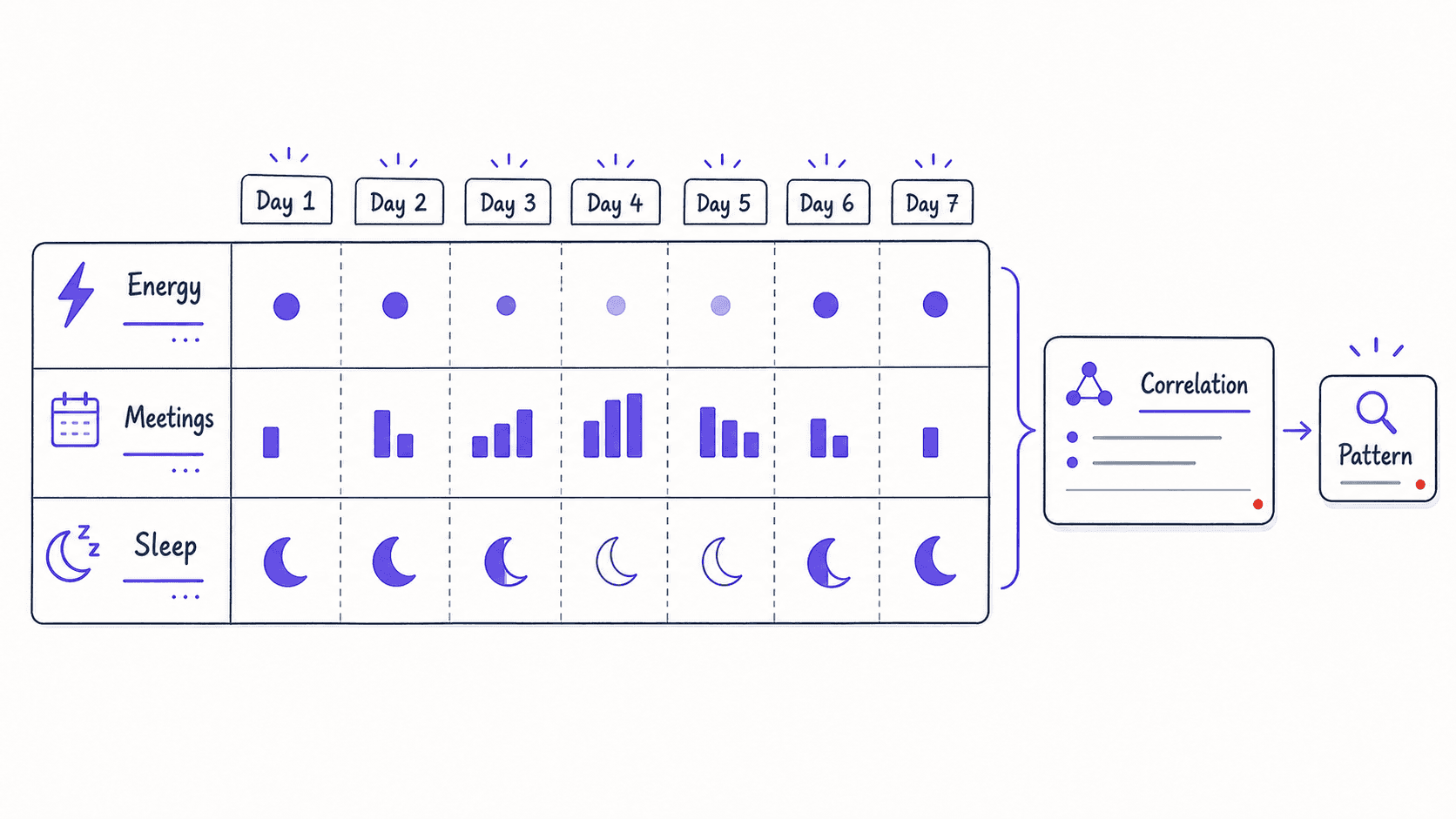
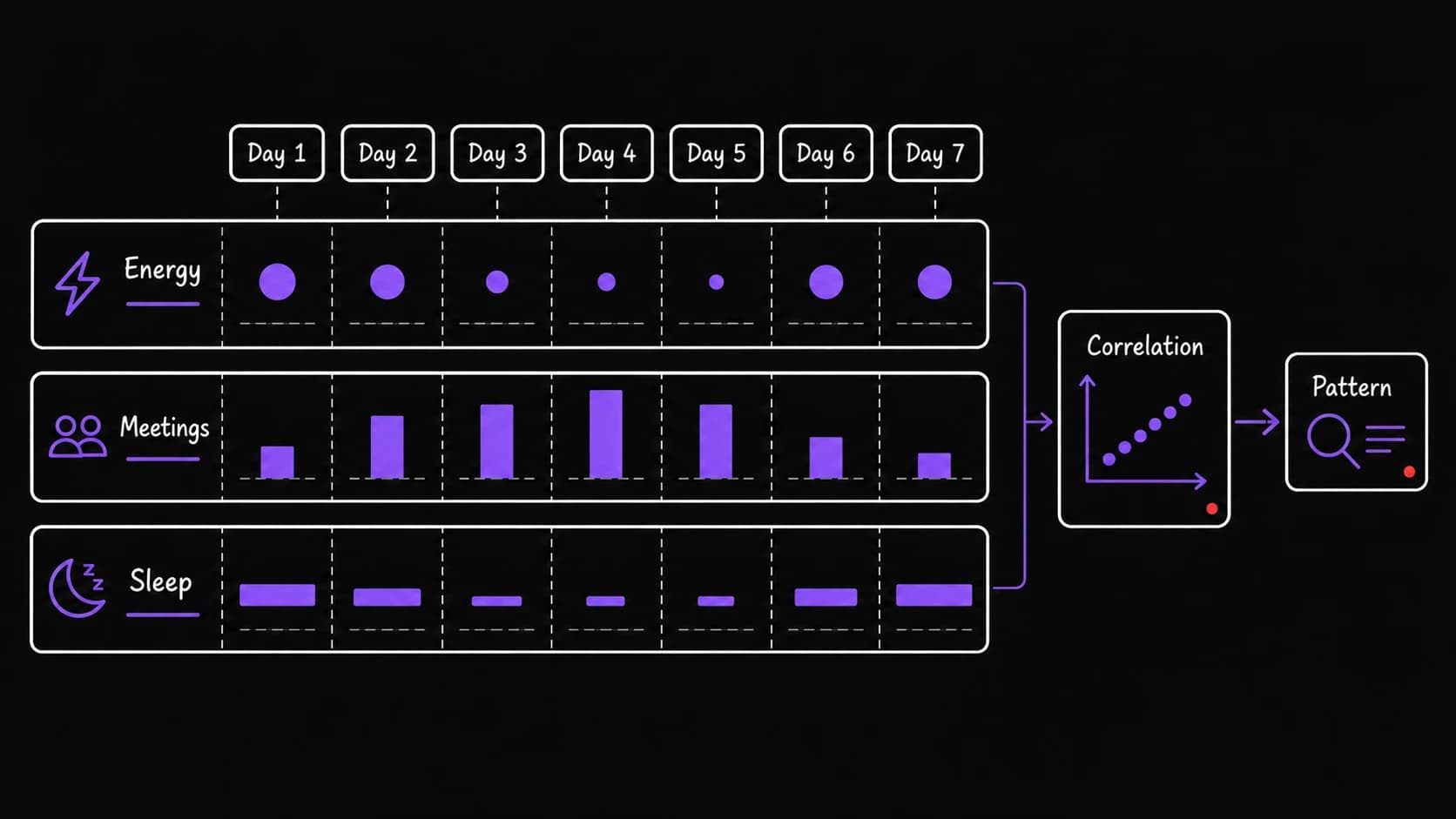
Each journal entry includes a ten-second energy rating: how is your energy right now, on a scale of 1 to 5? Logged at a consistent time each day (morning, evening, or both), this single data point becomes powerful when correlated with everything else in the system.
'Your energy is 2 or lower on 80 percent of days following less than 6 hours of sleep and more than 4 meetings.' 'Your highest-energy days consistently have morning exercise and no meetings before 10 AM.' 'Tuesdays with 4 or more meetings consistently correlate with Wednesday low-energy journal entries.'
This data feeds the task (do not schedule deep work after low-energy days), the (energy audit section), and the monthly patterns summary. The ten-second check-in produces months of actionable data.
The question-back pattern deepens each entry without feeling like therapy
After you write a journal entry, the assistant asks one follow-up question. The purpose is deepening: helping you think further about something you already said.
'You mentioned feeling stuck on the project. What would unstuck look like?' 'You wrote about wanting more time for creative work. What would you give up to get it?' 'You mentioned three people today but no projects. Is that unusual for you?'
Your answer to the follow-up often contains more insight than the original entry. The question-back is optional. You can skip it on days when you do not feel like reflecting further. Over time, the habit produces journal entries that are richer than what you would write unprompted.
Thread detection finds recurring concerns you might not recognize as connected
The assistant notices themes that recur across entries. 'You mentioned not having enough time for music on March 3, March 17, and April 2. This seems important to you but has not resulted in any action items. Do you want to make it a priority?'
For example, if 'career change' appears in three entries over two weeks, the assistant flags it as an emerging thread for you to review. A single mention is a thought. Three mentions across a month is a thread. The assistant shows you the threads so you can decide which ones deserve action.
The boundary between helpful and intrusive is yours to set
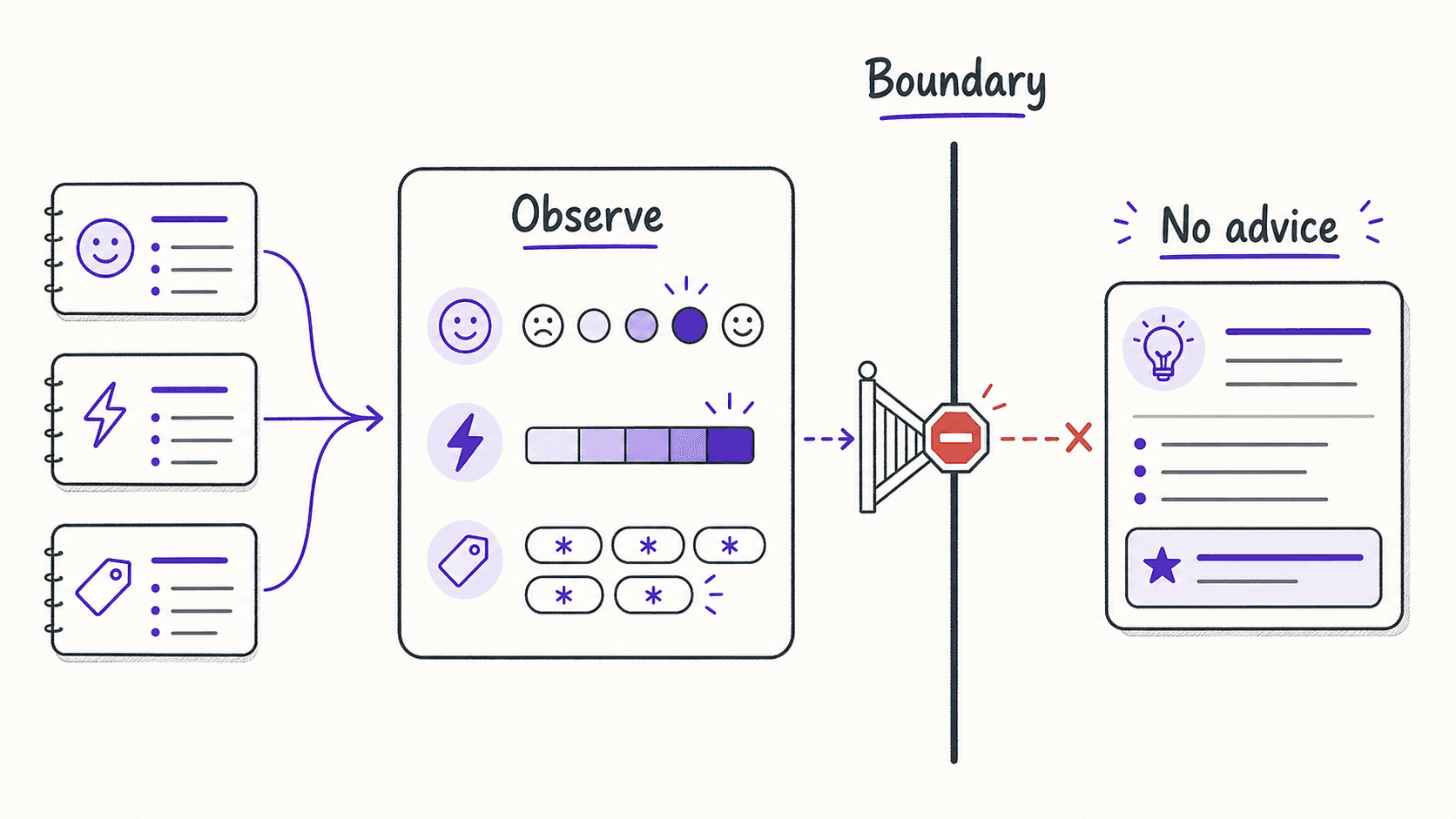
You control what the assistant analyzes. 'Extract themes and project mentions from my journal. Track energy ratings. Do not analyze my emotional state unless I specifically ask.' This boundary is a design decision, not a default.
The journal AI's job is to reflect, not advise. 'You have written about this concern four times in three weeks' is reflective. 'You should see a therapist' is advisory and out of scope. The assistant should never offer health advice, mental health recommendations, or unsolicited personal guidance. It surfaces patterns. You decide what they mean.
The monthly summary shows you what thirty entries reveal
After thirty entries, the system generates a one-page reflection: themes that dominated, patterns that emerged, projects that consumed the most mental space, people who appeared most, energy trends, and a question for the next month.
This summary tells you things about yourself you could not see in the day-to-day. The restlessness you felt was concentrated in the last week of every month. Your most positive entries clustered around weeks when you exercised three or more times. You stopped mentioning a friend in February and have not resumed.
The journal bridges naturally to the decision log
When a journal entry describes a dilemma, the system suggests: 'This sounds like it might be worth logging as a formal decision in your . Want me to create a decision entry from this?'
The cross- flow feels natural because it follows your own writing. You did not open the decision module and think 'what should I log?' You wrote about a dilemma in your journal, and the system noticed the decision embedded in the reflection.