Let the Week Inspect the System
The is where the whole system gets checked at once
Every other produces something for today. The morning brief covers your calendar. The email covers your inbox. The task list covers your priorities. The journal captures your reflections. The steps back. It reads from every module and asks: what happened? What was planned and did not happen? What should change?
This is the first that explicitly cross-references data from other modules. The review correlates tasks completed with journal , email volume with energy levels, meeting density with productivity, relationship health with calendar activity. These correlations are the payoff of the shared-memory architecture from the orientation chapters. They are impossible with separate apps.
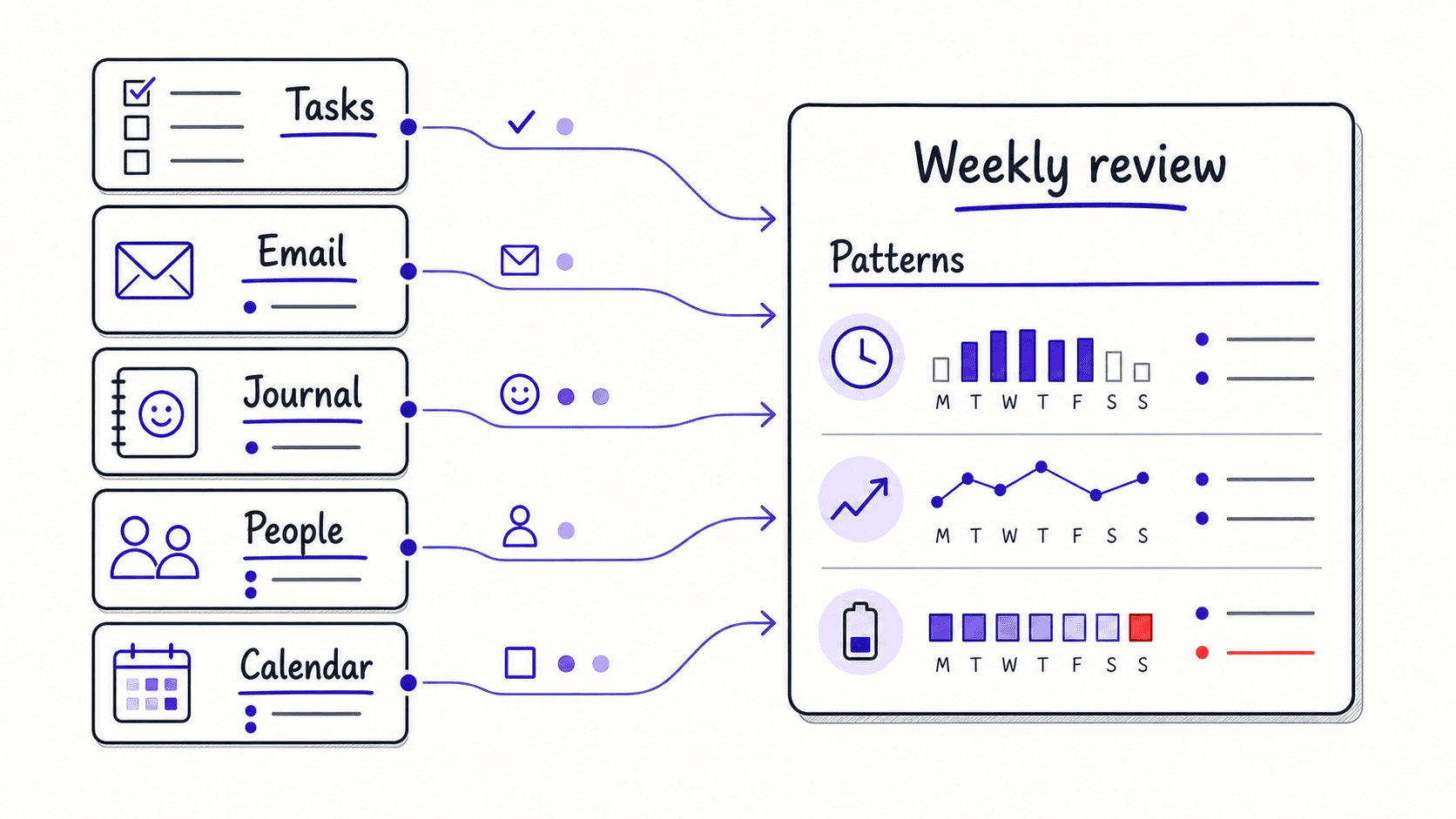
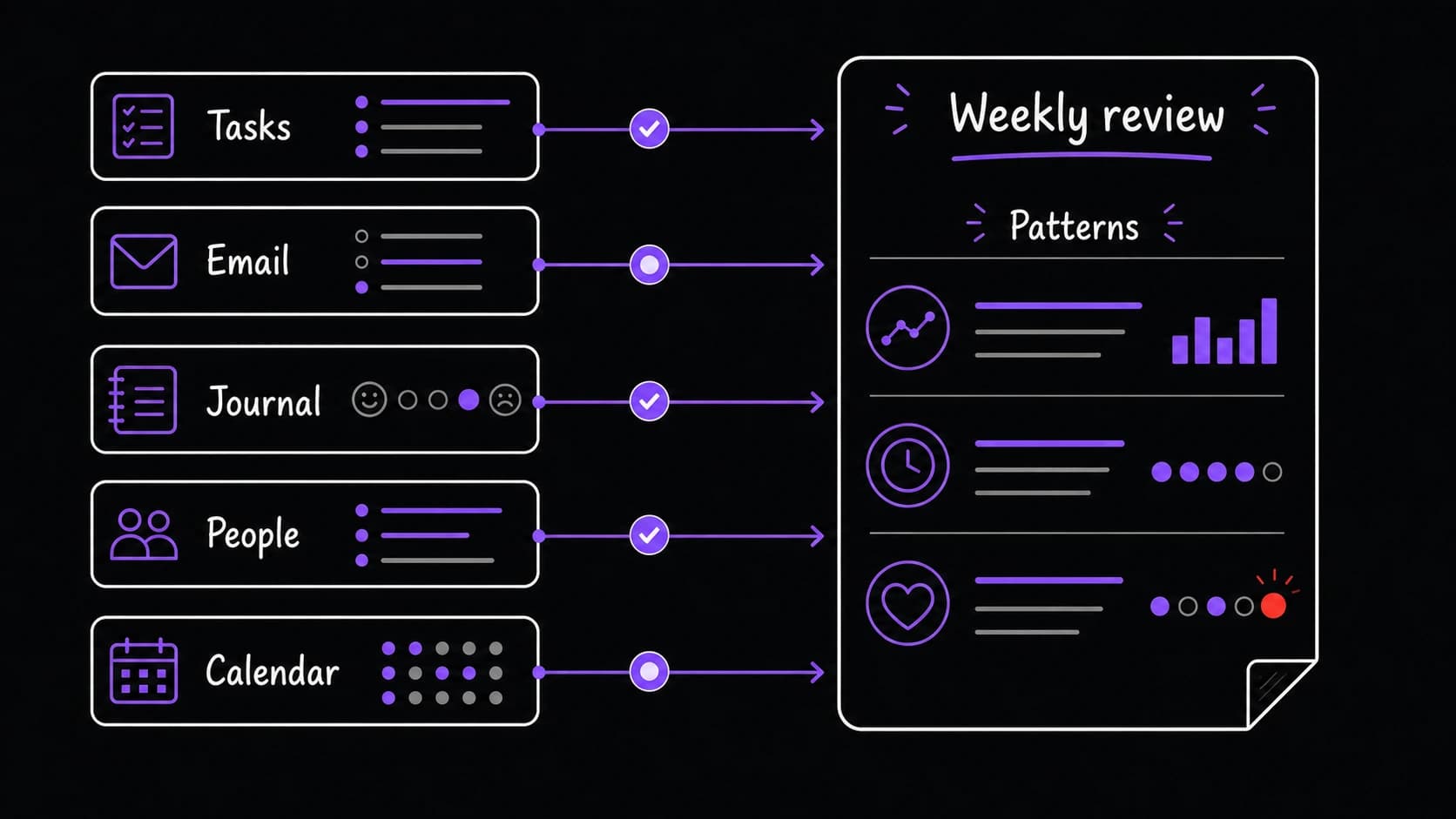
The done list comes first because people under-count their accomplishments
The review starts with what was accomplished, not with what is incomplete. People under-count their achievements. The system counts for them: meetings led, emails processed, tasks completed, words written, connections maintained, decisions made.
Seeing the done list first changes the emotional frame of the review. Instead of opening with guilt about the six tasks that slipped, you see the twelve tasks they completed, the twenty emails they processed, and the three relationships they maintained. The incomplete items still appear, but they appear in .
Structured prompts produce reflection that is useful instead of vague
The review is not an open-ended question like 'how was your week?' It asks specific prompts based on actual data.
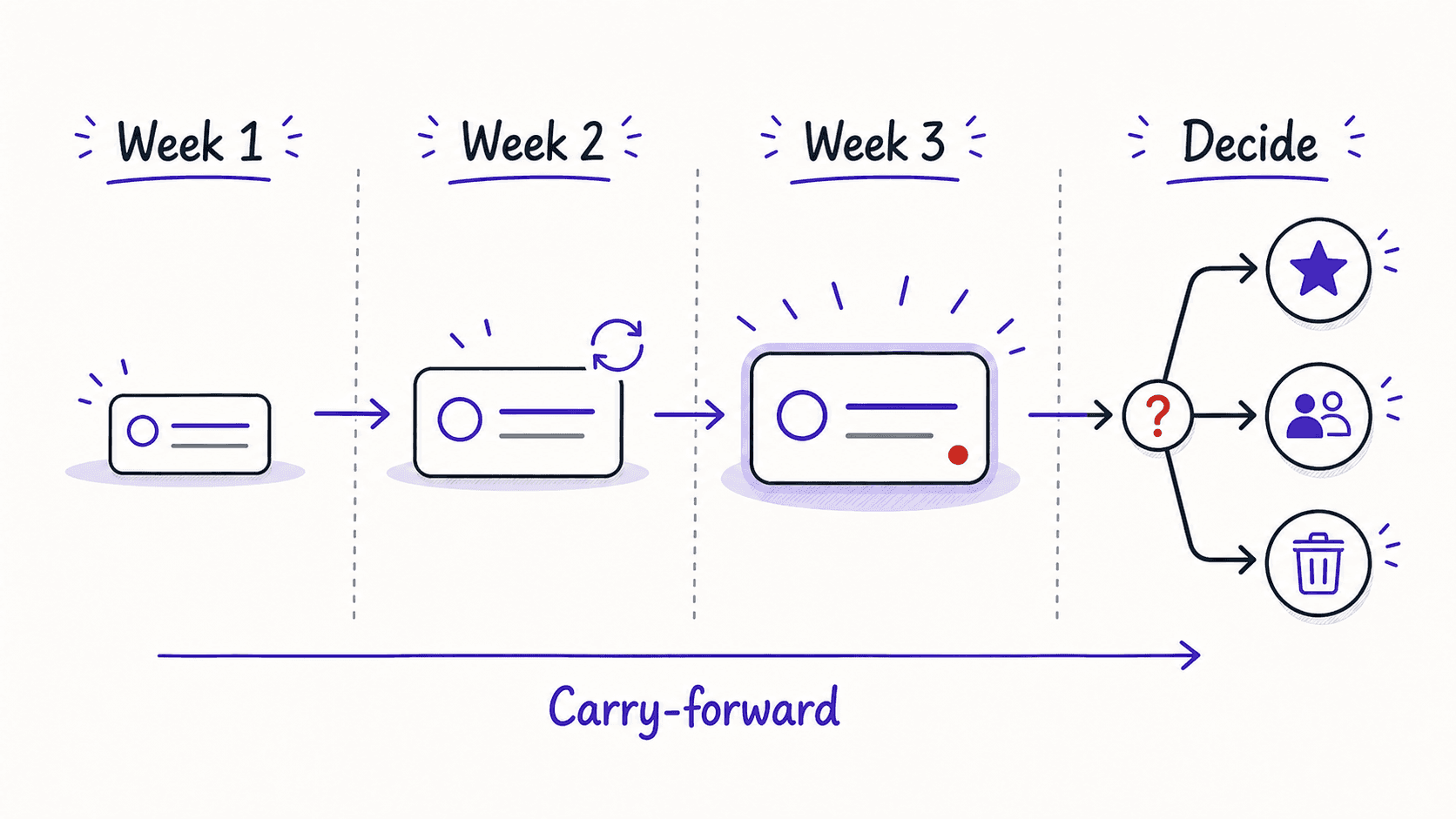
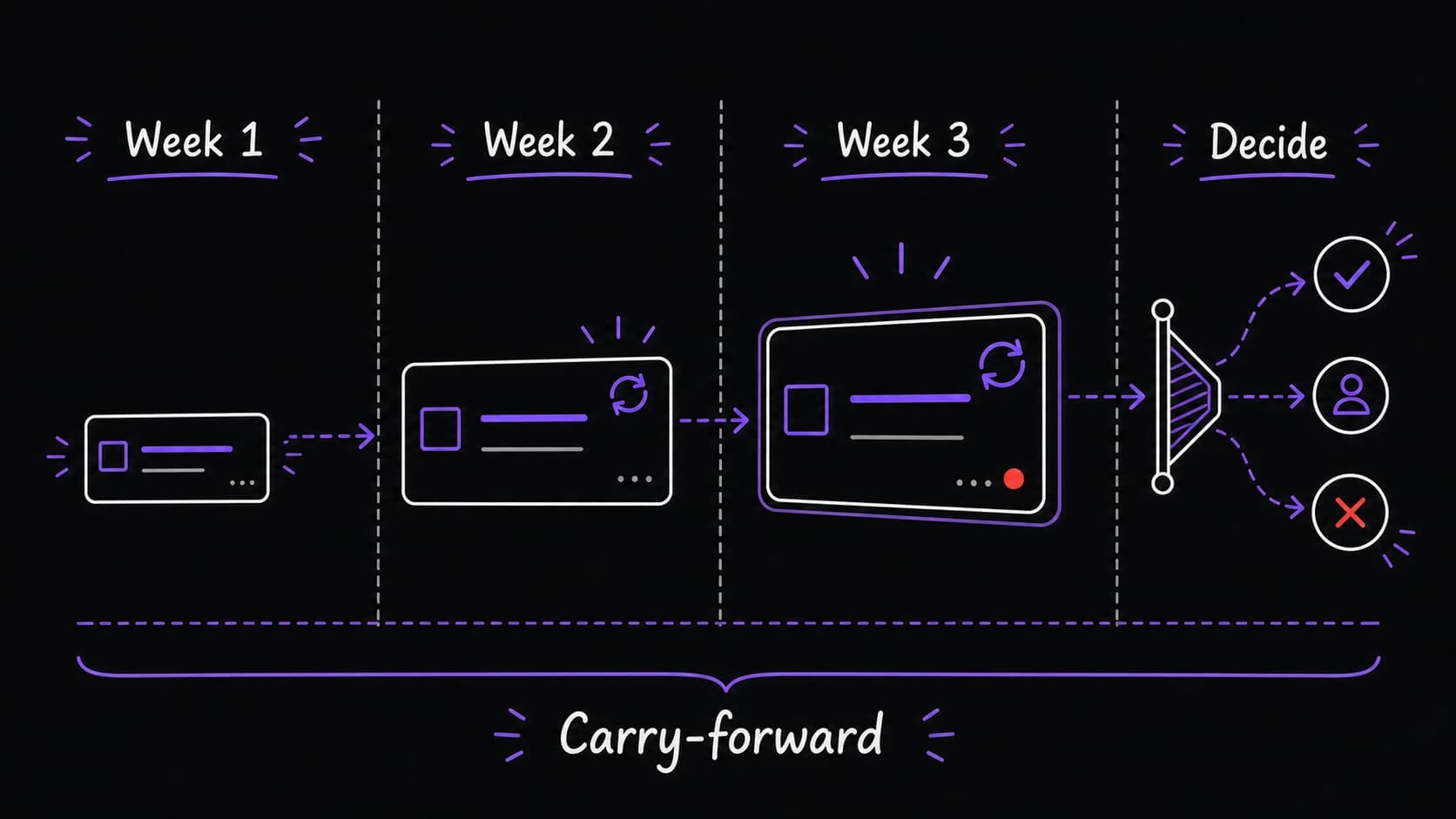
Carry-forwards get louder every week they repeat
Items that slip from one week carry into the next with increasing urgency. The system notices patterns: 'This is the third week that update portfolio website has appeared and not been completed. Should it stay on the list, be delegated, or be removed?'
When you review the task list in your weekly summary and find a three-week-old item, ask the assistant to flag it with a decision: renegotiate the deadline, delegate it, or drop it. If it has carried forward three times, something is blocking it. Name the blocker in the task notes and save an updated due date or remove the task entirely.
Three questions close the review and feed the next week
Every ends with three questions you answer:
- What is the one thing I want to make sure happens next week? The answer becomes Monday's top priority in the task .
- What should I stop doing? The answer updates the task 's rules. Tasks in the 'stop' category get flagged for removal or delegation.
- Who should I connect with? The answer updates the relationship 's with a specific name and action.
The answers feed back into the system. This is the loop: the review reads from every , produces observations and questions, and your answers update the modules for next week. The system learns from the review as much as you do.
The system health check catches drift before it becomes failure
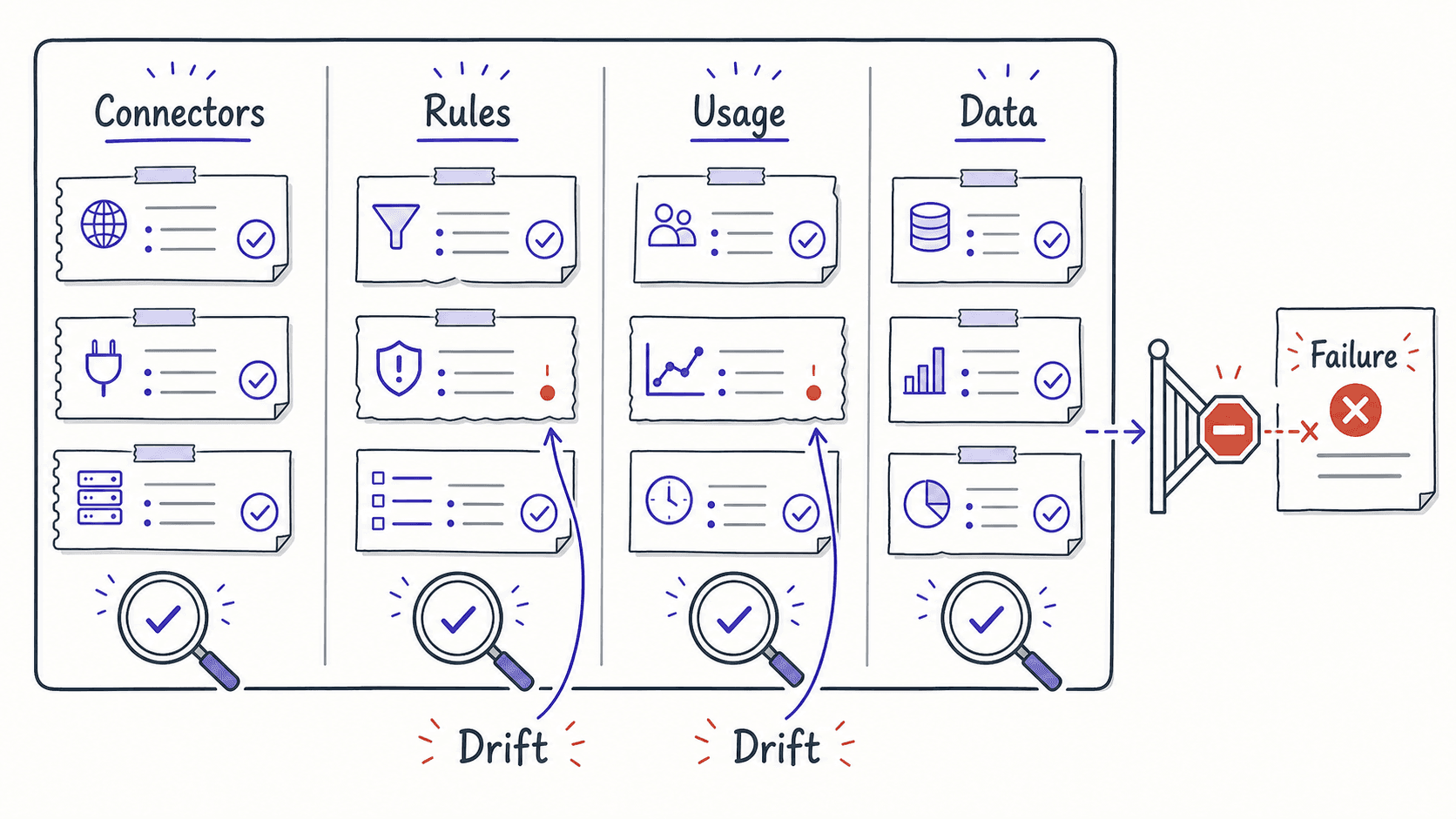
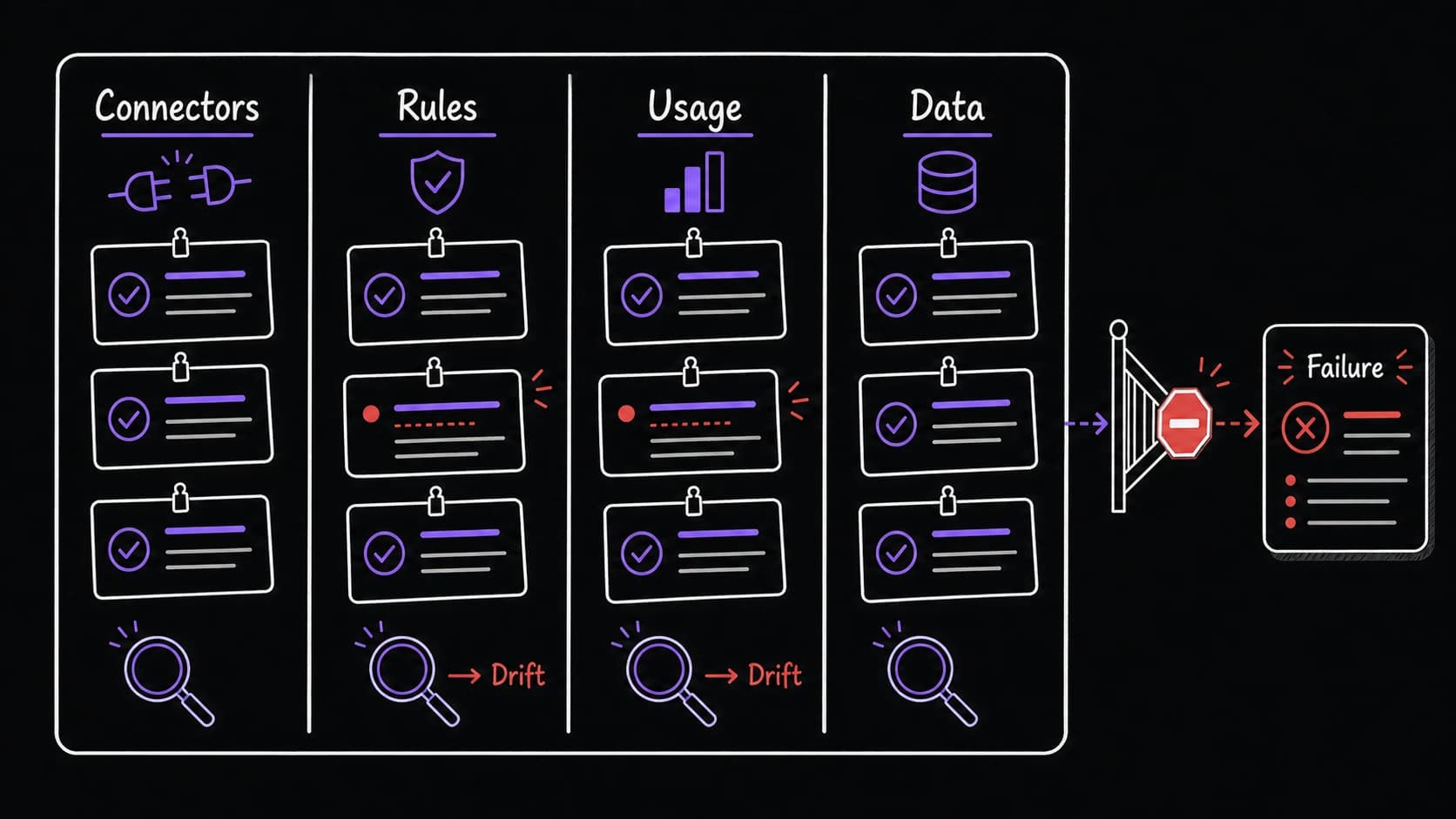
The includes a meta-question: are all my modules still working? The assistant checks: are all scheduled routines running? Did any produce errors? Is any connector disconnected? Has any not been used in more than two weeks?
This is maintenance disguised as review. You do not set aside time for system maintenance. The review does it automatically. If the Gmail connector disconnected on Tuesday and you did not notice, the review catches it on Friday.
Monthly patterns emerge when four reviews accumulate
After four weekly reviews, the system generates a monthly summary. 'In April you averaged 14 completed tasks per week, up from 11 in March. Your journal mentioned overwhelmed 6 times in April versus 2 in March. Your email volume increased 30%. Your highest-energy days were consistently Mondays and Saturdays.'
When you review the monthly summary and see three consecutive low-energy Wednesdays, compare them against your calendar to check whether a recurring meeting is the cause. A single dip is noise. Four consecutive dips in the same day of the week point to a scheduling problem worth investigating.
Pick a time that supports the habit, not one that competes with it
Friday at 4 PM is popular but competes with end-of-week fatigue. Sunday evening ties the review to next-week planning but competes with personal time. You pick your time. The system supports the habit by being ready when they are, not by nagging.
The review takes ten to fifteen minutes. Most of that time is spent on the three closing questions. The data assembly, correlation, and health check are done by the assistant before you sit down.
With the in place, the core system is complete
Count what you have built: the morning brief, , the correction loop, , the email , the task , the relationship tracker, the decision log, the reading pipeline, the journal, and now the . Each module reads from and writes to the same shared memory. Each one has approval boundaries that keep the assistant from acting without your review. Each one improves through the correction habit you practiced from the start. The weekly review ties them together by inspecting every module's output at once, catching drift, and feeding corrections back into the system.
This is a complete, self-correcting personal assistant. The morning brief gives you for the day. Email, tasks, people, decisions, reading, and the journal handle the domains where you produce and consume information. The closes the loop by surfacing patterns, carry-forwards, and system health. makes the whole thing coherent: your task knows about your calendar, your journal correlates with your energy, your relationship tracker reads from your email. The architecture is finished.
Everything from here is an example of how the same grammar applies to more domains: private numbers, home logistics, travel, professional growth. Each follows the same pattern you have been using since the morning brief: define a promise, connect sources, produce an output, save to memory, set approval boundaries, correct, and graduate. None of these upcoming modules changes the core architecture. They extend it into new territory using the same structure.
The final two chapters bring everything together: the morning routine that composes all your active modules into one command, and the maintenance routine that keeps the system honest over time.