The Capability Is Permanent
The morning that runs itself is the one you built by hand
You open your laptop. The brief is already waiting. Four meetings today, one rescheduled since last night, preparation notes attached for the one you would have forgotten. Thirty-two emails arrived overnight; three need a reply today and the assistant drafted starting points for each. Your task list is sorted by energy cost because the journal noticed you rated yesterday as low-energy and the flagged that pattern across the past month.
This is the same morning from the first page of this book. The difference is that you built every piece of what you see. You chose the sources. You drew the approval boundaries. You corrected the mistakes and saved the corrections as named rules. You decided what the assistant can do on its own and what it holds for your review. The system works because you taught it how your life works.
What you learned is a grammar for describing any assistant behavior
Every in this book follows the same structure: a promise (what the module produces), sources (where it gets information), output shape (how the result looks), failure behavior (what happens when something goes wrong), approval boundaries (what needs your review), review criteria (how you check the result), and reusable rules (what to save for next time). That structure is the grammar.
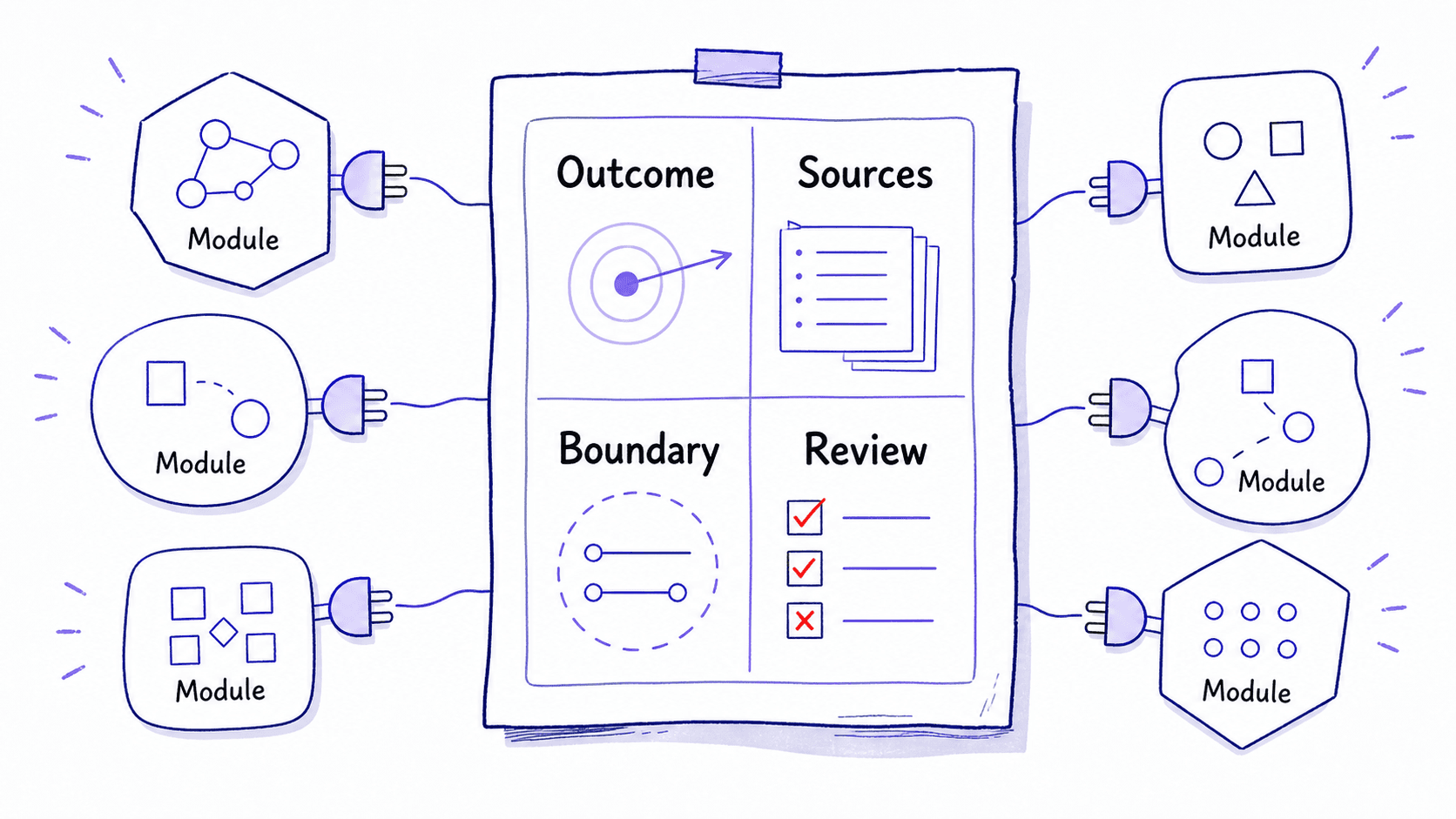
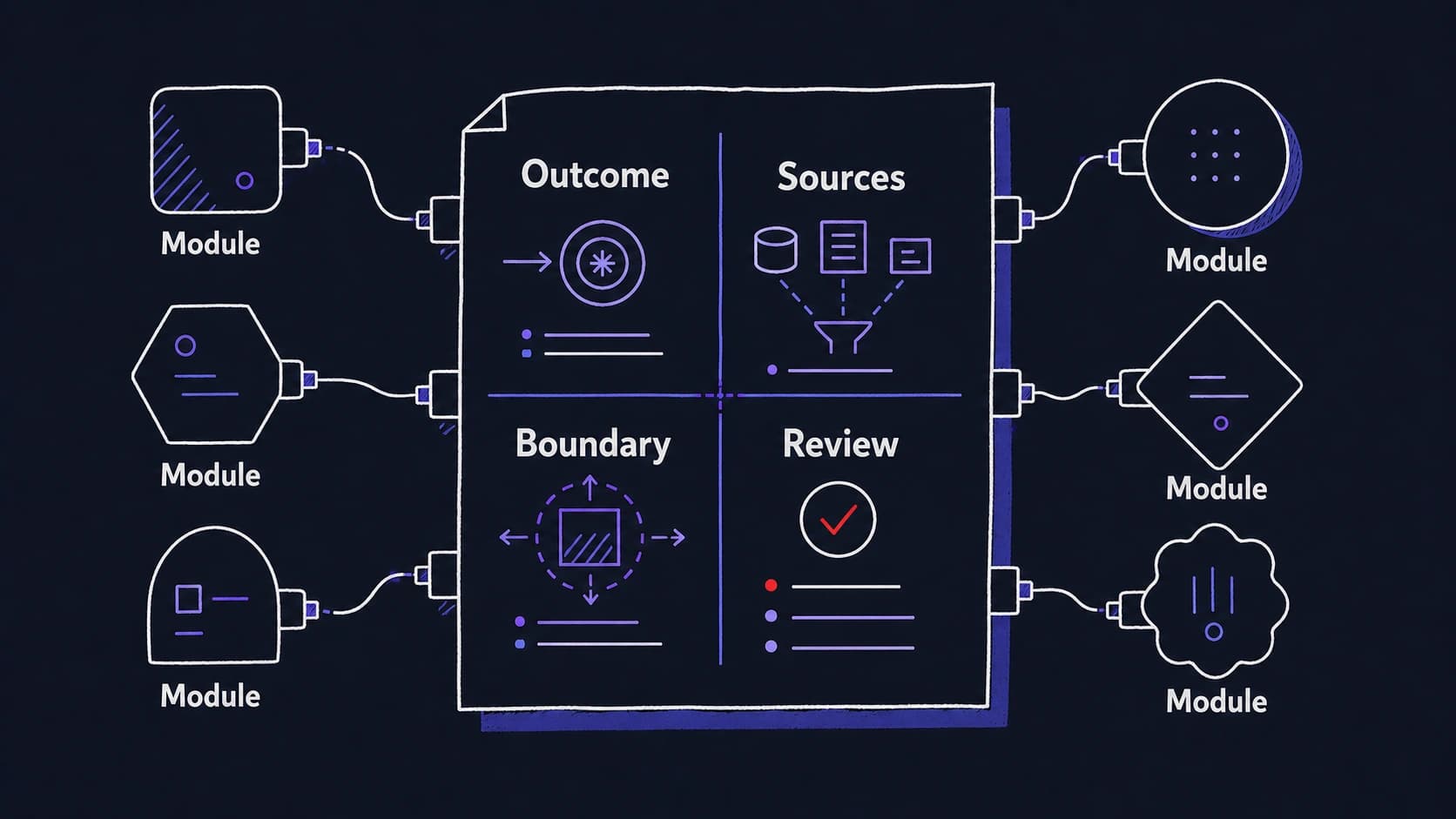
The grammar works for modules this book never mentioned. A meal planning follows the same seven questions. A fitness tracking module follows the same seven questions. A client relationship module for a business you have not started yet follows the same seven questions. The specific modules in this book are examples of the grammar, chosen because they address problems most knowledge workers share. The grammar itself applies to any domain where you want an assistant to produce reliable, reviewable, correctable work.
The system will still fail, drift, and need correction
Honesty about limits matters more than optimism about capabilities. Your assistant will misclassify an urgent email. It will merge two contacts who share a name. It will summarize a meeting and lose a someone made in the last two minutes. It will flag a pattern in your journal that reflects a coincidence, not a trend.
These failures are permanent features of the technology, and the system you built accounts for them. Source confidence tells you when the assistant is guessing. Approval boundaries prevent it from acting on guesses. The correction loop turns each failure into a rule that prevents the same failure next time. The catches drift before it compounds. The monthly rule review retires corrections that no longer apply.
The system does not eliminate failure. It gives failure a path: from mistake, to correction, to named rule, to monthly review, to retirement when the rule stops being relevant. That path is what makes the system self-improving instead of self-reinforcing.
The tools will change; the grammar will not
The assistant you use today will be different in a year. will change names. Scheduling features will move between products. New tools will appear that combine capabilities that are currently separate. The briefs you wrote this month will need updates when the tools underneath them change.
The seven questions will still work. When a new tool appears, you will ask: what outcome do I want? What sources should it use? What should happen when something goes wrong? What needs my approval? Those questions produced useful modules before the current tools existed, and they will produce useful modules after the current tools are replaced.
The capability you built is the ability to describe what you want in terms an assistant can act on. That description language, the grammar of outcomes, sources, boundaries, failures, and reviews, is yours permanently. It transfers to any tool, any assistant, any domain.
Start tomorrow morning with one brief, one correction, one rule
If you have read this far without building anything, start with the morning brief. Open your assistant, paste your calendar and email from today, and ask for a two-minute summary of what matters. Review the output, find one thing wrong, correct it, and save the correction as a named rule.
That sequence, build, review, correct, save, is the entire operating system in miniature. Every you add later is the same sequence applied to a different domain. The sequence is small enough to do in ten minutes and powerful enough to compound across months of daily use.
You already know how to describe what you want. The assistant is waiting for the description.