Save repeated procedures as Skills
Chapter Progress: Early DraftProcedures need a different home than preferences
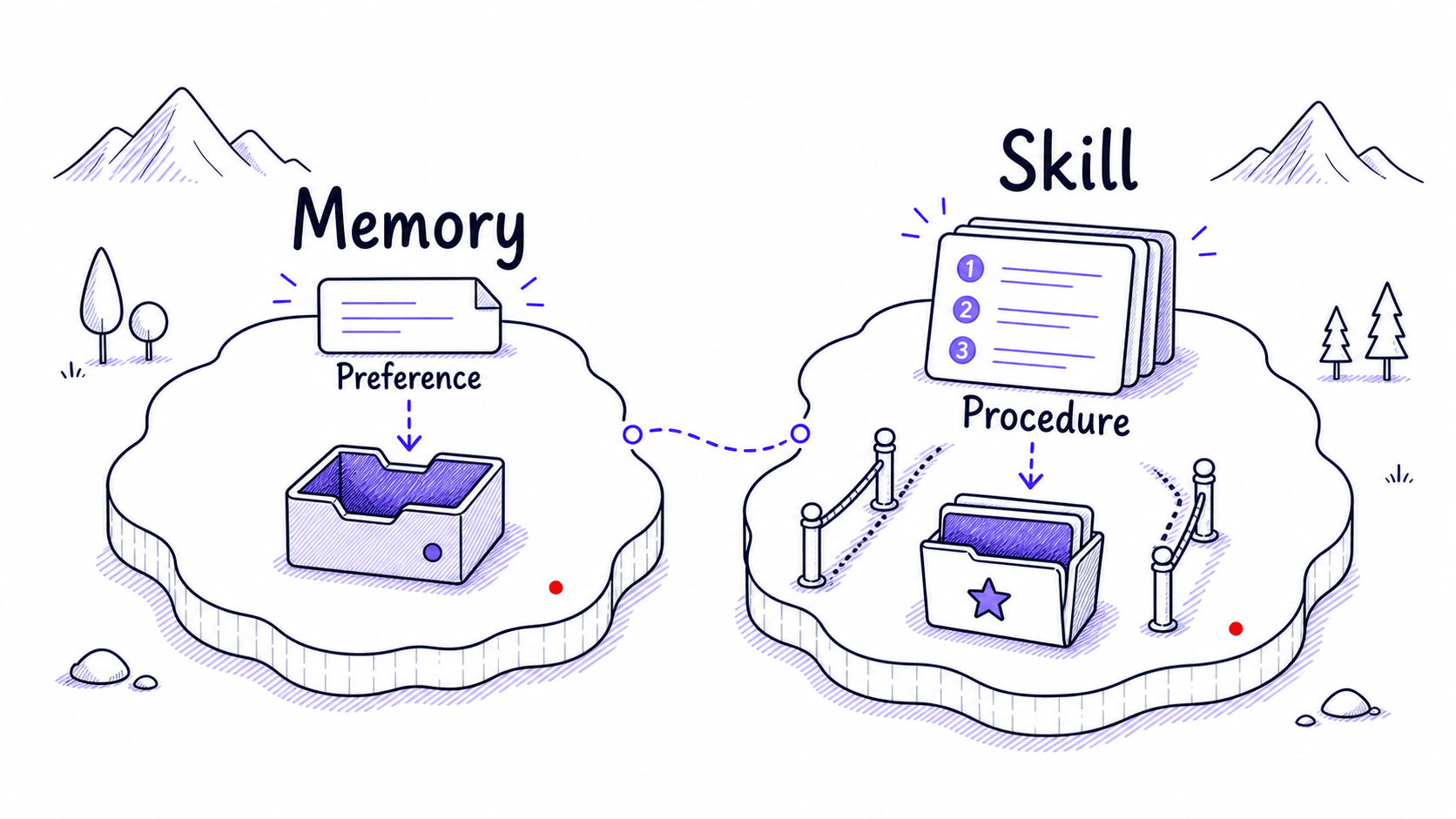
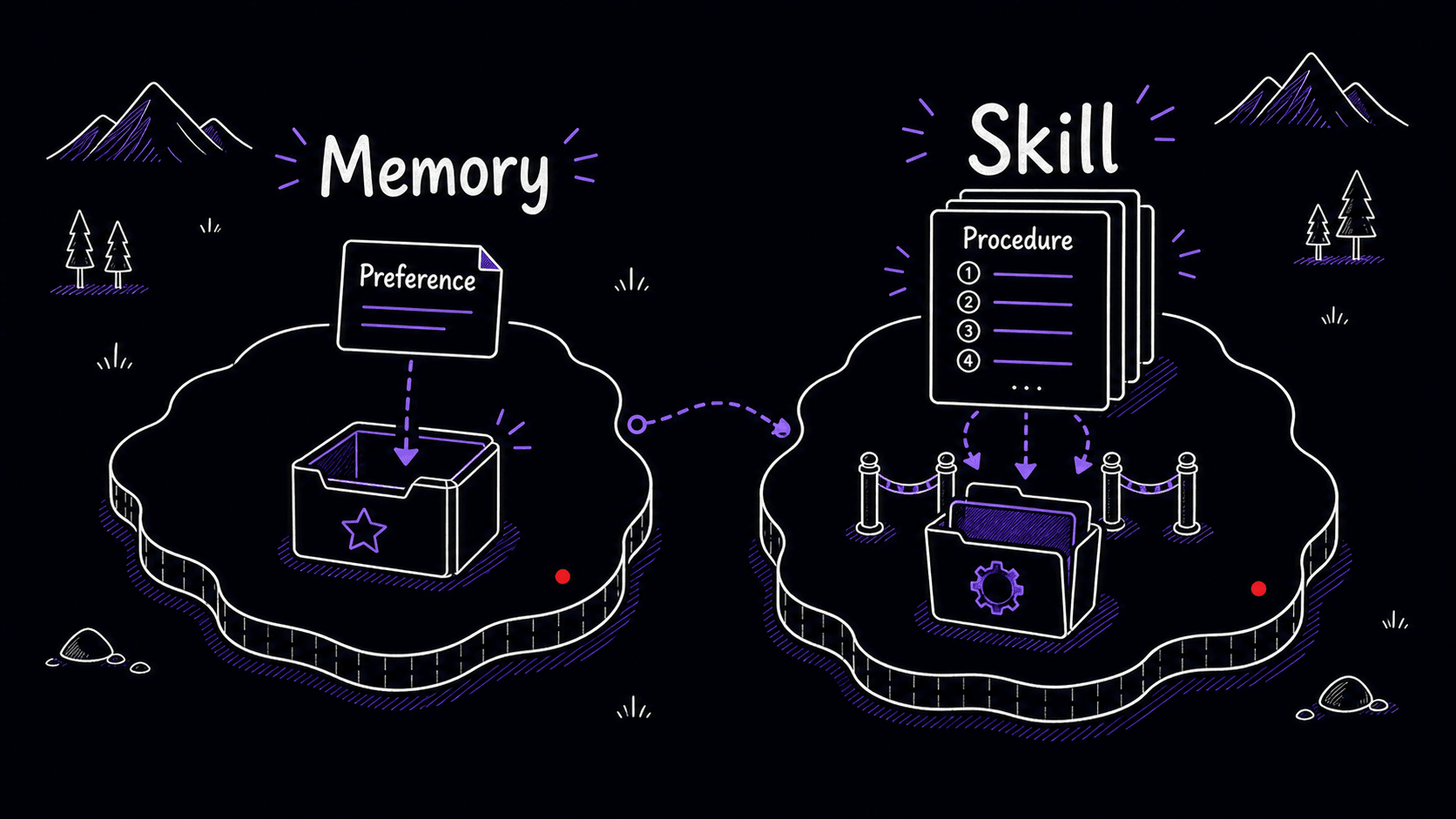
A memory is best for a stable fact or preference: 'I prefer concise meeting recaps with clear owners.' A is best for a repeatable procedure: 'When I give you a transcript, extract decisions, owners, deadlines, risks, and a follow-up draft, then ask me to verify anything ambiguous.'
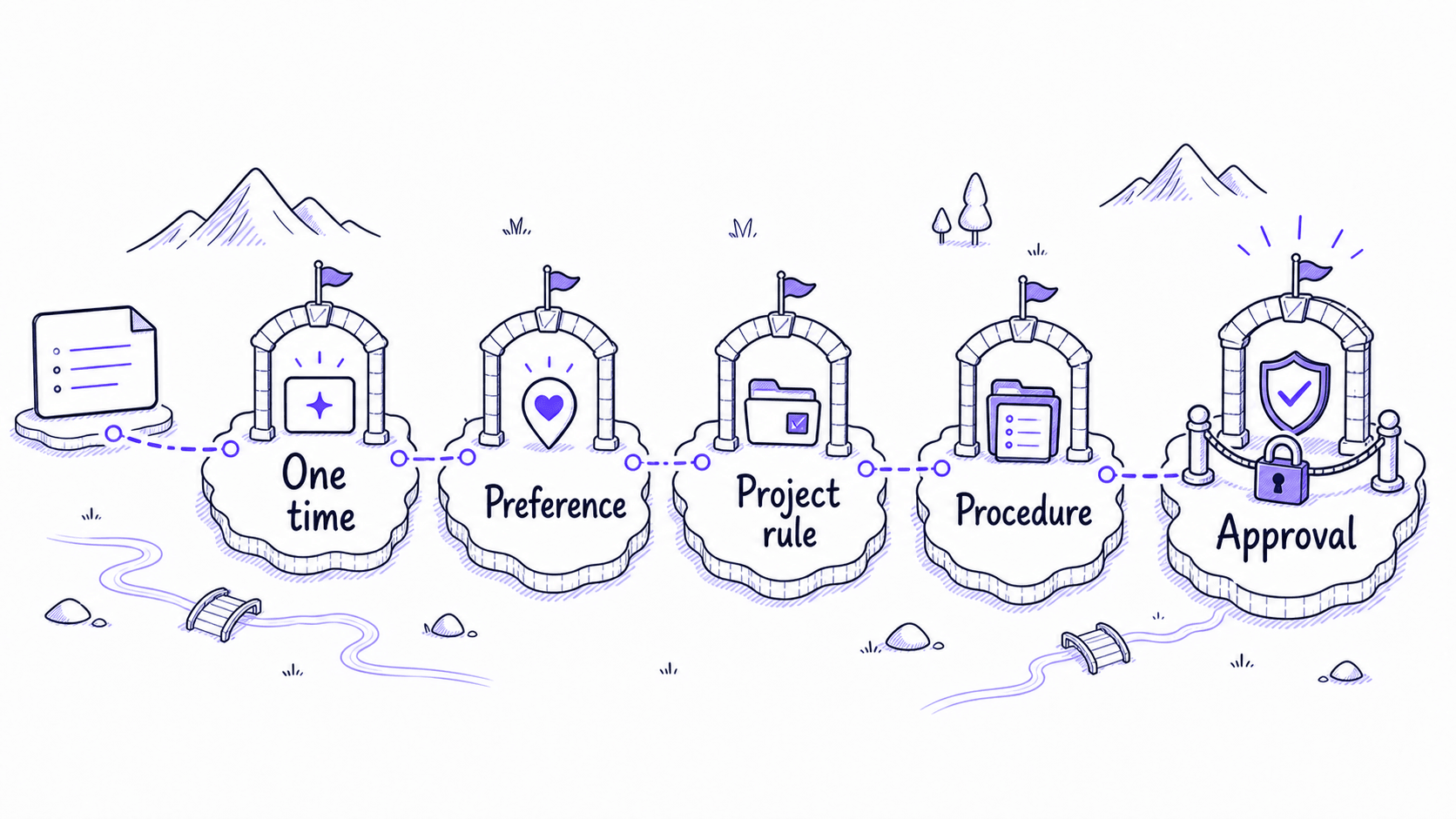
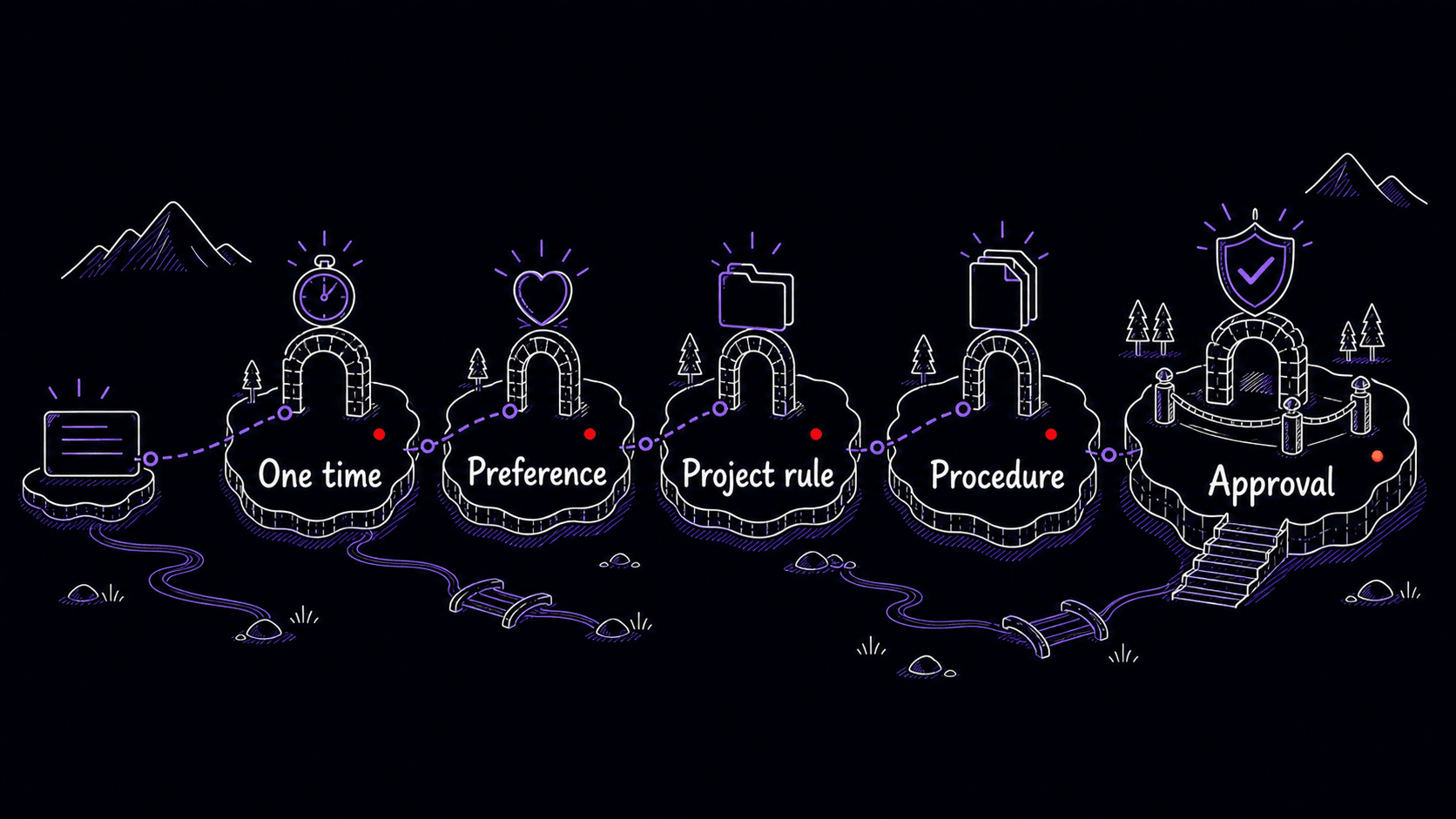
Use the simpler container first. If the instruction is a fact, preference, or standing rule, save it as memory or project . If the instruction has steps, inputs, examples, failure modes, or a review checklist, make it a .
Memory remembers a preference. A repeats a procedure.
The meeting-recap workflow from the previous chapter is a good example. 'I like short bullet-point recaps' is a memory. 'Extract every decision, assign an owner, flag missing deadlines, format as a table, and never invent action items' is a procedure with steps, sequencing, output requirements, and a boundary. The preference goes in memory. The procedure goes in a .
Most one-off prompts do not need to become Skills
Most AI work is genuinely one-off. You ask a question, get an answer, and move on. A handles that fine. The question is when a prompt crosses the line into work you should save.
If you keep re-explaining the same instruction, something should be saved somewhere. The question is where: memory, project , or a . The comparison table above helps you decide.
Better memory still needs explicit procedures
Memory and personalization are becoming a bigger part of everyday AI tools. That is where stable facts and preferences belong: 'I like short bullet-point recaps.' 'I work in healthcare.' 'My team uses Slack, not Teams.' The better that layer gets, the less you need to restate basic background.
Procedures are different. 'Extract every decision from the transcript, assign an owner to each one, flag anything without a clear deadline, format the output as a table with columns for decision, owner, deadline, and status, and never invent action items that were not explicitly stated' is too structured to store as a simple preference. It has steps, sequencing, output requirements, and a boundary. A saves that procedure so the AI follows it whenever the task comes up, without you having to re-explain the steps.
The repeated-correction test
Mini-project: audit your last week
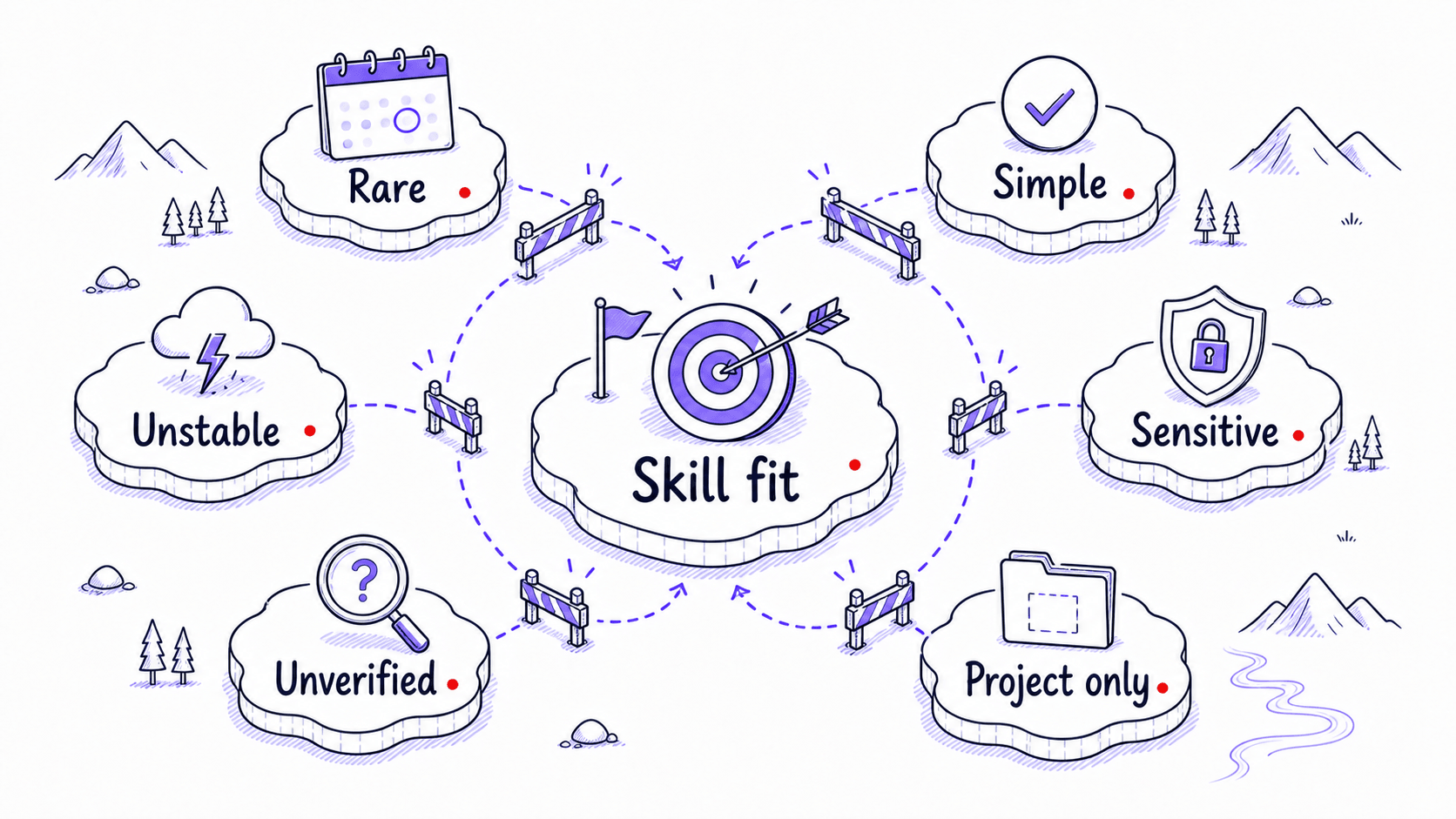
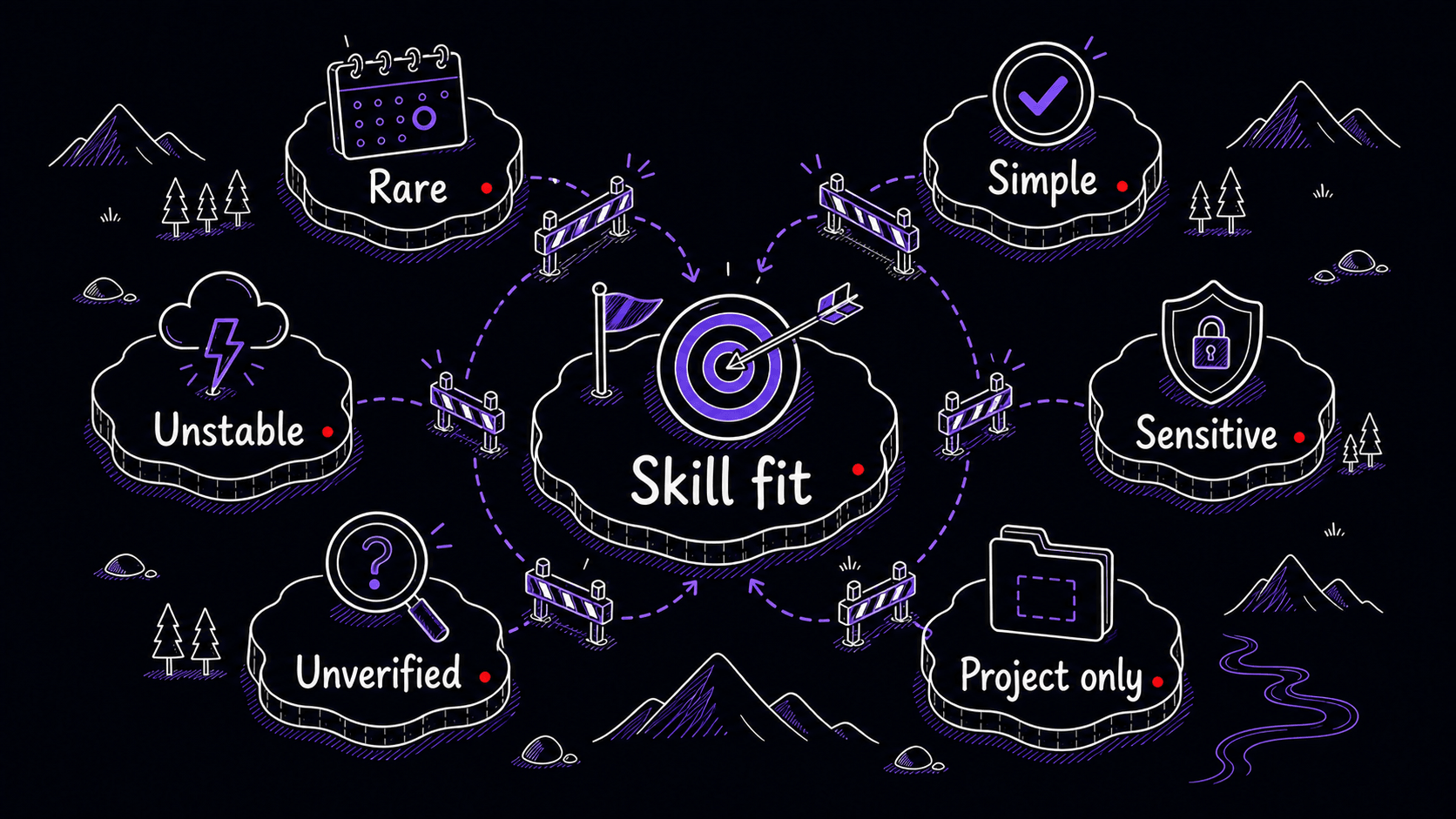
Six situations where a is the wrong container
Knowing when to hold off is just as important as knowing when to build. Before you create a , check whether the repeated work has enough stable structure to justify one.
References
2 sources- 1Equipping agents for the real world with Agent SkillsView source
Anthropic · 2025 · Anthropic Engineering Blog
Anthropic's Skill architecture preloads the Skill name and description, then loads the full SKILL.md only when the agent judges it relevant to the current task.
Retrieved May 2026. Skills use progressive disclosure: the AI reads metadata first, then loads full instructions only when relevant. This means the description you write determines whether your Skill gets used at all.
- 2Agent SkillsView source
OpenAI · 2026 · Codex Developer Documentation
Codex reads each Skill's name, description, and path first, then reads the full SKILL.md only when it selects the Skill for the current task.
Retrieved May 2026. Codex follows the same progressive-disclosure pattern: the description decides whether the full instructions ever load. Writing a clear description matters more than perfecting the procedure.