Skills scale from one person to an entire team
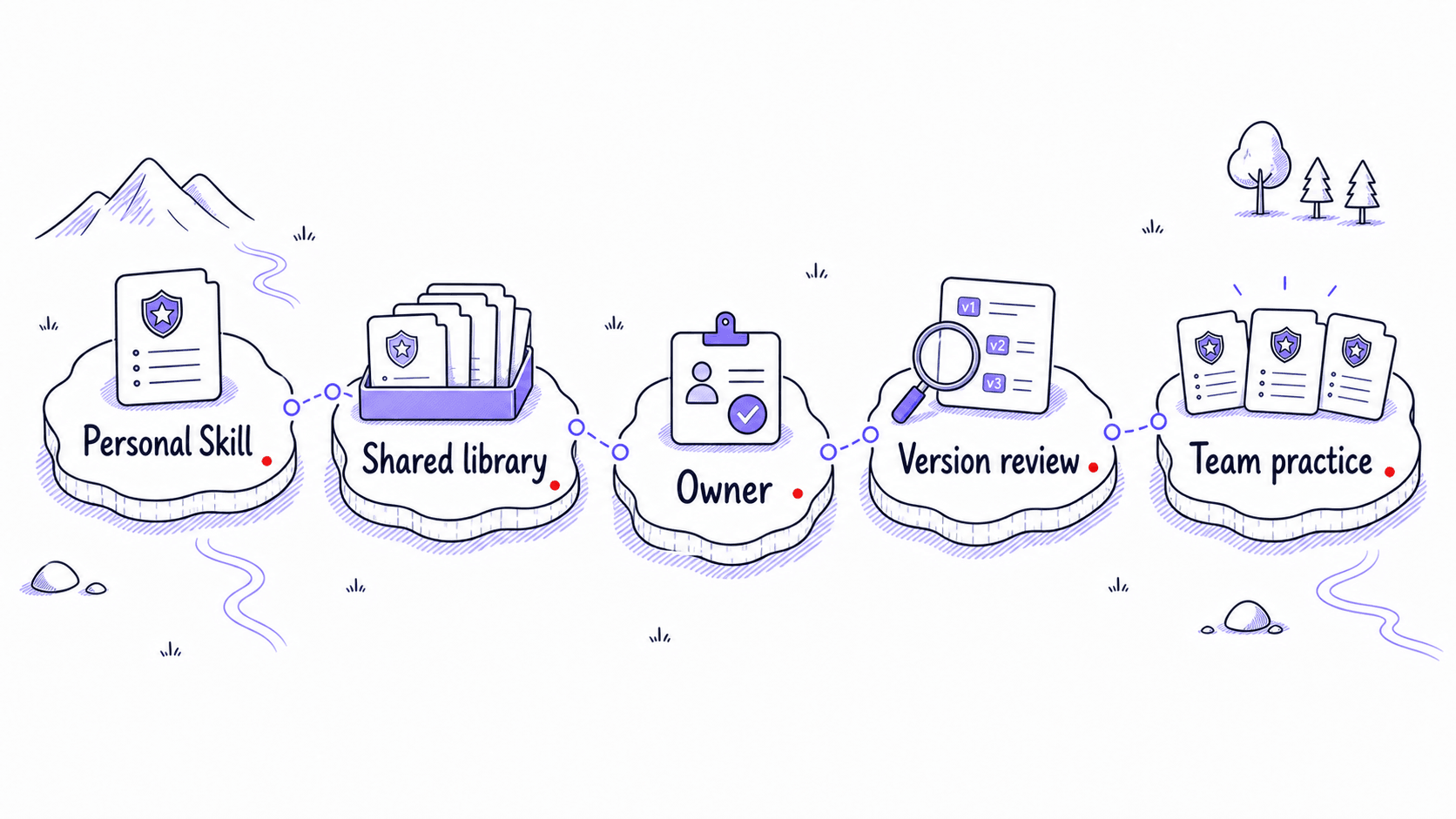
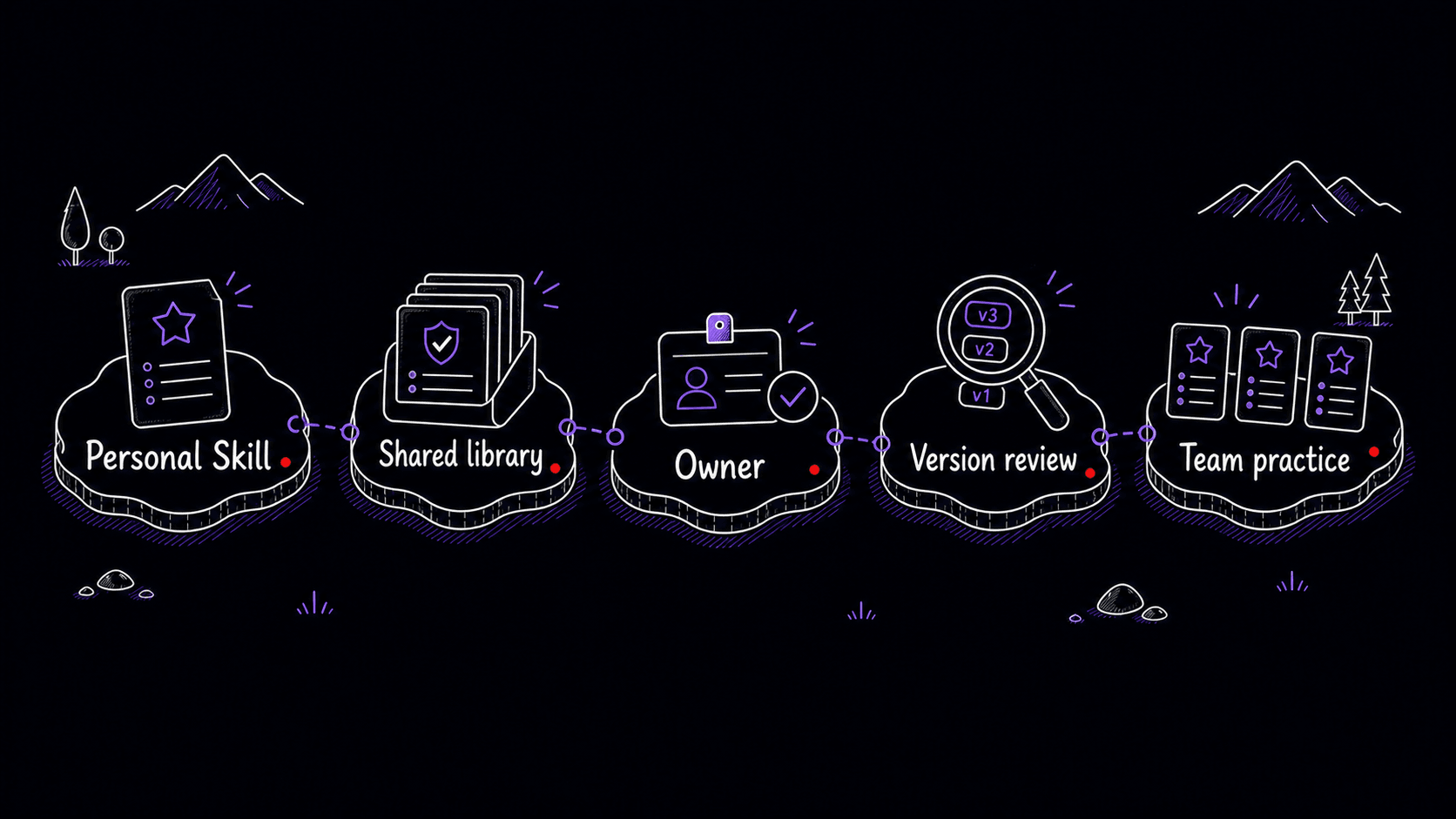
Chapter Progress: Early DraftYour personal library is the smallest useful unit
Everything you have built so far is personal: your folder, your foundation files, your gotchas from your corrections. That is the right starting point, because a works best when it captures one person's lived expertise. This chapter looks at what happens when the same pattern extends to a team, a department, or an organization.
Each topic below is a direction you can explore when you are ready. None of them are required to use the Skills you have already built. They are here so you can see where the system goes and decide which parts matter for your situation.
The ladder returns with your full experience behind it
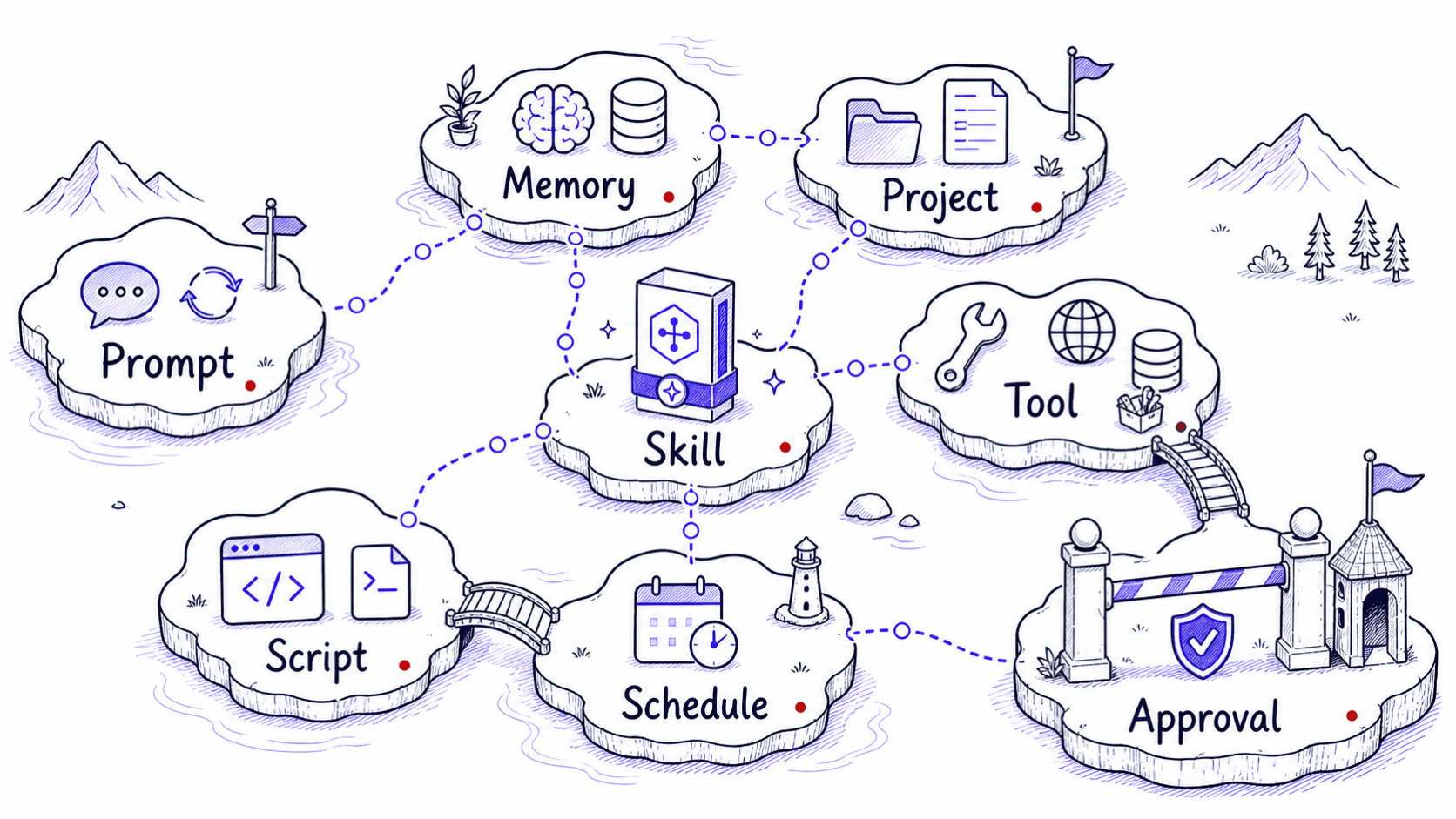
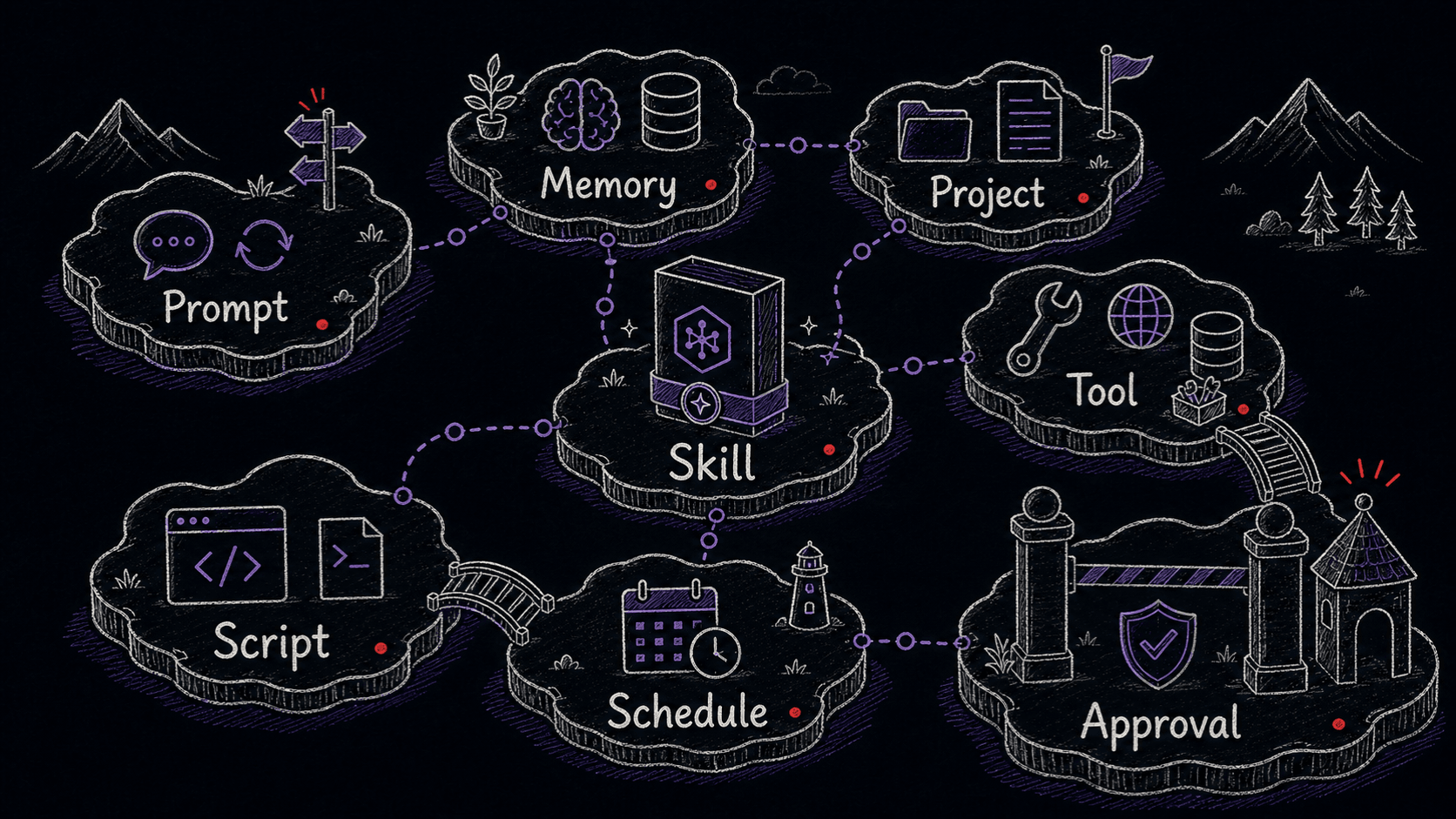
The first chapter introduced eight layers of , from prompting to approval boundaries. You have since built with four of those layers directly: prompting, memory, project context, and Skills. The table below is the same ladder, but now you can read each row through real experience. The layers you have used so far are personal by default; the layers ahead often become shared when a team depends on them.
As your system grows, start by asking which layer should handle the work. If you copy details from calendar, email, and notes into a chat every Friday, a connector should do that gathering for you. If you keep asking the assistant to check the same schema or run the same file conversion, a script should handle it. If you keep approving sensitive claims before they go out, that approval should stay with you, while the prepares the evidence for your review.
Skills that compose with other Skills
As your library grows past four or five Skills, you will start noticing ways to connect them. There are four common composition patterns, each solving a different coordination problem.
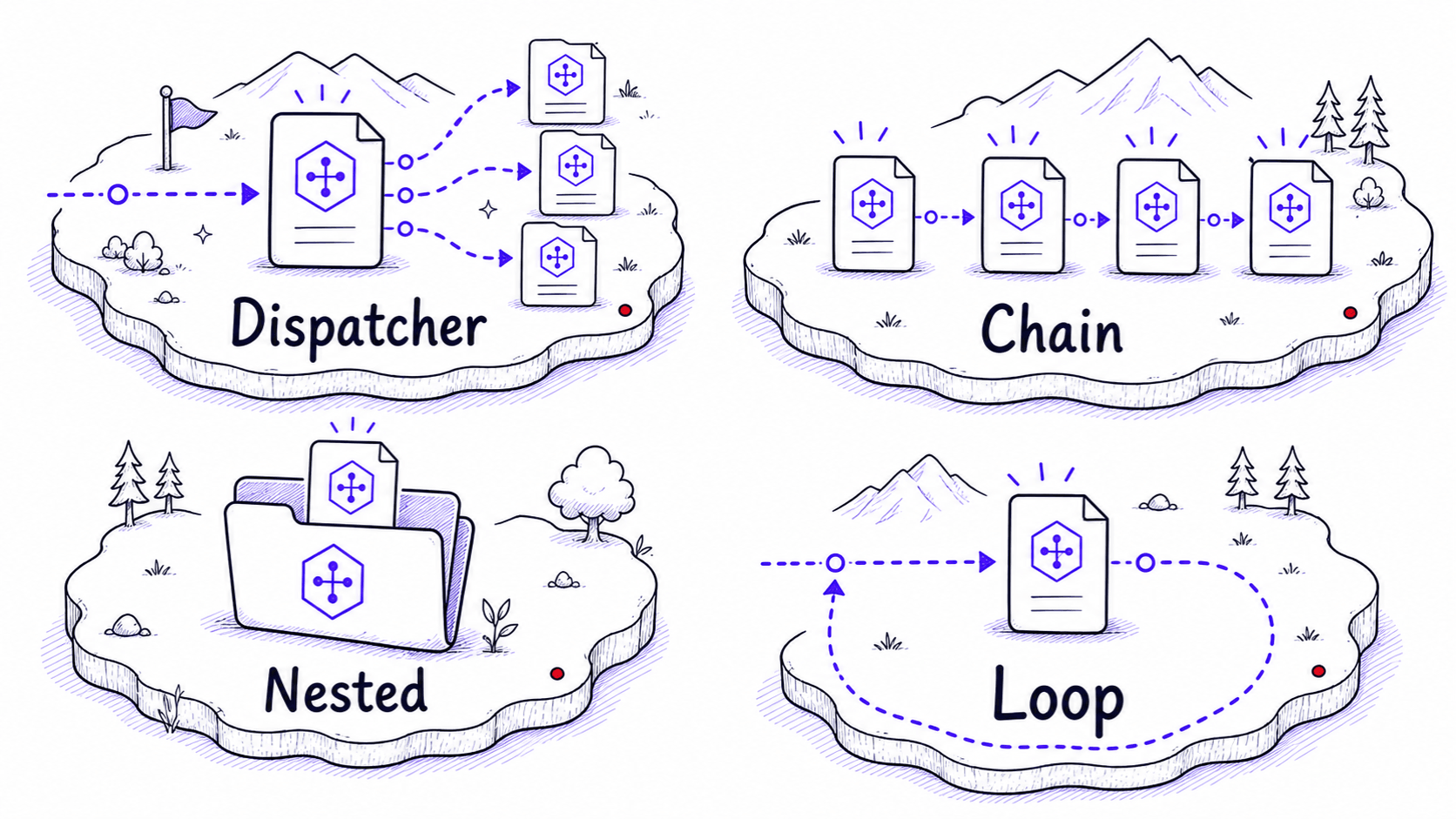
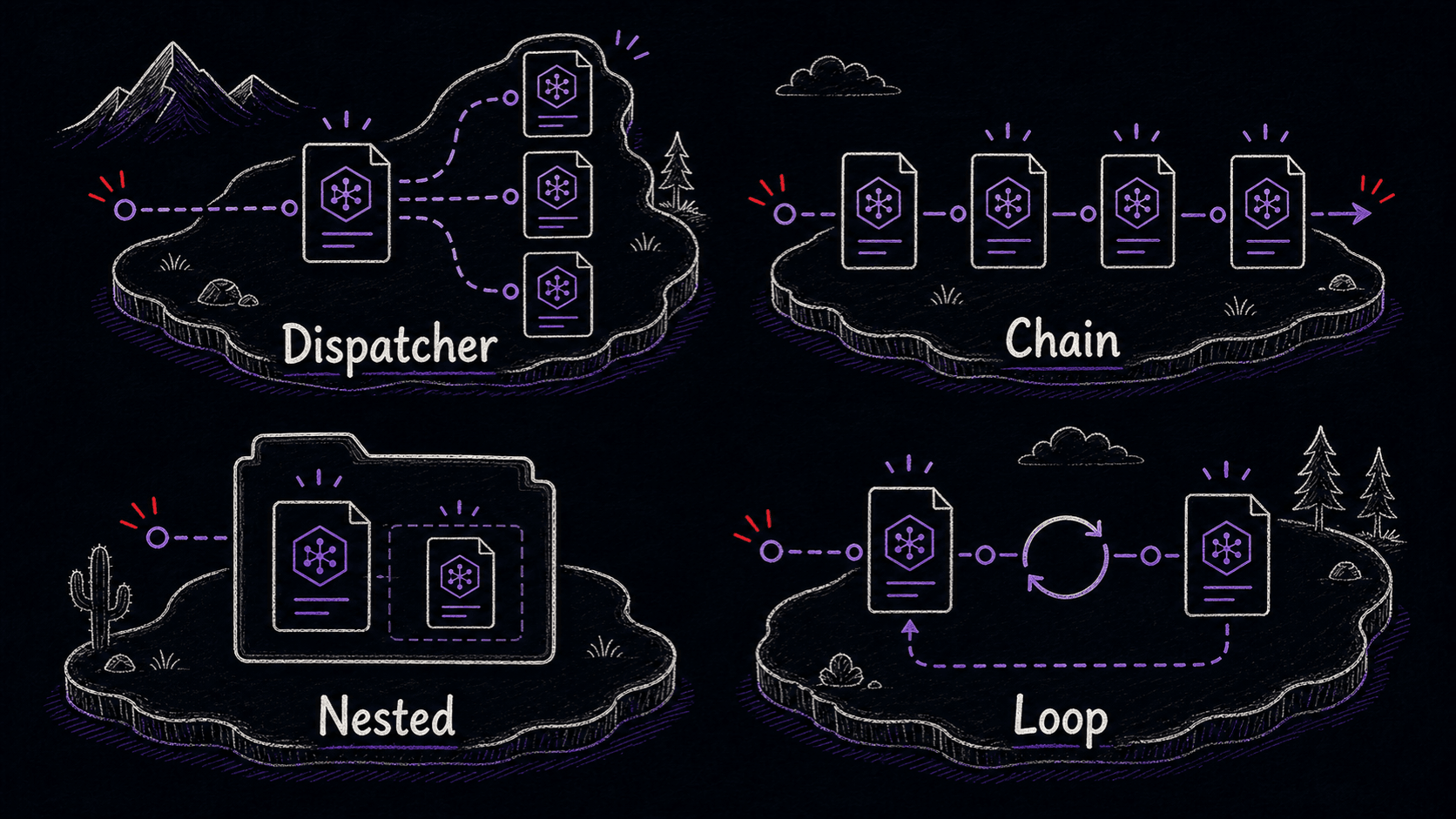
- Dispatcher : one Skill reads the input and routes it to the right specialist Skill based on the content type. You say 'handle this,' and the dispatcher decides whether to invoke your meeting-recap, client-prep, or compliance-review Skill. Useful when your library grows past ten Skills and auto-triggering becomes unreliable because descriptions start to overlap.
- Chained Skills: the output of one feeds as input to another. A meeting transcript runs through your recap Skill, then the recap runs through your follow-up-email Skill. Each Skill stays simple; the chain handles the sequence. You build chains by writing a procedure step that says 'pass the output to [other Skill name].'
- Nested Skills: a calls a sub-Skill as part of its procedure. Your meeting-prep Skill might invoke a stakeholder-research sub-Skill for each attendee, gathering before assembling the brief. The parent Skill orchestrates; the child Skill specializes.
- Agentic loops: a runs, evaluates its own output against your criteria, and iterates until the output passes. Useful for high-stakes content where a first draft is rarely good enough. The loop might run two or three times, tightening the output each pass against specific checkpoints you defined in the Skill.
A teaches humans and agents the same procedure
Because is plain with numbered steps, it works as a standard operating procedure for both people and AI. The same file that tells your AI tool how to do a meeting recap tells a new team member how your team does meeting recaps. The AI reads the instructions and follows them. A person reads the same instructions and understands the process.
This dual readability makes Skills useful for onboarding, knowledge transfer, and institutional memory. When someone leaves the team, their Skills stay behind. When someone joins, the Skills are documentation they can read on day one.
If your team already maintains wikis, runbooks, or standard operating procedures, consider whether the most frequently used ones would work better as Skills. The test is simple: does the procedure have clear inputs, structured outputs, and known failure modes? If yes, a gives you the same documentation with the added benefit that AI can follow it.
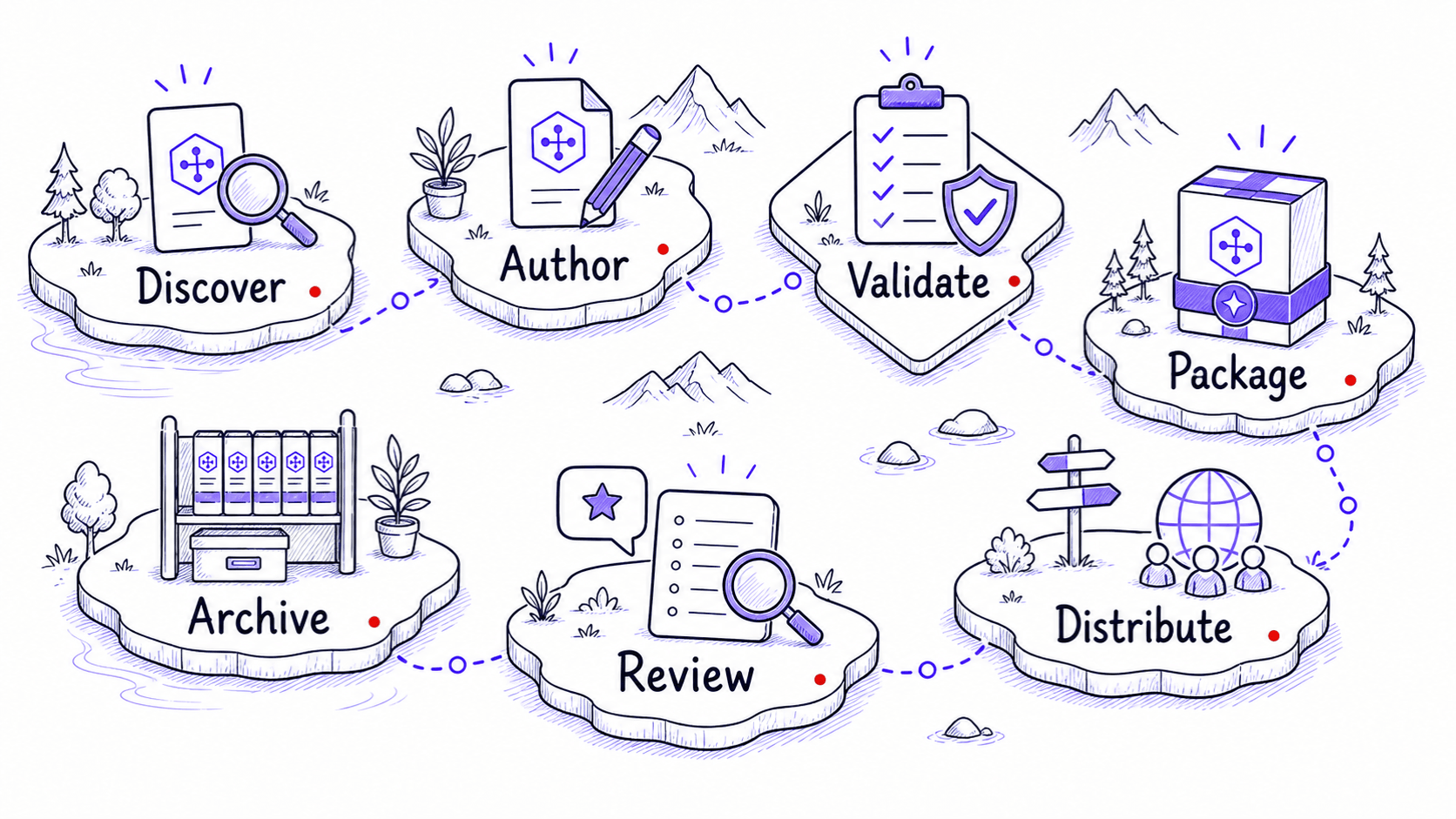
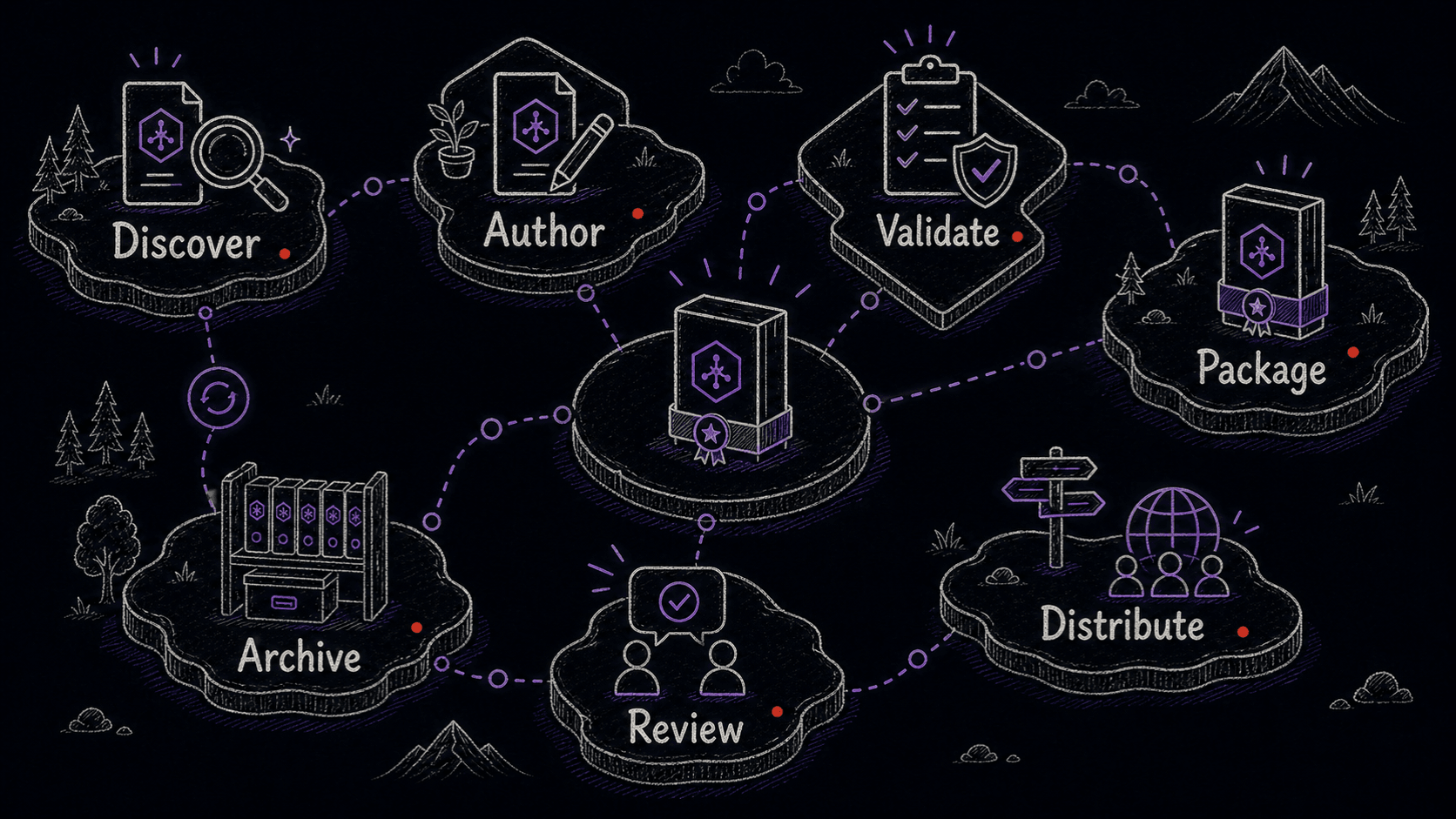
Teams need a lifecycle for shared Skills
A personal library runs on your weekly review habit. A team library needs more structure: someone decides which Skills belong in the shared collection, someone verifies they work, and someone retires them when they go stale. Without this lifecycle, shared libraries accumulate abandoned entries that erode trust in the whole system.
The chat that resets every morning no longer defines your AI work
This guide started with a familiar frustration: you open a chat, spend twenty minutes rebuilding the that made the last session useful, then close the tab knowing most of that work will vanish. You have spent the last eleven chapters replacing that loop with something durable.
Your is a record of how you do your best work. It holds procedures earned from real corrections, preferences that carry across every conversation, and boundaries you decided once and no longer need to restate. Every correction you make today becomes an instruction the AI follows tomorrow. The library compounds: each session starts closer to where the last one left off, whether you are at your desk or asleep.
That shift is quiet. There is no dramatic before-and-after screenshot. The difference is in what you no longer have to do: re-explain the format, re-correct the same mistake, re-describe the audience, re-state the boundary. The assistant handles the procedure. You handle the judgment that makes the procedure worth following.