From Scattered Context to a Useful Second Brain
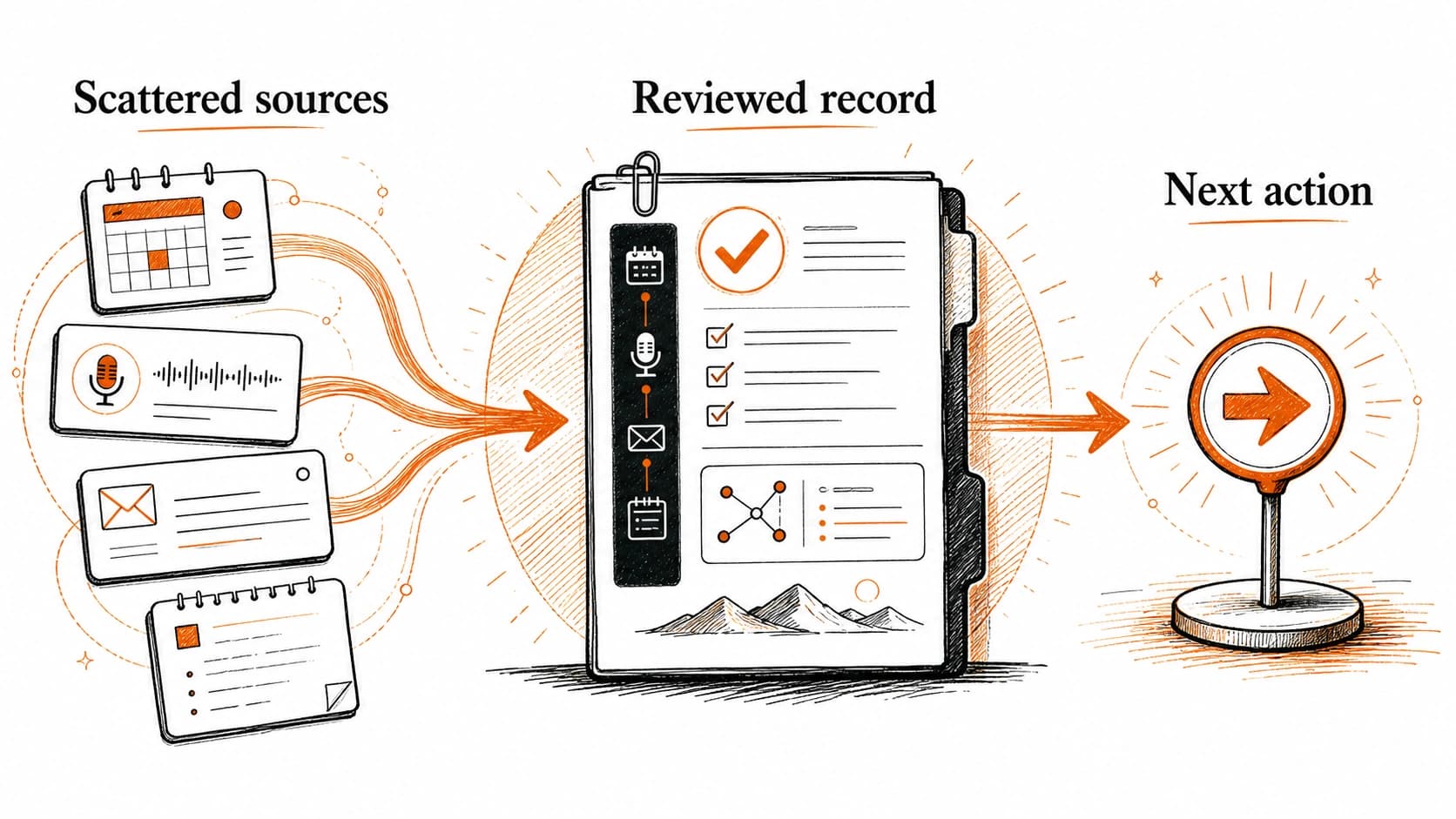
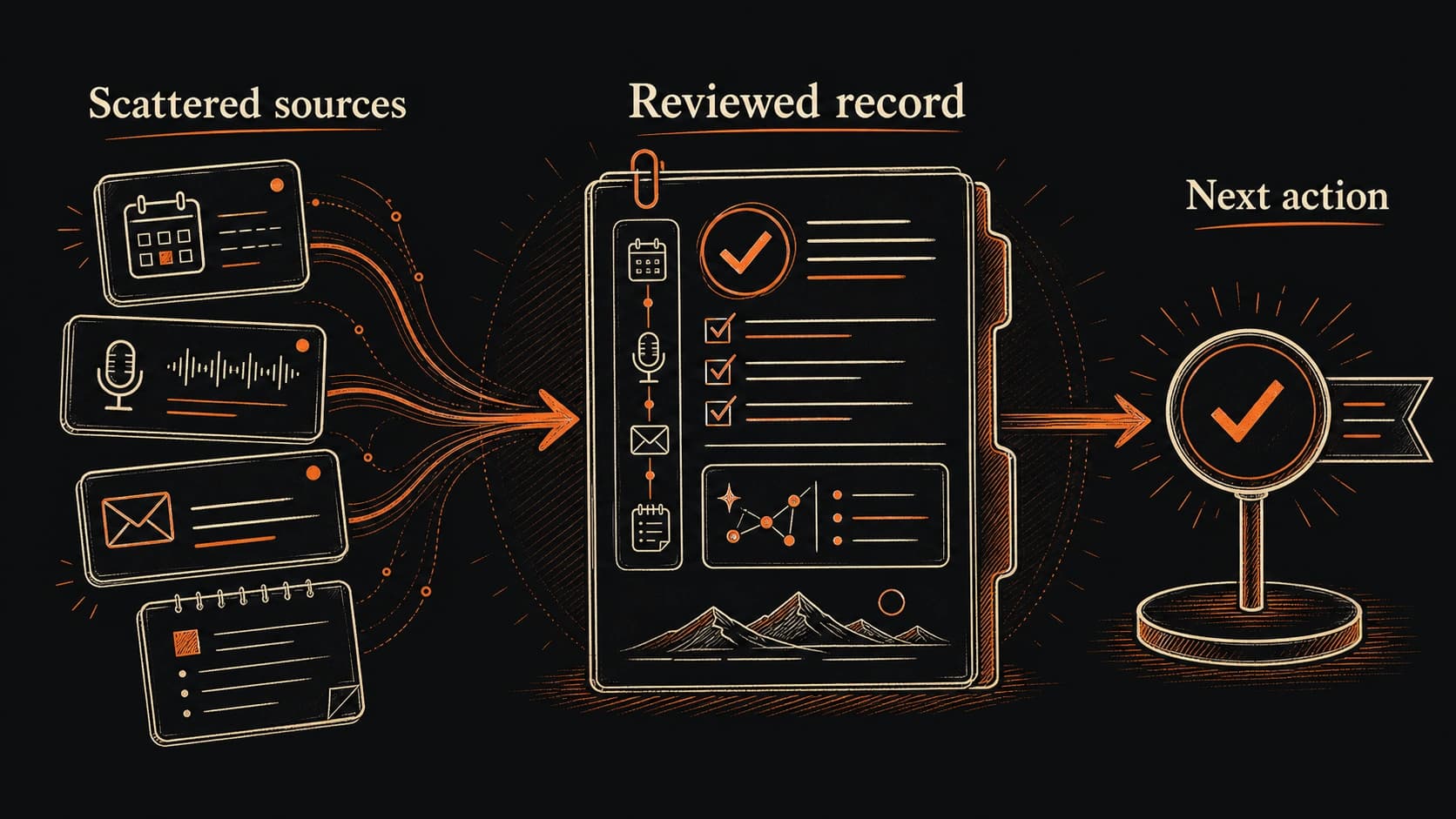
Your mind does its best work when it can notice, judge, connect, and create. Modern work pulls it in the opposite direction: track emails, meetings, calendar details, documents, notes, promises, and half-remembered decisions, all at once.
The for any real situation usually lives in several places at once. A deadline sits on the calendar. The reason for it lives in a meeting . The latest constraint arrived in an email. The next action is in a note you wrote after a call. Reassembling that picture takes time every single time you need it.
A useful keeps that together. It saves where information came from, who was involved, what was decided, what is still uncertain, and what to do next. Future-you picks up where you left off instead of reconstructing the picture from scratch.
Read the chart to see why reviewed records change the work. The point is not perfect recall; the point is keeping enough context to return with confidence.
| Time | Unaided memory | Reviewed record |
|---|---|---|
| Same day | 92% | 92% |
| One week | 58% | 90% |
| One month | 32% | 88% |
| Three months | 20% | 86% |
Every saved source should be findable when you need it again
A earns its keep the moment one saved source shows up with enough to be useful. For a Thursday client call, the system gathers the calendar event and the last into one prep packet you can check before deciding what to send.
Most stalls at the same point: you cannot find what you already know. The right source before a meeting, the reason behind a decision, the someone gave three weeks ago, the idea you had when it is finally time to act on it. The information exists. Reaching it is the bottleneck.
AI proposes the filing; you approve the trust transitions
Older second-brain systems asked you to be the full-time librarian. Capture the source, choose the folder, write the summary, add links, remember the follow-up, and come back later to clean up. That maintenance load is why most promising systems feel heavy by the second month.
An AI-ready shifts that labor. The assistant handles sorting and summarizing. You keep the final say on what is true, what matters, and what to do about it. The assistant proposes; you review before anything becomes trusted.
Five pieces make the system trustworthy
This book teaches one architecture. Every chapter adds to it, and every concept you encounter later deepens one of these five pieces.
A privacy boundary decides what may enter the system and how far it can travel. A keeps every claim tied to the evidence behind it. A separates raw material from reviewed conclusions, flagging when reviewed records go stale. A keeps records current so stays honest. And an approval boundary prevents the assistant from silently turning a finding into an action.
Together, these five pieces form a loop. Capture the source. Label its privacy. Organize it into a project. Review it before trusting it. Retrieve it with evidence. Turn it into approved action. Repair when it goes stale. Synthesize across records. Schedule what should happen before you ask. Each chapter adds one step. By the end, the loop runs on reviewed records you can verify, and the assistant proposes while you keep the judgment calls.
If you have tried a note system before and watched it decay by the second month, this architecture is designed to prevent that. The catches stale records before the system quietly goes unreliable. The approval boundary keeps the assistant from upgrading tentative language into firm commitments on its own. And the gives you a return path to original evidence whenever a conclusion feels uncertain.
The system makes judgment easier to apply. It preserves evidence, surfaces likely connections, and drafts follow-through. Deciding which interpretation matters, which ambiguity is acceptable, and which deserves action stays with you. The assistant proposes, the record cites, and you decide.
Return to the right source before the next high-stakes call
The payoff shows up when the stakes are high. Before a client call, you open one prep packet instead of searching five apps. During a project handoff, the new person reads a project page where decisions and are already linked. When you follow through on a promise you made weeks ago, the original sits right there, with a source you can verify.
At first, the system may feel slower. Review takes time you were not spending before, and that effort is real. It is also what makes the records reliable enough to reuse later. After a few weeks, records start building on each other. Meeting notes link to the decisions that came out of them. Decisions link to the tasks they created. Each person's page carries their commitments and preferences forward from one conversation to the next, and each project accumulates its own history. You stop rebuilding from scratch.
Start with one question: where do you keep rebuilding from scratch? A becomes powerful when it makes that one moment easier first.
Find where scattered information slows you down
Claude interviews you about your work and identifies the one recurring situation worth solving first.
The system you will build across this book
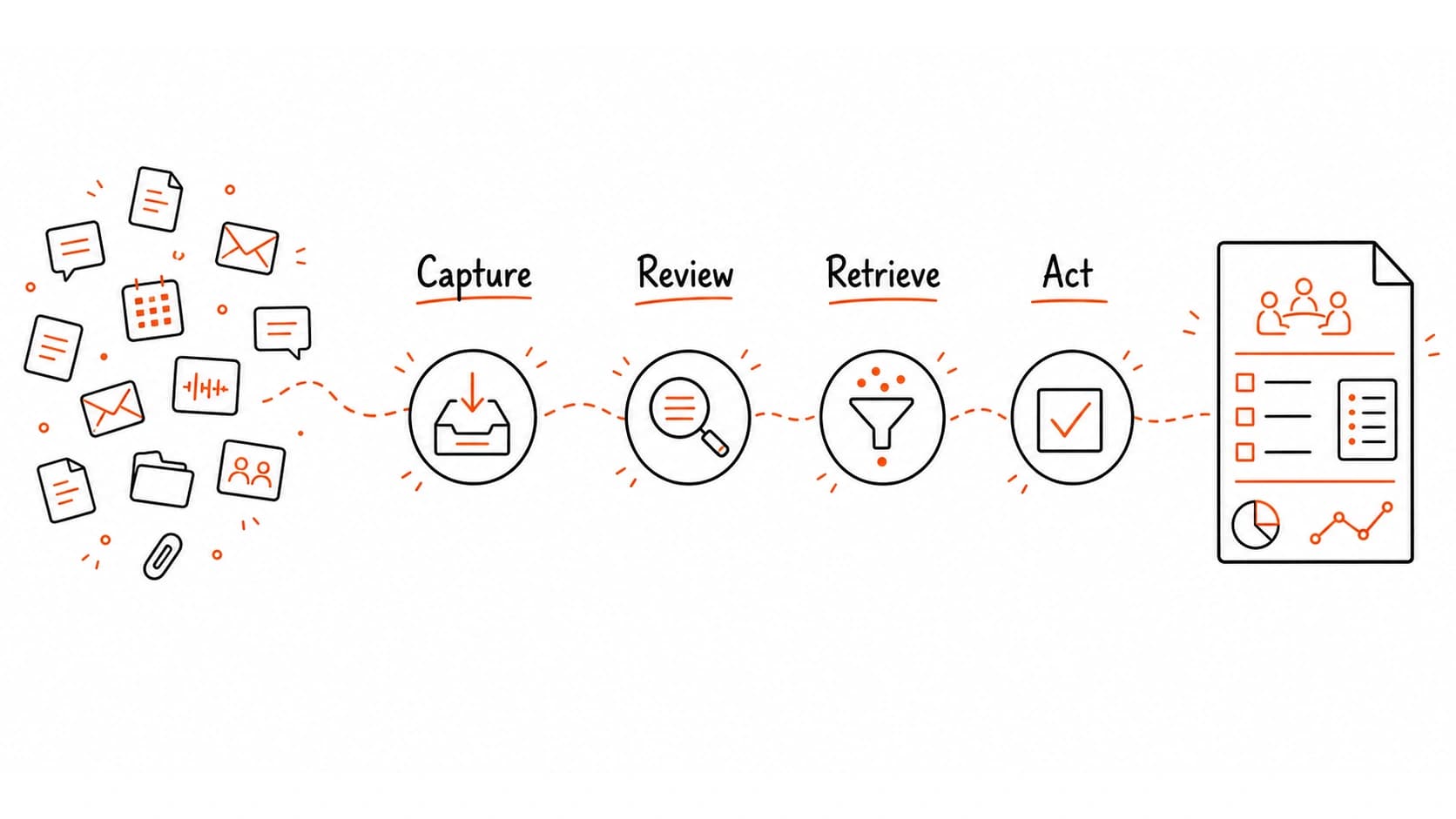
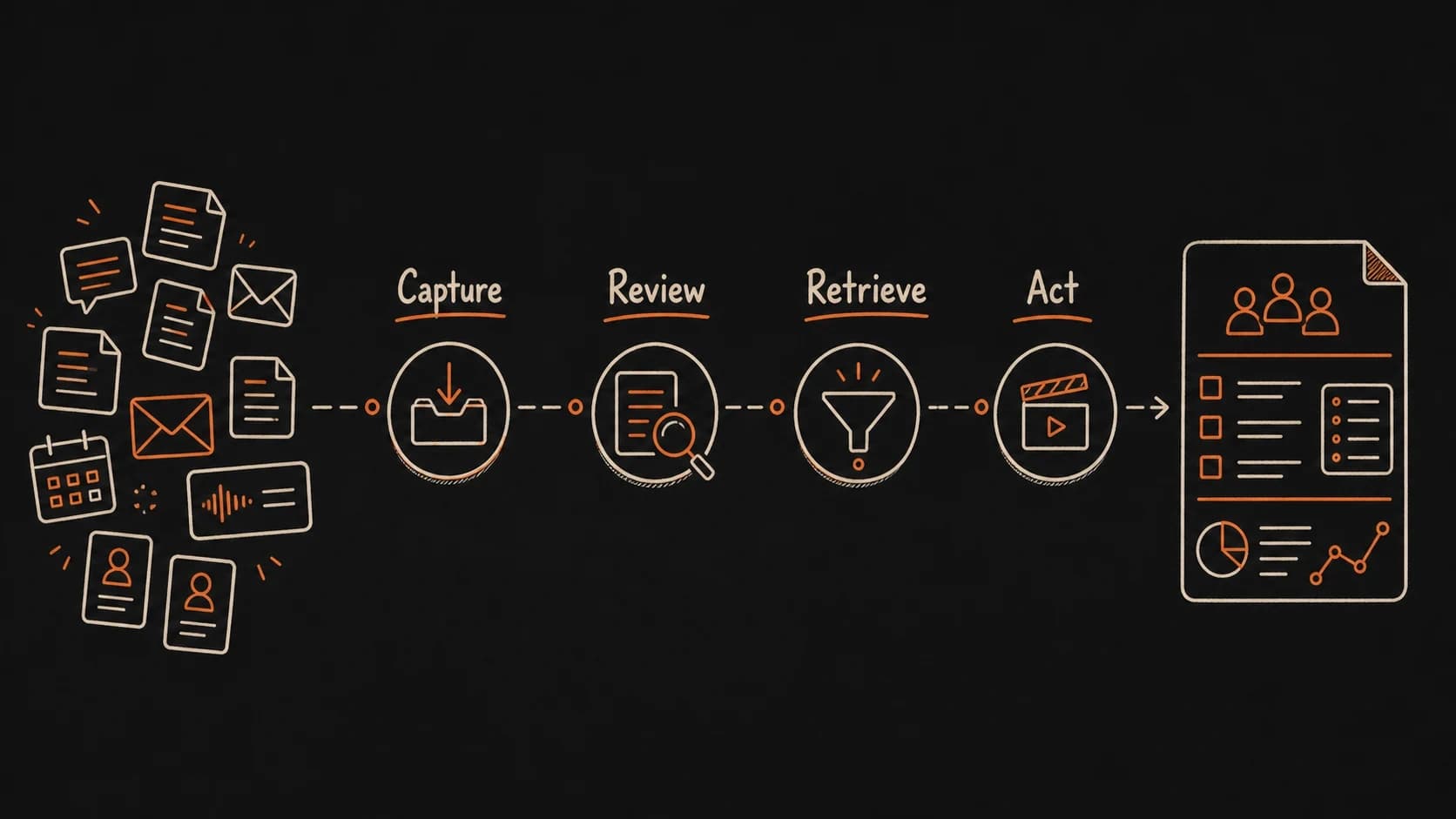
This book is for anyone whose work depends on conversations, commitments, documents, schedules, and decisions spread across multiple tools. If you want AI to handle the filing and surfacing while you keep the judgment calls, you are the reader this book is written for. You do not need to be technical. You need one recurring situation where scattered costs you time, and the willingness to review what the system proposes before trusting it.
By the end, the Thursday call will no longer mean a search across five apps. Each chapter adds one working piece to the same system. Privacy labels protect sources before capture. A gives material a place to land without organizational burden. Source cards link meetings, emails, and notes to the same story. Trust states separate evidence from approved conclusions. answers questions with cited sources. An approval queue holds decisions and tasks for your sign-off. A catches drift before records go stale. A layer surfaces contradictions across projects. Dynamic views reorganize the same records by project, person, or date. Scheduled briefings prepare tomorrow's before you sit down. The result is a reviewed prep packet with cited sources, open questions, overdue follow-ups, and approval-needed actions.
References
1 source- 1Building a Second Brain official website
Building a Second Brain · 2026 · Official website
View sourceAccessed May 10, 2026. The official site frames Building a Second Brain as a method for organizing digital life, reducing time spent searching for information, and using knowledge for work, projects, and creative output. Newer AI Second Brain material emphasizes "Personal Context Management" and the "Context Gap" as central concepts.
This guide builds on that foundation with durable records, review gates, and source-backed workflows. The AI layer here goes beyond context memory: it proposes filing, retrieval, and follow-through while the reader keeps approval authority.