From Disconnected Tools to One Assistant That Connects Everything
The day starts with six tabs open and no clear picture
You open your laptop. You check the calendar: four meetings, one rescheduled, one you forgot to prepare for. You open email: thirty-two new messages, three of which probably need a reply today but you cannot tell which ones at a glance. You open your task list: twelve items, some from last week, some from last month, sorted by nothing in particular. You open Slack. You open your notes from yesterday.
By the time you have assembled a picture of what matters today, twenty minutes have passed and you have already made reactive decisions about which emails to open first, which meetings to think about, and which tasks to ignore for another day. You did not decide your priorities. Your inbox decided them for you.
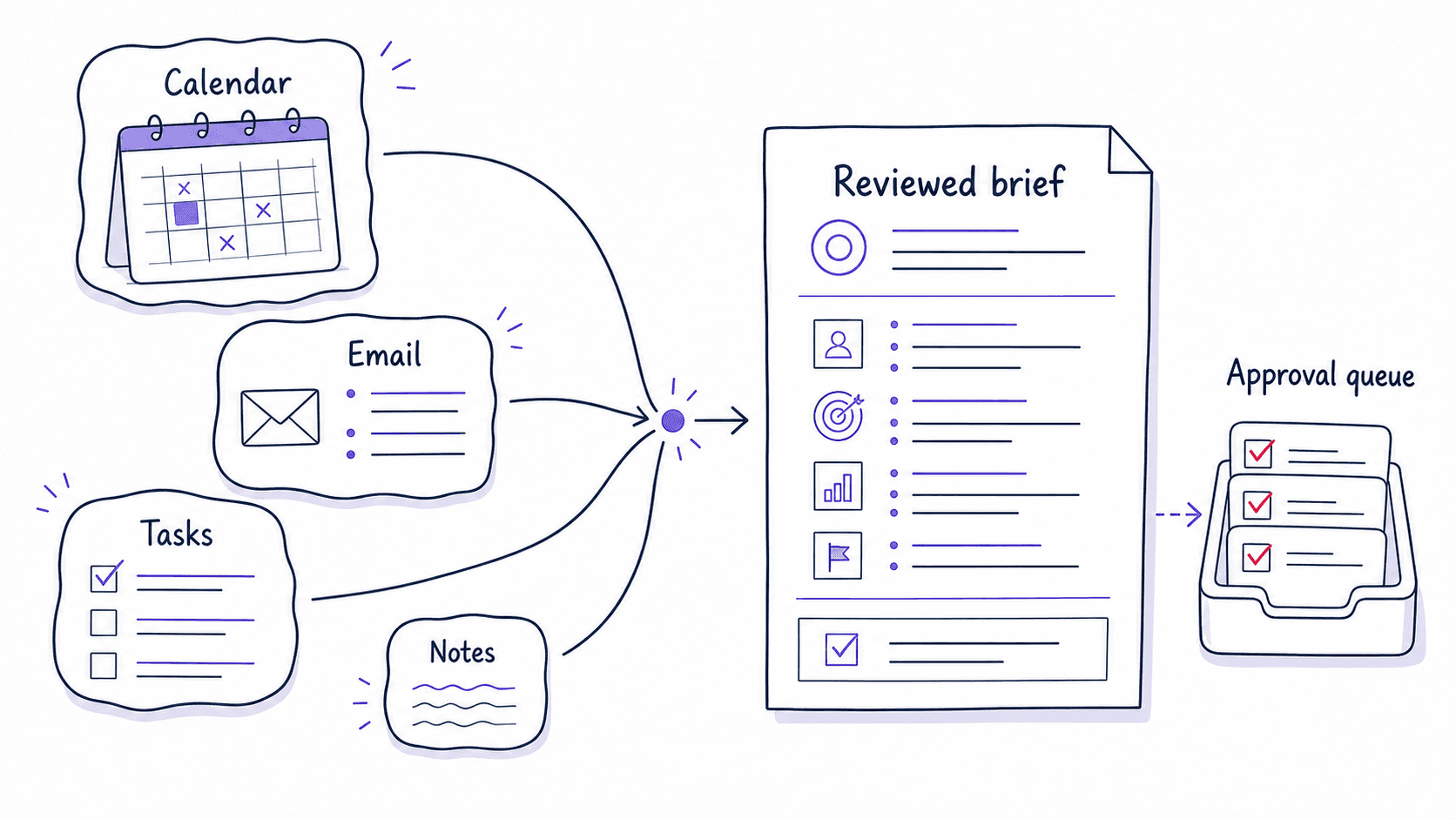
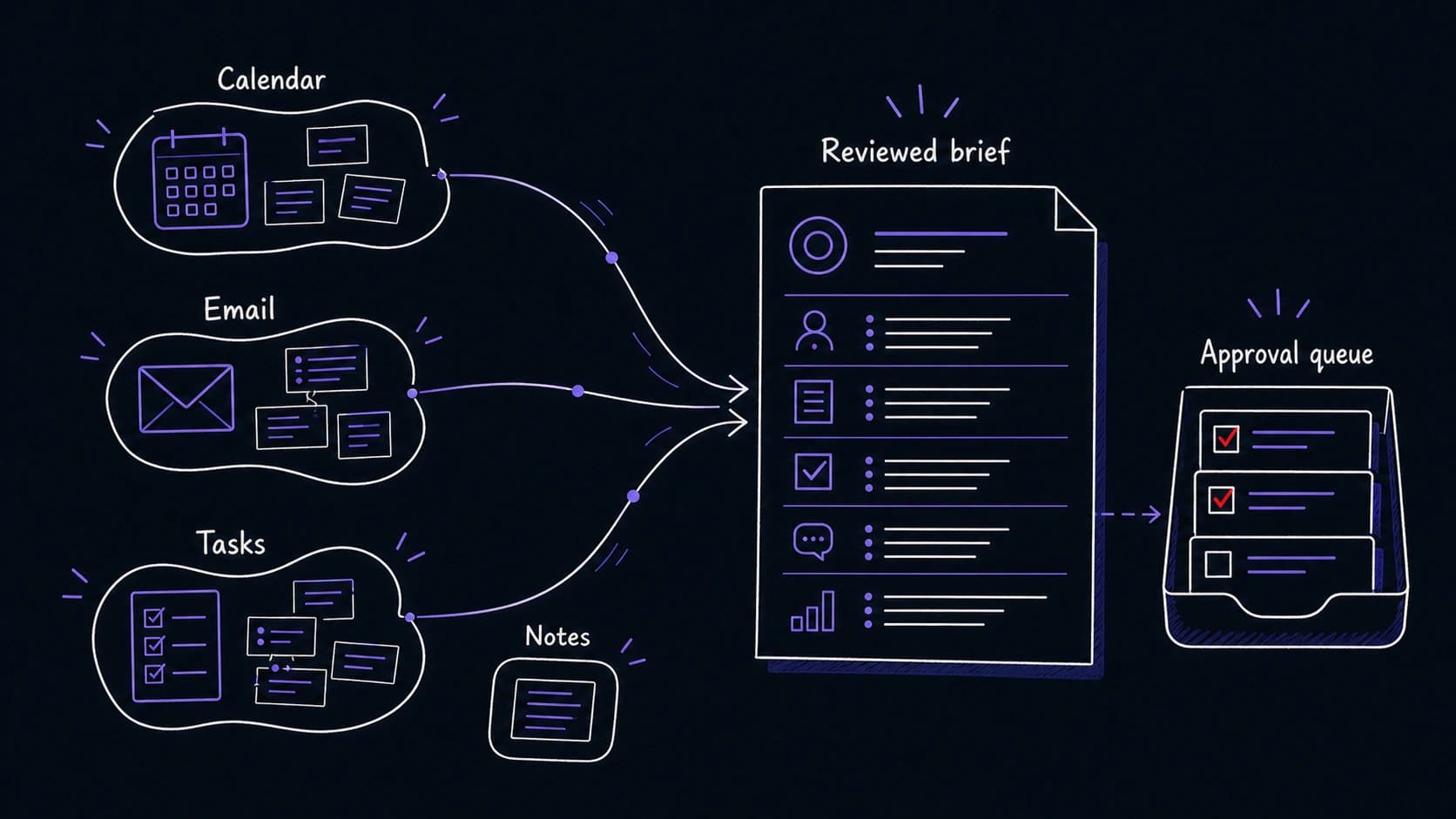
This book teaches you how to build a personal assistant that does that assembly for you. The assistant reads your calendar, email, task list, notes, contacts, and any other source you connect. It produces one document: here is your day, here are the risks, here is what needs your attention, here are the actions that need your approval before anything changes.
This book is for you if you already use AI casually and want more from it. You do not write code. You manage real responsibilities across professional and personal life: client work, family logistics, personal projects, health goals, creative pursuits, financial decisions. You have tried asking an assistant for help and gotten generic results. You suspect the problem is how you ask, and you are right.
Five modules make the system self-sustaining
The full book covers many modules, from finance tracking to relationship management to personal journaling. You can build as many or as few as you like. Five of them, though, form the minimum viable operating system: the smallest set that keeps itself running, inspects its own output, and gets better without you needing to remember maintenance tasks.
Every other in this book enriches the core five through the same shared records. The relationship tracker adds to contacts. The journal adds energy data to the task tracker. The finance module adds spending alerts to the brief. Each one is optional, each one is independently useful, and each one strengthens the core the moment you connect it.
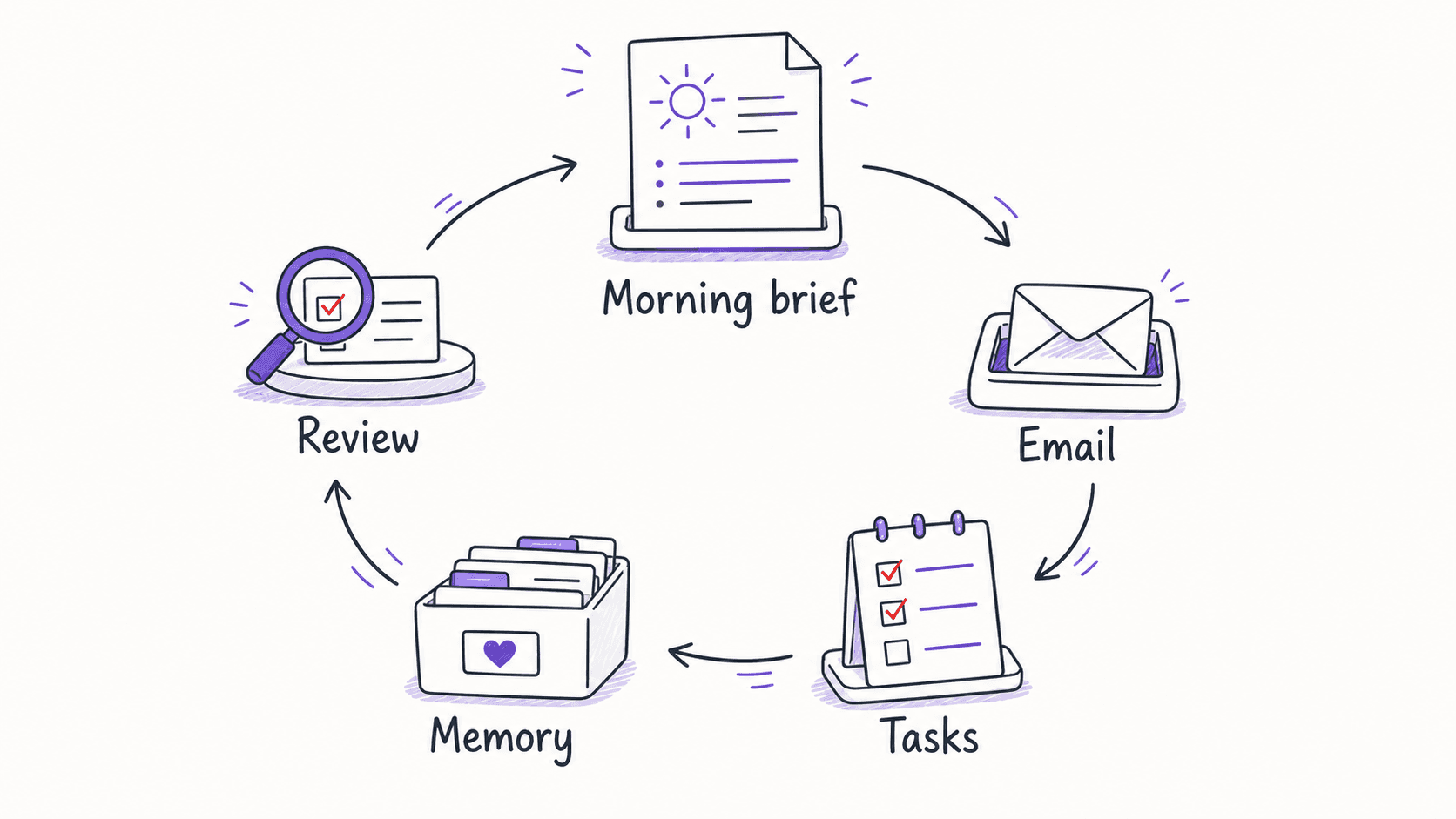
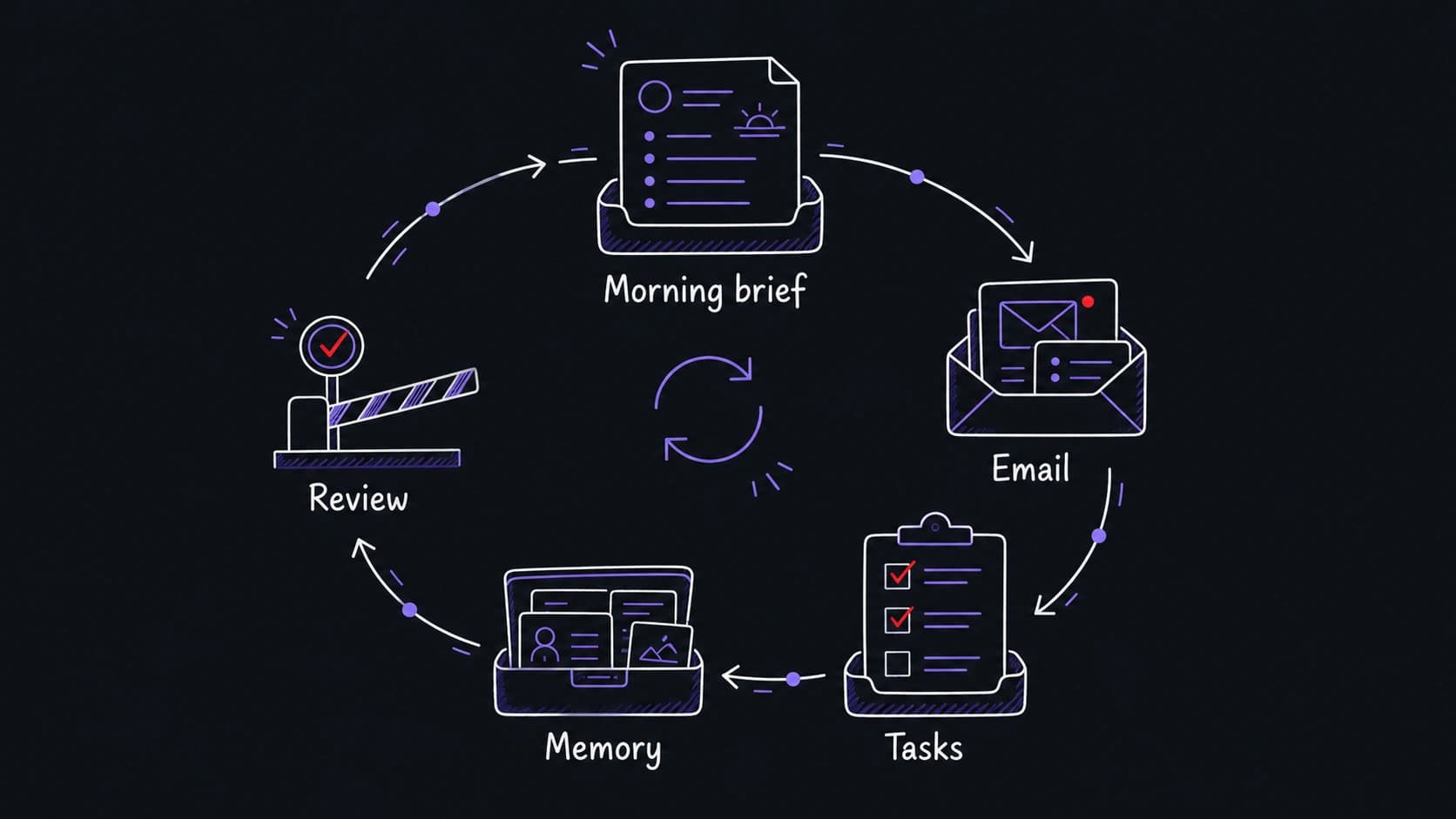
The promise is small, specific, and reviewable
A personal assistant operating system does not start as a giant app. It starts as a single promise: one reusable assistant behavior that gathers the right sources, produces a reviewable document, and waits for your judgment before it changes anything important.
The first promise might be: assemble a morning brief from my calendar, inbox, and task list. Flag conflicts. Draft replies for urgent emails. Never send anything without my approval. That promise is specific enough to test tomorrow. Everything else in this book builds on it.
You describe outcomes; the assistant handles implementation
This book does not teach you to write code, design databases, or configure servers. You describe what you want in . The assistant builds it.
But 'describe what you want' is harder than it sounds. Typing 'help me with my mornings' produces generic output. Typing 'build a three-layer morning brief from my calendar, email, and tasks, with meeting dossiers and proactive flags, and never reschedule anything without my approval' produces something genuinely useful.
The gap between those two prompts is the vocabulary this book teaches. When you write 'pull my calendar, draft replies for urgent emails, and never send without my approval,' you are naming a source, an action, and a boundary in one sentence. The modules give you practice writing prompts with that precision.
What makes this an operating system instead of a prompt collection
A collection of AI prompts is a toolbox. When you save a contact from an email and the morning brief pulls that record the next day, two prompts are sharing data. That coordination is what separates a connected assistant from a pile of unrelated prompts. Four properties make it possible.
- : every reads from and writes to the same local database. A contact record created by the email module is visible to the morning brief, the relationship tracker, and the .
- Composable modules: each is independently useful, but together they produce cross-references none of them could generate alone. The email tags a contact; the morning brief pulls that tag the next day.
- An approval layer: every has explicit boundaries for what it can do on its own and what requires your review. Draft a reply, yes. Send it, only after you approve.
- Self-maintenance: the assistant inspects its own output weekly and catches drift before it becomes failure. When the brief starts missing a calendar source, the flags the gap.
The book builds one at a time. The morning brief reads from the relationship module's contact records. The reads from every module's data. The task module uses energy data from the journal. The email classifier routes information to the finance module, the task module, and the relationship tracker. The combined morning routine brings everything together into a single daily document.
You do not need to build all the modules. Some readers will build three and stop. Some will build all of them. Because every shares the same memory, follows the same brief format, and respects the same approval rules, you can add modules whenever you are ready. Each new module immediately benefits from the data the others have already collected.
Six patterns recur and deepen across the book
As you build modules, you will notice the same patterns appearing at increasing levels of sophistication. Recognizing them early makes every chapter easier.
- The promise names what a will deliver, what it will read, and what it will never do without asking. For example: 'Pull my calendar and email, draft a brief, never send anything without my approval.'
- means every contributes facts to one database and every module can use facts contributed by others. A contact record created from an email is available to the morning brief and the .
- is the self-interview that turns a vague wish into a clear specification. You ask yourself what output you want, what sources to use, and what needs your approval before you open the assistant.
- The correction loop: you review a 's output, note what was wrong, correct it, and save the correction so the module improves over time.
- Approval boundaries separate safe actions from actions that need your review. The assistant can draft a reply; it cannot send one.
- Cross- enrichment is the payoff: the morning brief gets richer because the relationship enriched the contact record, the task module tracked the deadline, and the journal recorded your energy level.
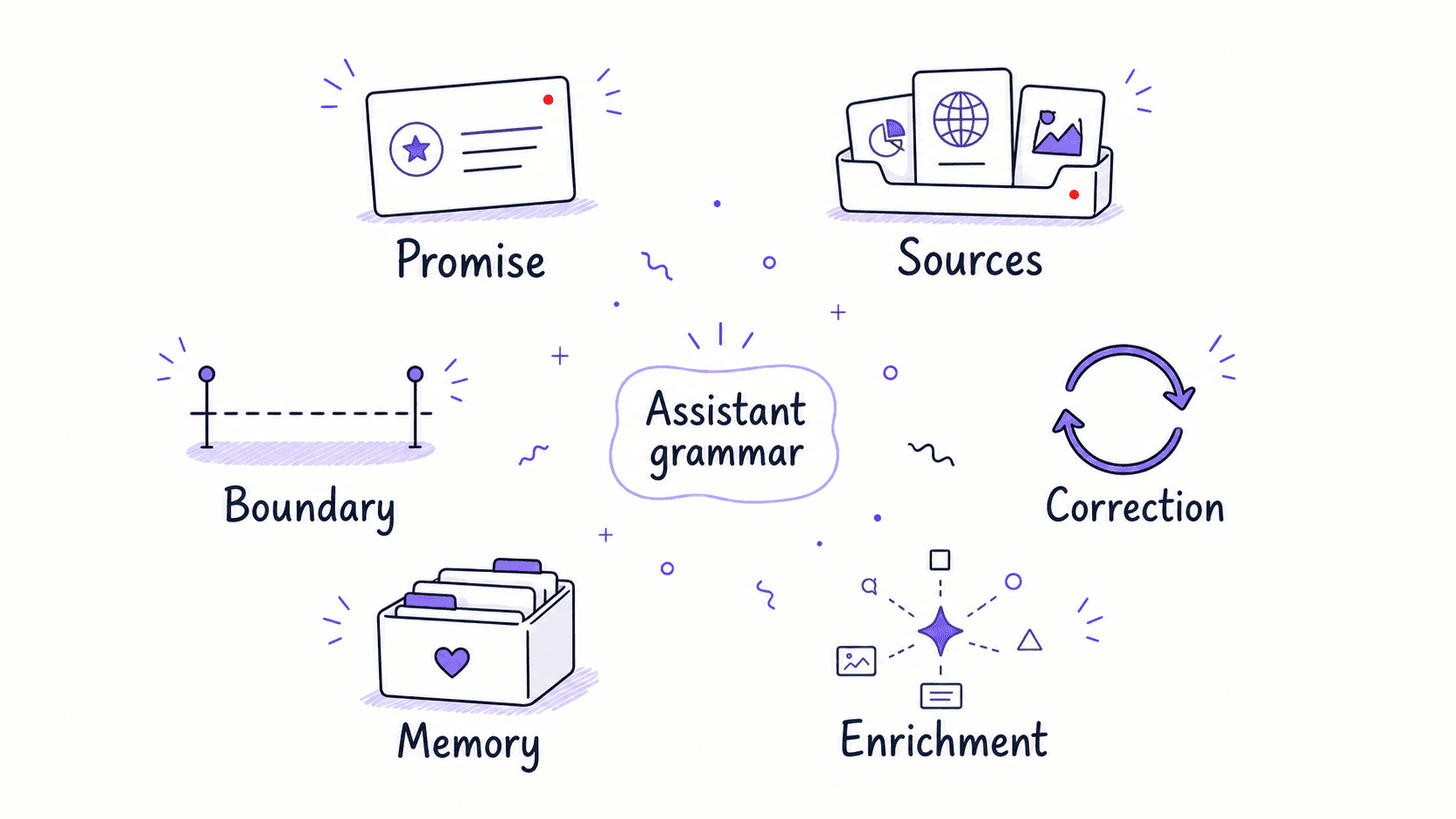
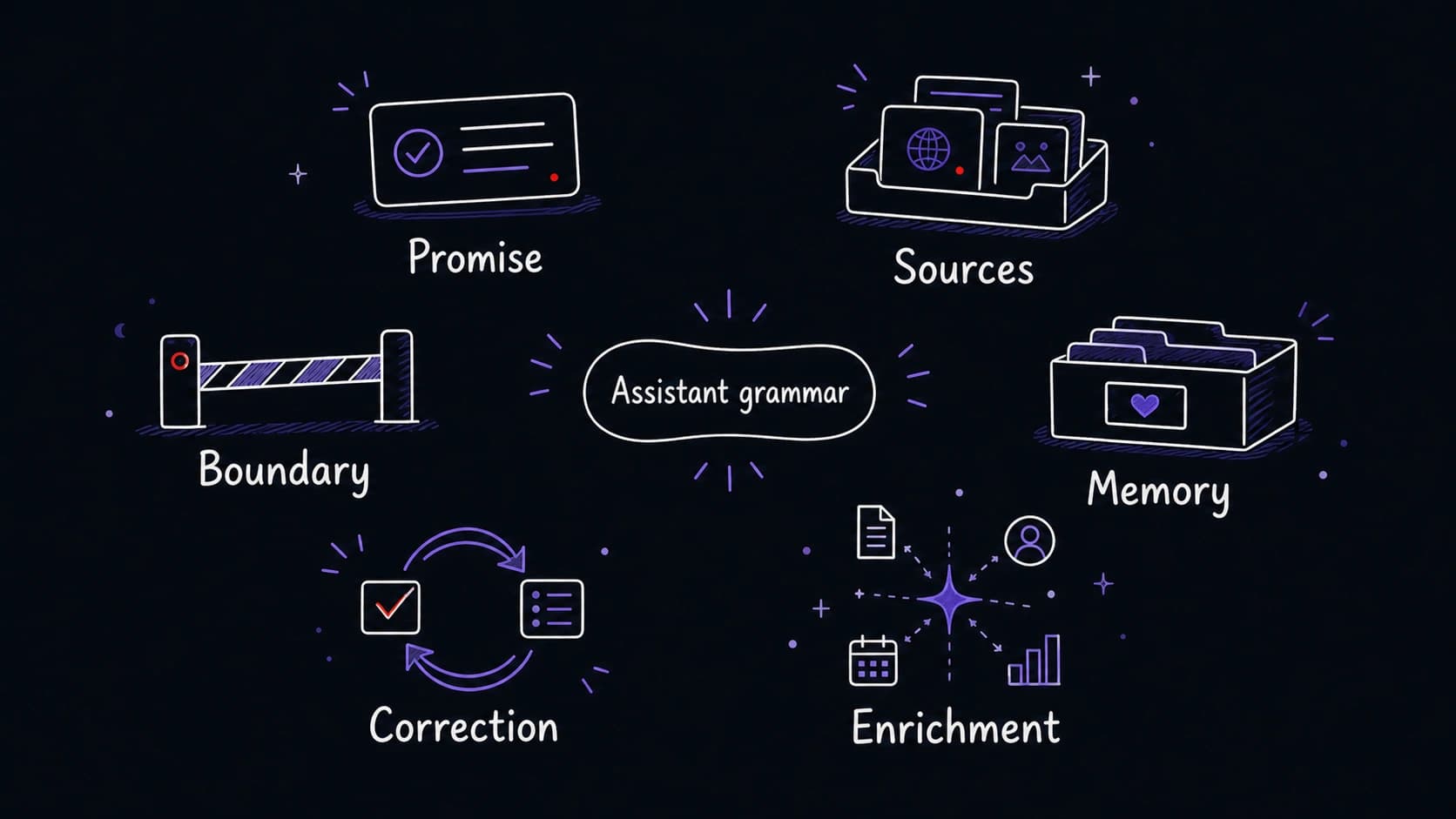
For now, remember three words: promise, sources, boundary. The other three (failure behavior, review criteria, reusable rules) become obvious once the first starts improving. Every chapter revisits all six, so you will absorb the full set through practice rather than memorization.
Each of these patterns starts simple in the orientation chapters and becomes more powerful as the system grows. By the time you compose modules into a single morning routine, all six patterns are operating together.
Two orientation chapters give you the foundation, then you build
Before the first , two chapters set the foundation. Build Your First Morning Brief walks you through a working prototype so you can see every pattern in action. Turn the Working Brief Into a Reusable teaches the self-interview technique called that turns a vague wish into a clear , and shows where modules live as they graduate from chat to project to scheduled routine. Then Lets Every Enrich the Others explains why every shares one memory and how that enables cross-referencing across your entire system.
Then the modules begin. The morning brief is your first build. After that, a voice chapter teaches you how to turn any 's text output into audio you can listen to while making coffee. If you build nothing else, those two modules will change how you start your day.