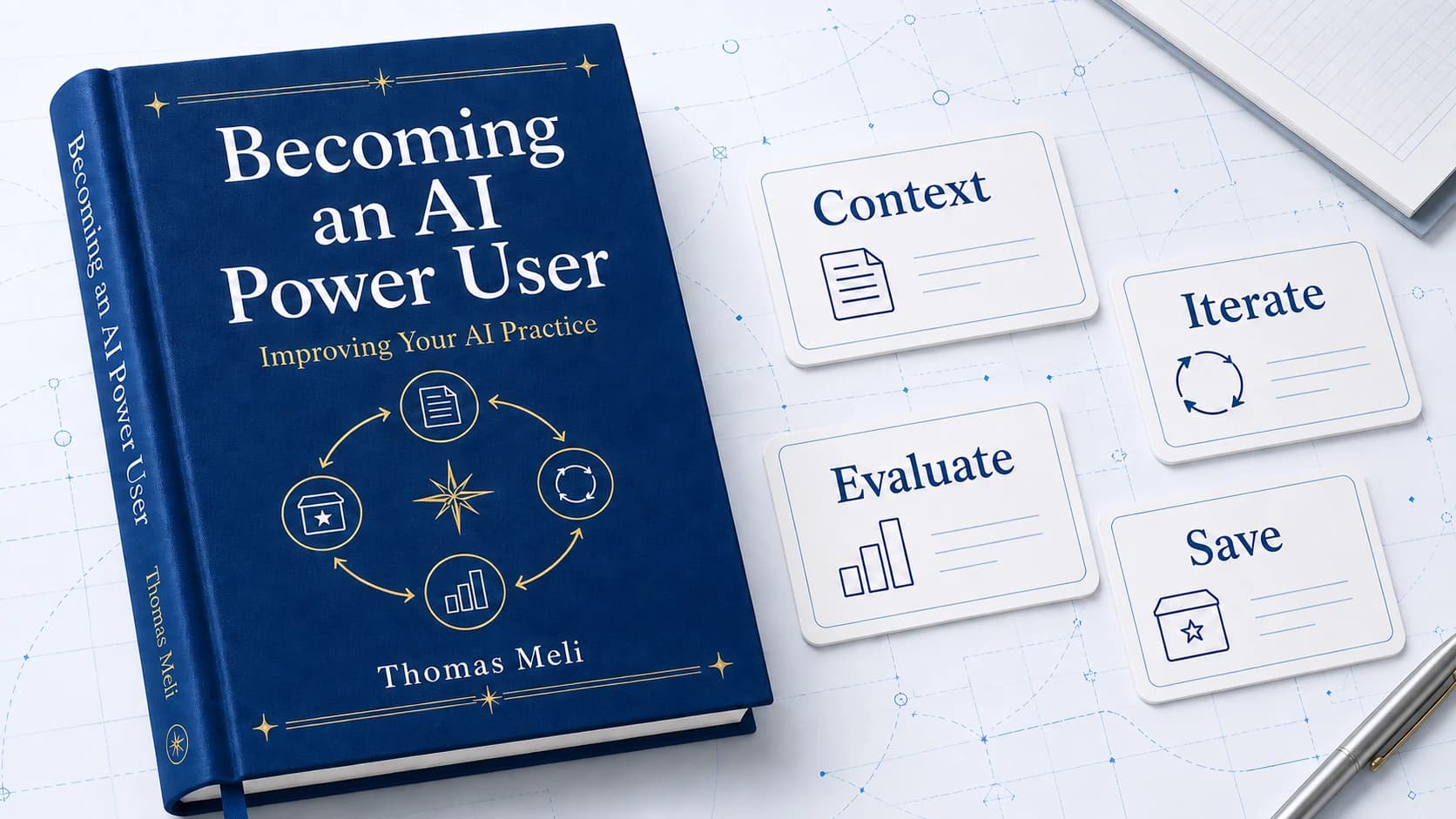
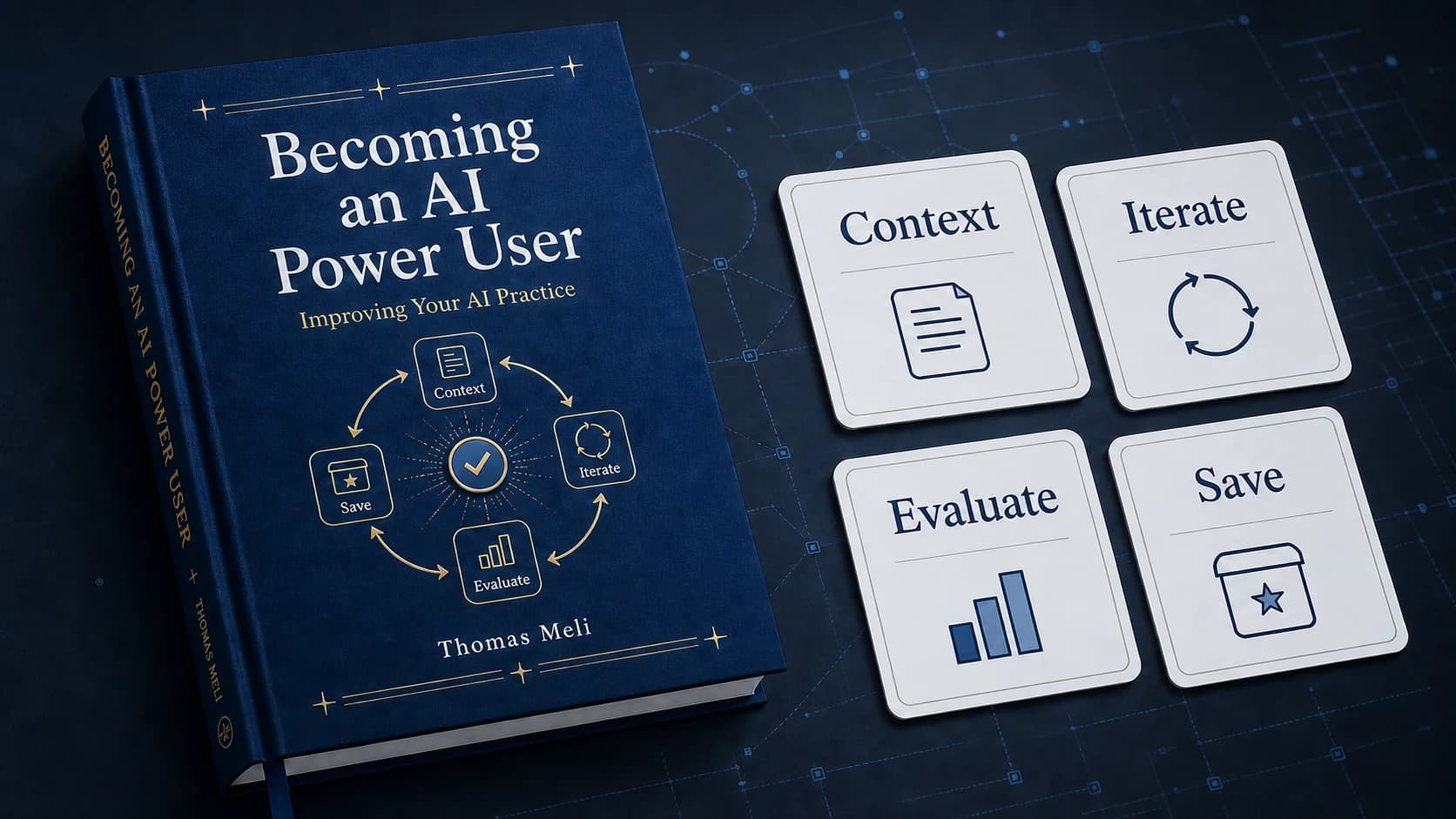
What power users do differently with AI
Chapter Progress: Early DraftPower users rarely plateau. The reason is not that they work harder at the same tasks. It is that their way of working keeps expanding what they can do next. They hand a piece of the work to a system they have built, and that frees attention to reach for something that was out of range before. The edge of what is possible keeps moving, and they keep following it. The gap between casual AI users and power users is specific, behavioral, and well-documented. Field experiments, platform data, and workplace surveys converge on the same finding: AI skill gains are unevenly distributed, and the habits that produce them are learnable through practical projects you build as you read.
You do not need to be technical to do this. What separates the two groups is several things working at once: curiosity and play (the constant 'wouldn't it be cool if I could,' the small experiments, the new projects), giving AI more context, treating the first answer as a draft, and building small reusable systems around the work that recurs. Power users tend to keep prompts and setups they reuse. The habit worth copying is not the secret prompt. It is the way they keep encoding what they know into something they can hand off, so they can climb to the next problem.
Find where you are on the learning curve
There is no single validated AI maturity model for individuals, but the research converges on a recognizable progression. Knowing where you are helps you focus on the principle that will unlock the next level of improvement.
Each chapter solves a recurring problem and leaves a system behind
Each chapter takes a problem that keeps coming back and pushes the work toward a more aligned result, the output you actually wanted. Along the way it leaves you a system you can hand the work to next time: a prompt, a standard, a rule, a skill, a workflow, or an evaluation built from your own work. The system carries what you learned, so your next session starts where the last one ended instead of from scratch. This is how the work compounds. Each pass lets you climb a level and aim at a problem that was out of reach before.
The system is a means, not the goal. The goal is the better result and the next problem it lets you reach. A casual reader finishes with sharper intuitions about when and how to push. A reader who builds along the way finishes with a working set of prompts, standards, and workflows tuned to their own work, each one a place to keep experimenting and a rung toward the next thing they want to make.
The skill stays useful as the tools change
The specific models and interfaces will keep changing. New versions of Claude, ChatGPT, and Gemini will ship, the interface will move from typing to voice, glasses, and earbuds, coding agents will gain abilities they do not have today, and brain-computer interfaces and systems far more capable than today's are on the horizon. These habits sit underneath those changes. They worked with GPT-4 in 2023, they work with Claude Fable 5 in 2026, and the same posture should carry through whatever comes next, including artificial superintelligence. The medium changes; the move of pushing a system to do more, then handing it more, stays the same.
The deliberate overhead is worth it for recurring, high-stakes, or standards-sensitive work. For a one-off question with low consequences, typing a bare prompt and moving on is rational. The practice pays back on the work important enough to improve.
Many of the problems we treat as permanent are really limits on how much focused intelligence we can bring to them. As that intelligence becomes more available, more of those problems may become solvable. Real risks come with more capable systems, and the people working on AI alignment have our respect for the work of making the technology safe to benefit from. This book is for the reader who wants to take on projects, solve problems, and build things that make their corner of the world a little better. The next chapter, on the expanding edge, looks at what keeps power users moving: imagination and play, evaluation, strategy, desire, and routines, all working at once to widen what is possible next.
Find where you are and where to start
References
2 sources- 1Work Trend Index (31,000 knowledge workers across 31 countries).
Microsoft, LinkedIn · 2024
Power users save 30+ minutes per day. Over 90% say AI makes their overwhelming workload more manageable. They are 68% more likely to experiment with new AI uses, 49% more likely to pause and ask 'could AI help with this?' before a task, and 30% more likely to keep trying after a poor response.
The behavioral gap is specific and replicable. Power users pause more, iterate more, and experiment more.
- 2Economic Index: Learning Curves (Massenkoff, Lyubich, McCrory, Appel, Heller). Privacy-preserving analysis of Claude.ai and first-party API conversations from February 5-12, 2026.
Anthropic · 2026
Users with 6+ months of Claude tenure had about a 4-percentage-point higher conversation success rate after controlling for task, model, country, and use case. High-tenure users were 7 percentage points more likely to use Claude for work. Task sophistication also rose with tenure: in one analysis, each additional year of Claude usage corresponded to nearly one additional year of education required to understand the human prompt. High-tenure users used Claude more collaboratively, with more iteration and less delegation.
This is direct evidence of learning-by-doing. The experienced users do not automate more. They iterate more, on harder problems, with better model-task matching.