In general, trying to change human behavior is less reliable than changing automated systems and processes.
Becoming an AI Power User
Becoming an AI Power User
349 min leftPage 33 of 223 (est.)
1.6The Expanding Edge
They use AI failures to improve reusable specifications and standards
Developing
Some AI failures reveal a standard you never wrote down
Many failures come from tacit criteria: expectations you apply without ever stating them. A colleague who has worked with you for years may know that "professional" means warm and concise to you. An assistant gets only the word.
An AI brief that says "no meetings today" can mean two different things
Some failures look identical on the surface. An assistant that could not open your calendar and one that opened it and found nothing can both tell you, "You have no meetings today." The second is good news. The first is a failure that looks like good news, and no instruction about tone or detail will catch it.
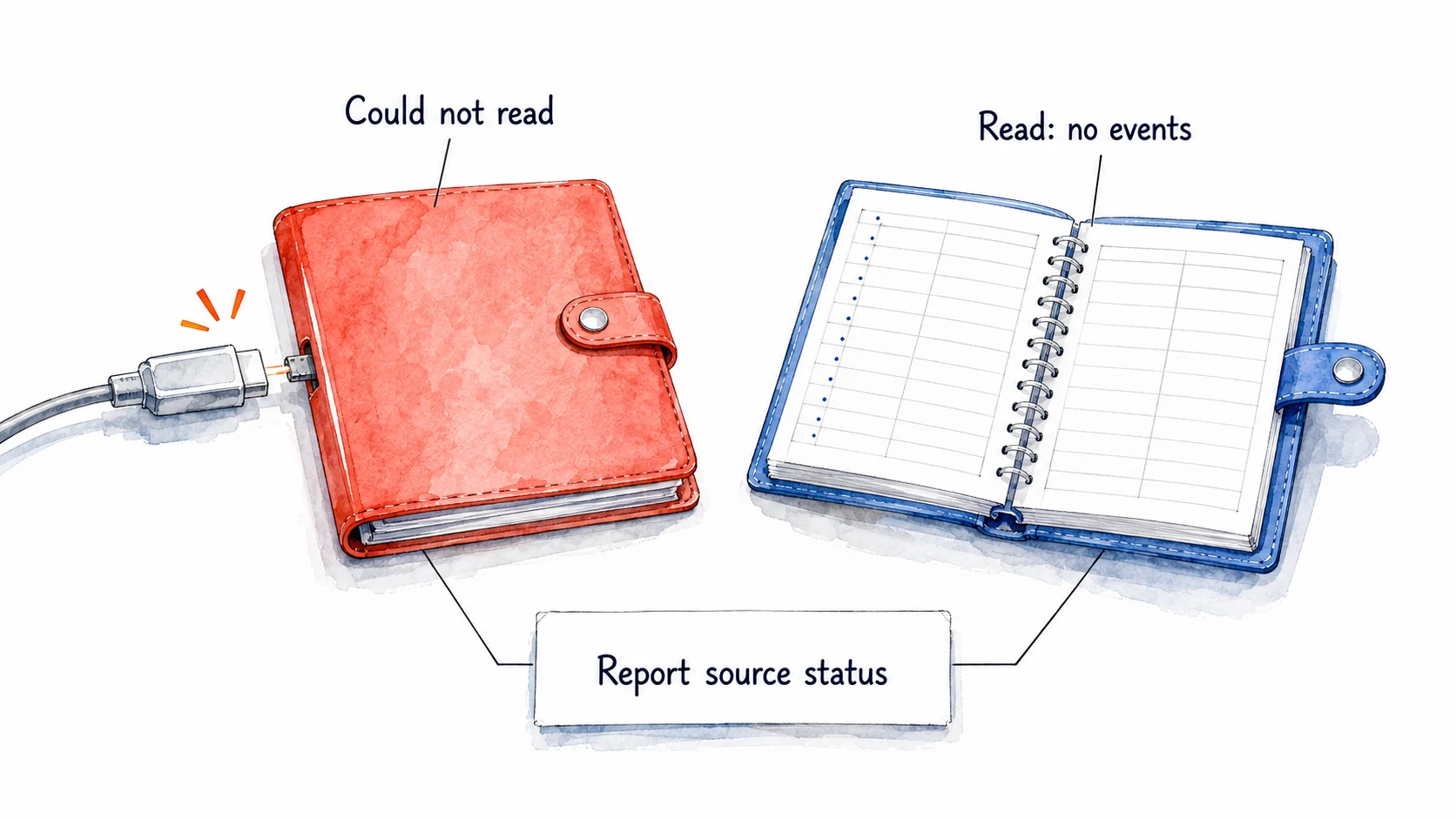

Here is that failure repaired from start to finish. The task is a morning brief: a short summary, each morning, of what needs your attention before the first meeting.
The request. You set up the morning brief with one line: "Each morning, summarize my day so I can plan."
The weak output. One Tuesday it opens cheerfully: "Good news, your calendar is clear today. A great chance for focused work!" You have a 10:00 client call and a 2:00 dentist appointment.
The diagnosis. Ask the assistant which sources it read and what each one returned. Suppose it reports that the calendar request failed because the connection had expired overnight. Your instruction never said what to do when a source cannot be read, so the summary filled the gap with the friendliest reading. Adding "be accurate" or "be thorough" to the prompt would have changed nothing, because the assistant never had the schedule.
The missing distinction. "I could not read your calendar" and "I read your calendar and it is empty" need different reports, and your prompt let both come out as "no meetings."
The corrected instruction. "Before summarizing, list each source you tried and whether you could read it. If the calendar could not be read, say so first and do not describe my schedule. If you read it and it has no events, say 'Calendar read: no events today.' List commitments before noon and messages that need a reply today, and cite each one. Mention a concern only if I have told you about it. Do not invent a schedule."
The result to check. Try three mornings: a normal day, where every item should match your calendar; a day with nothing scheduled, which should say "Calendar read: no events today"; and a day with the calendar connection turned off, which should open with the failed source and say nothing about your schedule. Save the instruction once all three mornings come out right.
Trace an AI failure through every step it passed
Frustration tells you something went wrong without telling you what. Start with the specific mismatch: a number with no source, a constraint the draft ignored, a file the assistant could not open, a tone unlike your examples. Then give the assistant the request, the output, the sources it could reach, and what you wanted, and ask it to quote the part of the exchange behind each cause it proposes. Its explanations are inferences from the text. When it says a draft "optimized for thoroughness," it is describing what the output appears to put first, with no window into the model's reasoning. These questions help sort the causes, and several can apply at once.
- What was missing? Compare what the assistant could reach with what the task needed. Ask it to point out any assumption it made, then check whether the information was absent or ignored.
- What did the draft put first? A draft may lead with background when your reader needs a decision. Point to the passage and compare it with your request.
- Would an example show what you want? An example can carry a tone or structure that a description leaves open. It cannot supply a missing fact or prove the assistant can do the task every time.
- Would a different breakdown help? Competing goals can be easier to check as separate steps. A tightly connected task may do better in one pass.
- Is this an instruction problem at all? A clearer prompt fixes an ambiguity. Missing records need retrieval or access. A calculation may need a calculator, and a hard judgment may need a more capable model or someone with the expertise.
One plausible explanation is a place to start. The same failure across several examples is a pattern to build a repair around.
Many failures also pass through more than one step. The psychologist James Reason pictured an organization's safeguards as slices of Swiss cheese lined up in a row. Every slice has holes, and an accident happens when the holes in several slices line up, so a hazard passes straight through. The "clear day" morning brief went through three slices: the calendar connection had expired, the drafting step turned missing data into good news, and you trusted the summary without glancing at your calendar. The source report exposes the first hole so you know to reconnect the calendar, the rule against describing an unread schedule closes the second, and a source list at the top of every brief makes the third easy to check. Before choosing a repair, trace the failure through every step it passed.
When several repairs are possible, start with the cause the evidence supports and the step whose failure costs you most, then retest. The easiest change is tempting, and being easy says nothing about whether it reaches the cause.
Tell the assistant exactly what it missed instead of saying "try again"
When a draft is close, a direct request does the job: shorten this sentence, compare two options, check that figure. When the draft keeps missing the point, say what it missed before you add more instructions. A specific correction gives the assistant a clearer next step than "try again."
Suppose you ask for an email to your manager requesting approval to attend a two-day industry conference. Your notes include the early-bird ticket price, the flight and hotel estimate, a registration deadline of Friday, the sessions you want to attend, and the colleague who will cover your client calls. Each correction below answers a different problem with the draft that came back.
- "Say what the trip costs in total. The draft describes the sessions but never answers the first question my manager will ask." This points to the question the draft left unanswered.
- "Lead with the request and the Friday deadline, then give the reasons." This tells the assistant what the reader needs first.
- "Keep the three short sections, and add who covers my client calls while I am away." This keeps a format that works and adds what the draft left out.
- "You assumed the early-bird price still applies. What in my notes supports that, and what is still unknown?" This asks for scrutiny of one assumption without demanding that the assistant disagree.
- "Keep the full cost breakdown. Cut the session descriptions to fit under 150 words." This says which requirement wins when two compete.
- "Compare every date, price, and name with my notes. Flag anything you cannot support before you revise the wording." This asks for a fact check before any polishing.
After the revision, check that it fixed the miss you pointed to and kept what already worked. Keep correcting while each revision gets closer or teaches you something. When neither is happening, these situations usually call for a new approach.
- The same error returns after a clear correction. Confirm the assistant received the correction and had the information it needed, then try a different model, a narrower task, a worked example, or a different check. A repeated error tells you where to look. It does not prove the task is beyond AI.
- The output follows the instructions and misses the situation. Office politics, a promise made to a client, or a personal preference may never have reached the assistant. Supply the facts that would change the result, or ask someone who knows the situation.
- Fixing it takes more time than the task deserves. When you need the result today, finish it with a method you trust. A learning experiment earns more attempts while each one teaches you something. Write down what failed and what would justify another try, such as a different tool or a newer model.
Retest saved prompts on new cases and new models
Say Renee, a consultant, uses AI to draft weekly client updates. She supplies her notes, the client's constraints, and an email whose tone she likes. The first update is good, so she saves the prompt. The next week, working from another client's notes, the same prompt ignores a budget cap and produces something that sounds like a press release. A month later her assistant moves to a newer model, and a third update misses in a way she has not seen before. One good run showed that the prompt could work on one set of notes. It could not show that the prompt carries her judgment to every client.
To sort out why, Renee keeps the request, the notes, and the output from each attempt. The second client's notes may differ in a way the prompt never anticipated, the assistant may have skipped an instruction that needs clearer wording or an example, and the new model may read the same words differently.
Retest a saved prompt whenever something it depends on changes: the model, a source connection, your needs, or how often it fails. Keep a few representative inputs and the cases that failed before, so the old and revised versions run on the same material. Where a silent failure would hurt, add a calendar reminder to retest.
- : a prompt that produced excellent results on one model can produce mediocre ones after an update. When you switch models, have the assistant rerun the prompts you rely on against a saved example of good output and flag the ones that drift.
- Conflicting instructions: as saved standards pile up, two can overlap or disagree. Ask the assistant to find them, decide which one applies, narrow rules that reach too far, and note why.
- Stale automation: a workflow that chains several AI steps can break quietly when one model in the chain changes behavior. Build checks into it, and read its output from time to time.
Archive instructions that no longer serve their purpose, with a note saying why. A prompt you have not touched in months may be a seasonal workflow you will want again in December, so check what it does before you retire it.
Diagnose a frustrating AI interaction and plan its repair
The assistant sorts the evidence, proposes a repair, and plans a test of whether it fixes the failure.
- Copy the promptUse the copy button above the box.
- Paste it in Claude or CodexMake sure your active project is enabled.
- Answer the questionsGive clear answers so it understands what you want made.
- Test it to see if it worksTry the output and refine until it does what you need.
Problem: A frustrating AI result can have several causes, and I need evidence before I choose a repair.
Intent: I want to investigate the exchange, propose a repair, and plan a test.
Use the exchange and sources already in this conversation. If they are missing, ask me for the original request, the output, what I wanted, and the specific mismatch. Ask what source material the assistant had and what it could read or do. Keep original records separate from my recollection, and mark any access conditions that are unknown.
1. State the observable failure by comparing the result with my criteria and the sources. Ask for missing evidence before deciding on a cause.
2. Consider each plausible explanation: missing or ignored information, unclear criteria, an example that could clarify the target, a task breakdown that hid a requirement, failed source access, or a capability limit. For each one that applies, separate evidence from hypothesis and say what would settle the question. Do not infer hidden reasoning from the draft alone.
3. Propose a repair that follows from that assessment. It may change instructions, retrieval, tools, checking, the model, or the task design. Explain how it addresses this failure.
4. Plan a test on the original case and one different case. State what the repair should fix and what correct behavior it must keep. Leave the results blank until the tests run.
5. Draft a short record of the proposed repair, its scope, and its open limits. Say what evidence would justify saving it, trying another method, or stopping the investigation.
Return the diagnosis, the repair proposal, and the test plan. Do not rerun the original task, save anything, invent personal facts, or treat a plausible cause as established.
References
1 source- 1
James Reason · 2000 · BMJ 320, pp. 768–770
Reason described layered defenses that include engineered controls, people, and procedures. Each can contain weaknesses, and an accident can occur when a path through several weaknesses opens.
Used as a lens on AI workflows, the model directs attention to source access, generation, and review together. A better instruction can repair one layer, while another layer may need a different kind of repair.
The model comes from safety research and gives no evidence that one instruction usually repairs an AI task. The causes and safeguards in your workflow have to be found from the failure itself.